| Author |
Message |
 ldarrellcSenior Member ldarrellcSenior Member
Posts: 510
Joined: 05 Oct 2006
|
|
 Posted: Wed Nov 08, 2006 6:18 pm Posted: Wed Nov 08, 2006 6:18 pm |
 |
|
|
|
|
|
|
 |
 eagamesExpert Member eagamesExpert Member
Posts: 3013
Joined: 15 Nov 2005
|
|
| Posted: Wed Nov 08, 2006 6:33 pm |
|
|
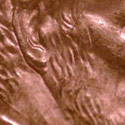
Just a guess... around EF
Hard to tell from a picture.
I think 43 cents don't wear fast because they're steel and tougher than copper, instead of wearing the zinc starts to wear off of the high spots. The wheat stalks often are complete after a lot of circulation.
_________________
Ed
|
|
|
|
|
|
wavysteps2003Expert Member
Posts: 1344
Joined: 25 Feb 2005
|
|
| Posted: Wed Nov 08, 2006 6:57 pm |
|
|
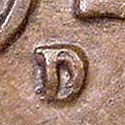
To be honest with you, the pictures are to blurred to make any kind of accurate grading. These are some pictures of a 1943-D, MS-62 / 63.
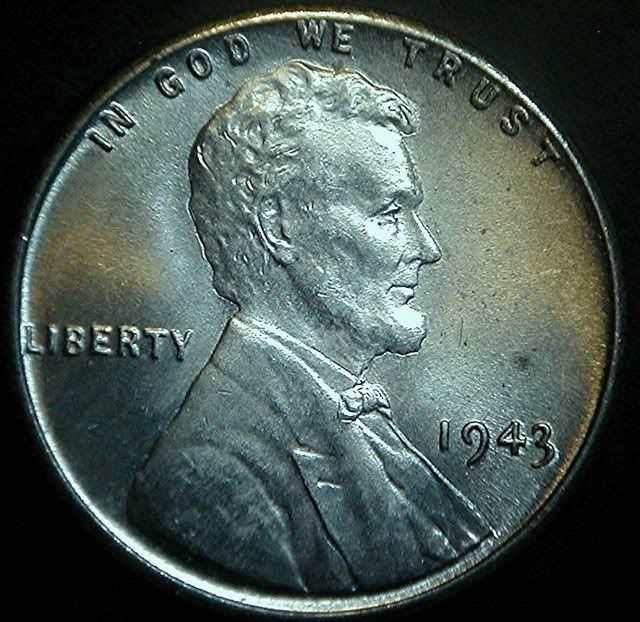
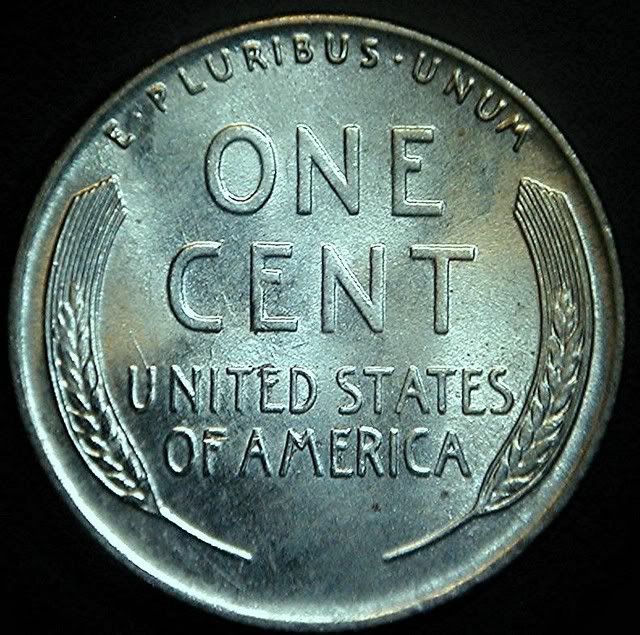
The reason for the grade on this coin is a blemish above the date and some bag marks on the beard and temple of Lincoln. There is also a ding on the F of OF and two smaller blemishes on the reverse.
Just one more thing; when shooting pictures of a coin, it should be out of the protective holder. The plastic tends to reflect light back towards the camera and also distorts the image to some extent. Also, older plastic can some times be cloudy which again will affect the picture.
Hope that this helps.
WAVYSTEPS2003 aka BJ Neff
|
|
|
|
|
|
ldarrellcSenior Member
Posts: 510
Joined: 05 Oct 2006
|
|
| Posted: Wed Nov 08, 2006 8:09 pm |
|
|
|
|
|
|
|
|
 coppercoinsSite Admin coppercoinsSite Admin
Posts: 2809
Joined: 29 Jun 2003
Location: Springfield, Missouri.
|
|
| Posted: Wed Nov 08, 2006 8:23 pm |
|
|
Grade? NET AU, cleaned.
Your coin has been wiped or polished. The high points of the coin are shinier than the fields. Dead giveaway.
_________________
C. D. Daughtrey
owner, developer
www.coppercoins.com
cd@coppercoins.com
|
|
|
|
|
|
 DickExpert Member DickExpert Member
Posts: 5780
Joined: 21 Sep 2006
Location: Rialto, CA.
|
|
| Posted: Thu Nov 09, 2006 9:45 pm |
|
|
CD, Thanks to you, this day is not a waste! I always wondered hoe one could dictinguish between a "cleaned" , and a non-cleaned coin. You have just shown me. I would never have believed this is a cleaned coin! Thanks again, Dick
_________________
" Deja Moo: The feeling that you've heard this bull before".
|
|
|
|
|
|
 coopExpert Member coopExpert Member
Posts: 3402
Joined: 17 Sep 2003
Location: Arizona
|
|
| Posted: Thu Nov 09, 2006 10:28 pm |
|
|
BJ: Did you notice the die clash on the reverse of the 1943?
_________________
Richard S. Cooper
You may be only one person in the world, but you may also be the world to one person.
|
|
|
|
|
|
wavysteps2003Expert Member
Posts: 1344
Joined: 25 Feb 2005
|
|
| Posted: Fri Nov 10, 2006 7:53 am |
|
|
Hi Coop - Yep, sure did, but that is almost to common an occurance for this year.
WAVYSTEPS2003 aka BJ Neff
|
|
|
|
|
|
DickExpert Member
Posts: 5780
Joined: 21 Sep 2006
Location: Rialto, CA.
|
|
| Posted: Fri Nov 10, 2006 9:31 pm |
|
|
BJ, where is it? I have one with a beauty on the obv. Not '43. It is the upper part of the "E" in one. Is it on yours,or one of the links? Dick
_________________
" Deja Moo: The feeling that you've heard this bull before".
|
|
|
|
|
|
 StevenExpert Member StevenExpert Member
Posts: 1298
Joined: 30 Nov 2005
Location: S/E Missouri
|
|
| Posted: Fri Nov 10, 2006 9:48 pm |
|
|
Dick, The clash on the 43 shown appears to be above to the right and below the C of CENT.
Steven
|
|
|
|
|
|
DickExpert Member
Posts: 5780
Joined: 21 Sep 2006
Location: Rialto, CA.
|
|
| Posted: Fri Nov 10, 2006 11:07 pm |
|
|
Steven, I noticed the sort of fuzziness in that area, but took it to be the "impression" one sees, now and then on some of the wheats. I have several of these. Looks like they press was operated with too much pressure., and the impression was passed thru, showing the outline on the reverse.
_________________
" Deja Moo: The feeling that you've heard this bull before".
|
|
|
|
|
|
StevenExpert Member
Posts: 1298
Joined: 30 Nov 2005
Location: S/E Missouri
|
|
| Posted: Sat Nov 11, 2006 12:19 am |
|
|
Dick,
I believe the impression you are talking about shows a faint outline of the entire head coat and vest. I am not sure about how those occur possibly a pressure issue. I don't think I have ever heard any discussion about it before either. The one shown here though appears to me to be well defined and looks to be "shelf like" for no better term than I can come up with right now. and does not have the entire design to it only showing the back of the coat and head that I can see. I believe but am not sure that a clash would depress the field where pressure would raise the field???
I think coop would be one to ask about this he has posted several items concerning die clashes.
I bet more than one person will be able to tell this is an explaination from a beginner 
Steven
|
|
|
|
|
|
eagamesExpert Member
Posts: 3013
Joined: 15 Nov 2005
|
|
| Posted: Sat Nov 11, 2006 12:36 am |
|
|
I think the main differance is that like Dick said when the image is from strike pressure it looks a bit fuzzy as it shows through. I see that on a lot of cents from the 40s. From clash it looks sharper (like the 1943 above) where it does show because it's actual damage from the dies hitting eachother probably without a blank in between them so it has the sharp look. After they try to clean it up sometimes you can see some image remaining and scratches where they polished it off.
I'm not even sure what the right term is for when it shows from strike pressure. I've seen it called strike through but that gets confused with being struck through something. Anyone know if there's a correct term for the image showing through from strike pressure?
_________________
Ed
|
|
|
|
|
|
wavysteps2003Expert Member
Posts: 1344
Joined: 25 Feb 2005
|
|
| Posted: Sat Nov 11, 2006 8:30 am |
|
|
Transfer of a design through strike pressure; sort of like the Kung-fu master hitting the top brick and cracking the seventh brick down without affecting any of the others. This is a new theory to me and I wonder if it were possible, why would you not see the reverse on the obverse then, for the strike pressure is equal on both sides of the planchet. Hmm, I am fogetting my physics; the pressures are unequal from obverse to reverse due to the buffer, which in this case is the planchet, which absorbs some of the energy of the strike, however, it is an infinitesimal amount and would not affect a mutual transfer of designs.
My understanding of the ghost image of Lincoln's bust on the reverse is that it is an older die clash that has been abraded to some extent, however, due to the depth of the clash, not entirely obliterated.
I can see both affects on the above coin, the newer die clash around the C of cent and also the ghost image that covers most of the reverse. I put this coin back into a box that I have that is full of 43's and now I can't seem to find it again; if I do, I wil take some macro pics of the die clash.
WAVYSTEPS2003 aka BJ Neff
|
|
|
|
|
|
coopExpert Member
Posts: 3402
Joined: 17 Sep 2003
Location: Arizona
|
|
| Posted: Sat Nov 11, 2006 8:58 am |
|
|
Strike pressure would show an over all strongness of all details if it was too much. To little strike pressure would leave all details weaker.
But back to the clash affect on the die. Each time the clash happens the dies are cleaned by using pressure on the die with a wire brush. Each time this happens, (the cleaning to remove clashes) it removes a little more of the field of the die. When a die clash happens you always see the clash mark as a outline of the next area above the fields. When the die is cleaned, more material from the die is removed from the field area and you start to see some of the edges of letters/numbers/devices being affected. Each time this die is worked over by the brush, the fields get a new scratch pattern. This scratch pattern will in time flatten and you can see finger prints of the pattern as it disappears. Then another clash, more scratching away on the field taking more of the edges of letters/numbers/devices. This process keeps happening over and over. The clash always happens to the outline of the bust and the letters on the reverse of wheat cents and on the memorial on later cents.
Repeating this process over and over (clash-cleaning) this thins down the fields to make a ghost of the bust on the reverse always in the same position. Letters are starting to lose shape. The outline appears on every coin till the die is retired. After the thinning/clashing happens too much, the die gets thinner and the clashes may crack in certain areas where the cleaning happens over and over. So the result is that the outline of the bust becomes the regular mark (because of cleaning, clashing, normal wear) on the coin. This area becomes worn leaving a raised area in comparison to the letters/numbers/devices. So what was cleaned away is now the same size/height of the details. Leaving weaker edges to the letters/numbers/devices and showing weaker in these areas of the die. Details lost, crispness disappears after the coin strikes thousands more Cents. In time just from wear the details of the deeper parts of the die loses detail. Why does this happen? Wear/clashes/cleaning finally finishes the die off till it is retired. The bust images you see on the reverse are justs parts of the die worn from all of these cleanings. Not a plus as to value unless the clash lines are fresh (before the cleaning) and distinct. But that is why the ghost images are there and one some why the clash marks are there. It is just another day for the die, getting closer to its end when it is retired.
_________________
Richard S. Cooper
You may be only one person in the world, but you may also be the world to one person.
|
|
|
|
|
|
|



