| Author |
Message |
 smedSenior Member smedSenior Member
Posts: 624
Joined: 21 Oct 2003
Location: Zephyrhills Florida
|
|
 Posted: Sun Jul 15, 2007 10:28 am Posted: Sun Jul 15, 2007 10:28 am |
 |
|
Is that a die clash from the shield on the 1813?
_________________
Life Member American Numismatic Association (ANA), Pensacola Numismatic Society
Life Member American Veterans (AmVets), Veterans of Foreign Wars (VFW), Fleet Reserve Association (FRA)
Member Loyal Order of Moose
Member American Legion
|
|
|
|
|
 |
 JRoccoVeteran Member JRoccoVeteran Member
Posts: 418
Joined: 08 Oct 2004
|
|
| Posted: Mon Jul 16, 2007 8:03 pm |
|
|
| smed wrote: |
| Is that a die clash from the shield on the 1813? |
Yes it is. This die state of this variety is known for a big old shield (upside down and backwards of course) on Miss Liberty's ear.
Times sure were different back then. Why waste a still working die just because of a few heavy clashes.
Have to remember also that aside from the bust and the eagle (with just a shield outline), these are hand punched down to the dentils...not even a gang punch back then for the dentils.
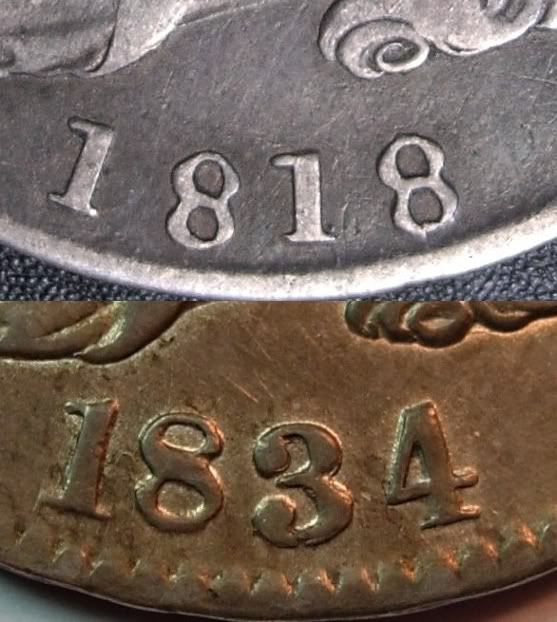
Take a look at the different numbers back then too. Talk about crude 8's...
_________________
John
|
|
|
|
|
|
smedSenior Member
Posts: 624
Joined: 21 Oct 2003
Location: Zephyrhills Florida
|
|
| Posted: Tue Jul 17, 2007 4:54 am |
|
|
Interesting... I don't think I've ever seen a die clash on a device before.
_________________
Life Member American Numismatic Association (ANA), Pensacola Numismatic Society
Life Member American Veterans (AmVets), Veterans of Foreign Wars (VFW), Fleet Reserve Association (FRA)
Member Loyal Order of Moose
Member American Legion
|
|
|
|
|
|
JRoccoVeteran Member
Posts: 418
Joined: 08 Oct 2004
|
|
| Posted: Mon Jul 23, 2007 8:33 pm |
|
|
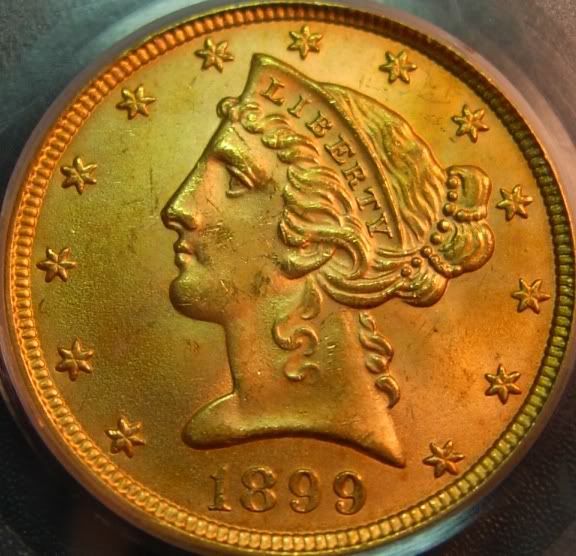
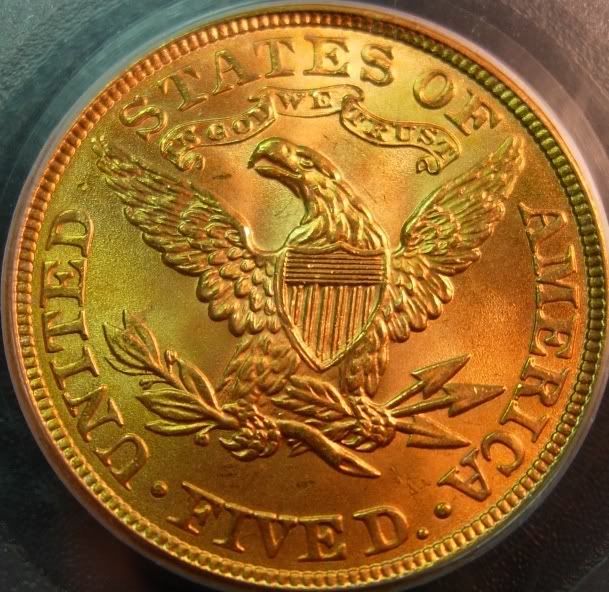
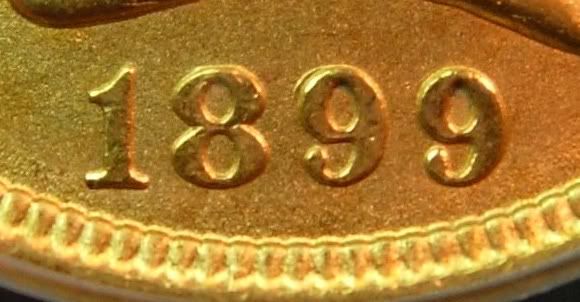
This variety addiction doesn't exclude gold either. Here is a very uncommon RPD on a high grade Half Eagle.
_________________
John
|
|
|
|
|
|
JRoccoVeteran Member
Posts: 418
Joined: 08 Oct 2004
|
|
| Posted: Sun Jul 29, 2007 4:47 pm |
|
|
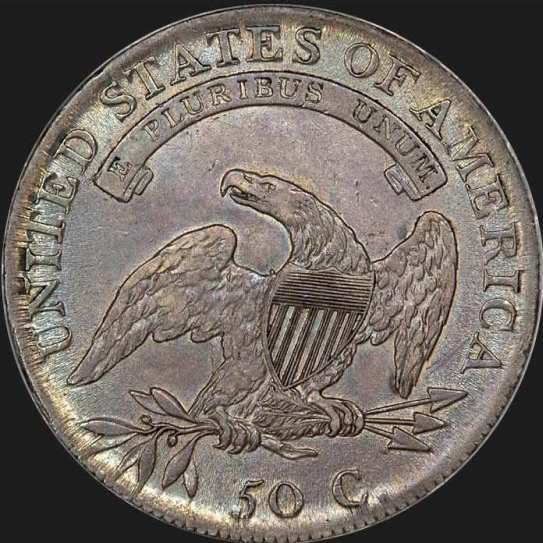
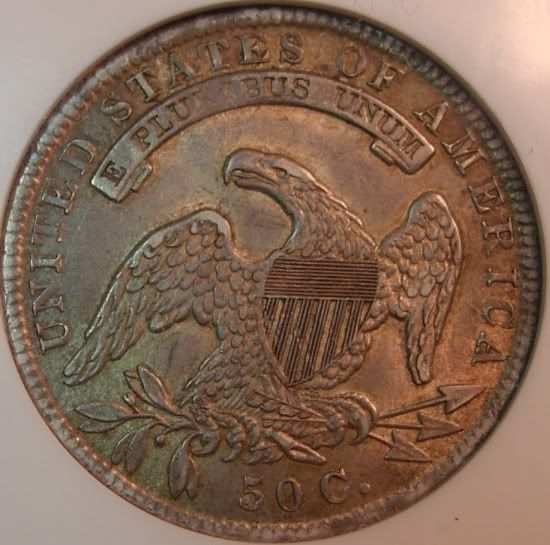
The Capped Bust Half dollar series has many different Sub-Designs or Hub types. One of the major changes in Sub-Design occurred after only the first 2 years of production. Looking at the reverse - there were about 10 major changes. The most obvious being the bird itself. It was discovered back in 1807 and 1808 (remember-this was BEFORE the War of 1812...talk about history) that the coins were not striking up well. Metallurgy was just not understood back then nor was metal flow. I will show 2 reverses for comparison. First pic is an 1808 reverse and the second is an 1836 reverse. Both of these are slabbed as AU58 coins and both ARE AU 58 coins. Notice how much weaker the strike is on the 1808, which led to the design change.
But look at the bird in the 1808....what a beauty. The bird on the 1836 is nice also, but....
The original design showed our eagle in full glory---a strong fighting machine. Look at the musculature on the birds legs, the real size smaller stronger talons, the stronger neck and head, the smaller beak, the more realistic pointed feathers as opposed to the rounded birds feathers on the 1836. The bird on the 1808 looks poised for flight and I sure wouldn't want to be its prey - I believe that is the message that we wanted our eagle to display as symbolic of our new growing country. Compare that to the eagle on the previous 1899 gold for a stronger comparison. What interesting stuff. Sorry for the ranting, but this stuff IS numismatics...and cool too. These classic designs are soo interesting.
_________________
John
|
|
|
|
|
|
 GarryNExpert Member GarryNExpert Member
Posts: 1296
Joined: 09 Jul 2003
Location: Chicago
|
|
| Posted: Mon Jul 30, 2007 7:08 am |
|
|
|
those are beautiful reverse designs. i had once a proof quarter, 1873, that had that reverse, it looks especially nice in proof
|
|
|
|
|
|
JRoccoVeteran Member
Posts: 418
Joined: 08 Oct 2004
|
|
| Posted: Sat Aug 04, 2007 11:19 am |
|
|
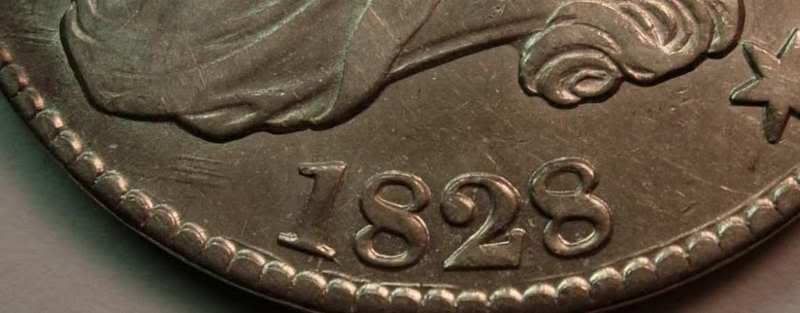
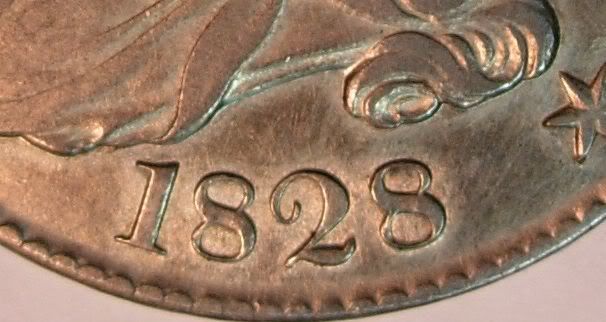
Another great example of the state of affairs back in the 19th century was the way the average Joe working in the US Mint kinda made do with what he had at hand at the time. We know that they reused dies whenever possible-even years later-and tried to get as much traction from each die because making these back then must have been a bear. We also know today that aside from the very simple central design that EVERYTHING else was hand punched into the dies thus leading to sooo many varieties. Take the numbers for example, I showed a few examples of the crudeness of some numbers earlier, well there were also many different number punches to choose from back then also. The difference in the numbers from year to year were strong, but they varied a heck of a lot even withing the same year. Take a look at 3 different examples of the number 2 on three of my 1828's---we have a small square bottomed 2 with a knobbed top curl (also notice the2 different 8's with one of them re-cut), a large square bottomed 2 also with a knobbed top curl and then a beautiful curled bottomed curled top 2 that is also very large. Look also on the large square base 2 example at all the graver slips. These dies were being constantly tinkered with and played with to keep them going and this is a good example of some of those graver slips showing on a very early die state example.

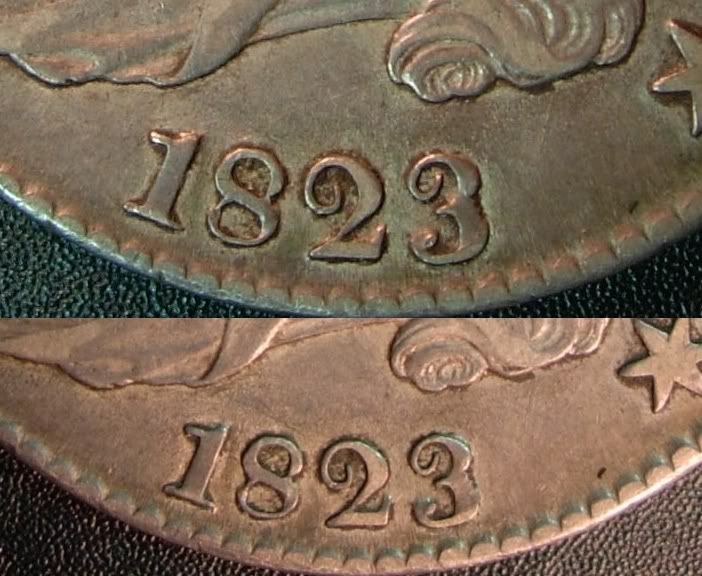
Take a look at this example also. I know that the year is different, but look at some of the peculiarities on this one also. This one shows a square bottomed 2 with a curled top and a knobbed bottomed 3 with a curled top on the 3---in addition take a look at the 3 itself- a little bit of patchwork appears to have been done on this one also, not to mention the little 8 and large 2 and 3.
_________________
John
|
|
|
|
|
|
 DickExpert Member DickExpert Member
Posts: 5780
Joined: 21 Sep 2006
Location: Rialto, CA.
|
|
| Posted: Sat Aug 04, 2007 12:46 pm |
|
|
Does anyone beside me get the feeling that the "8", on the 1823, is "upside-down"? Or is it my vision, again?
Dick
_________________
" Deja Moo: The feeling that you've heard this bull before".
|
|
|
|
|
|
JRoccoVeteran Member
Posts: 418
Joined: 08 Oct 2004
|
|
| Posted: Wed Aug 15, 2007 7:30 pm |
|
|
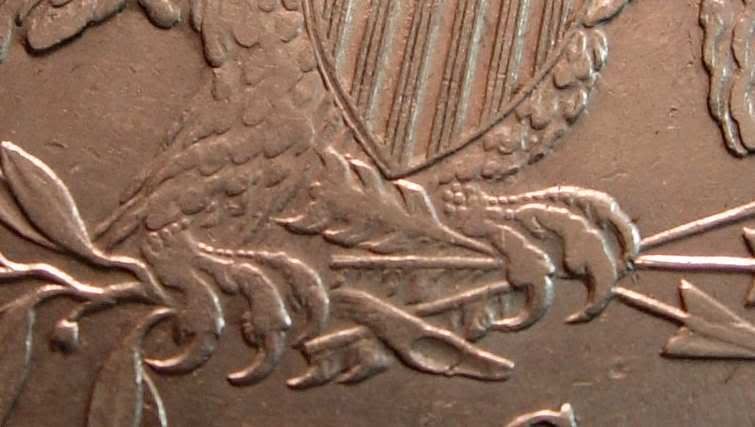
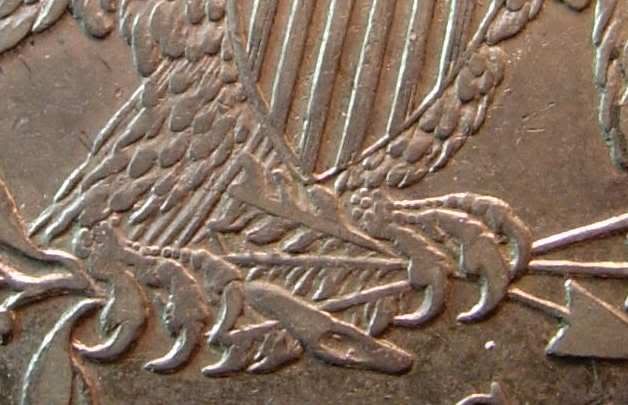
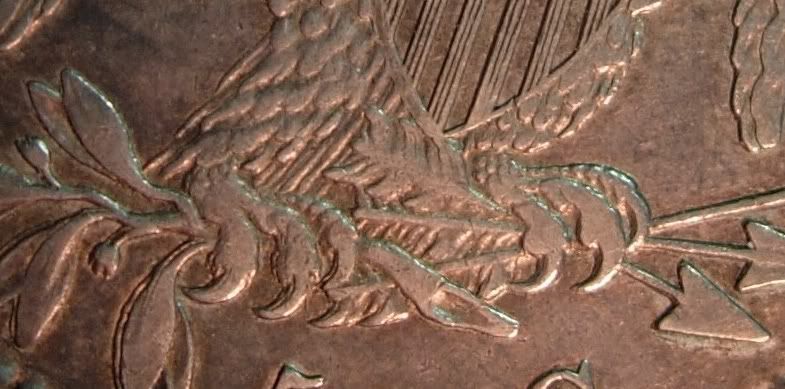
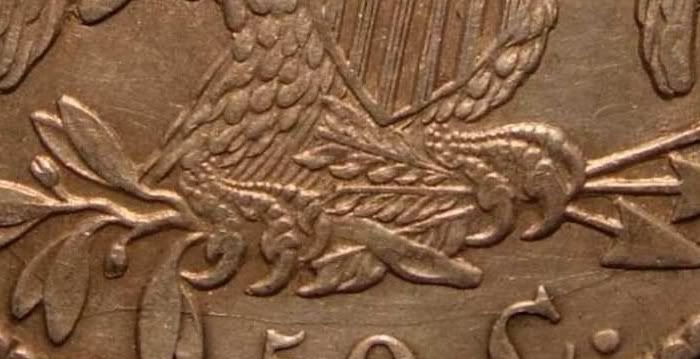
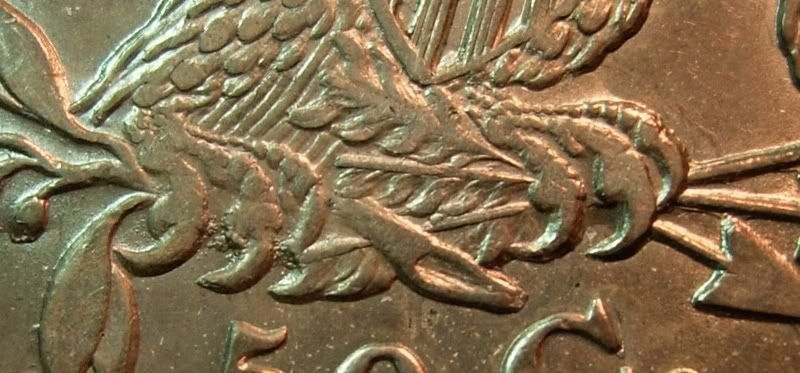
Take a look at just a few of the different varieties of arrowshafts used on these old timers. This is just a small sampling of the different arrowshaft punches. Remember that on these coins nearly EVERYTHING was hand punched into the dies. The arrowheads are hand punched as well as the arrow shafts. So much to look for on these. And to top it off, these are punched on manpowered screwpresses.

_________________
John
|
|
|
|
|
|
JRoccoVeteran Member
Posts: 418
Joined: 08 Oct 2004
|
|
| Posted: Fri Aug 24, 2007 7:32 pm |
|
|
Hey, I just saw on another thread about modern coinage there is still some hoopla over edge errors on some Pres dollars.
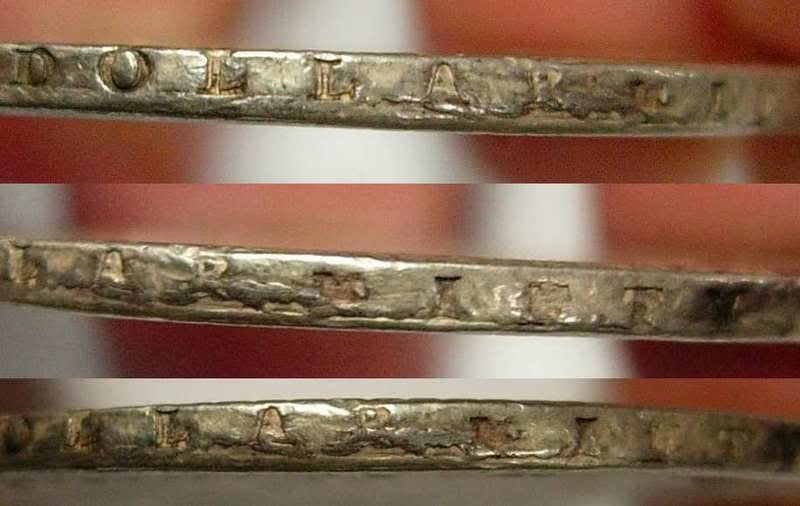
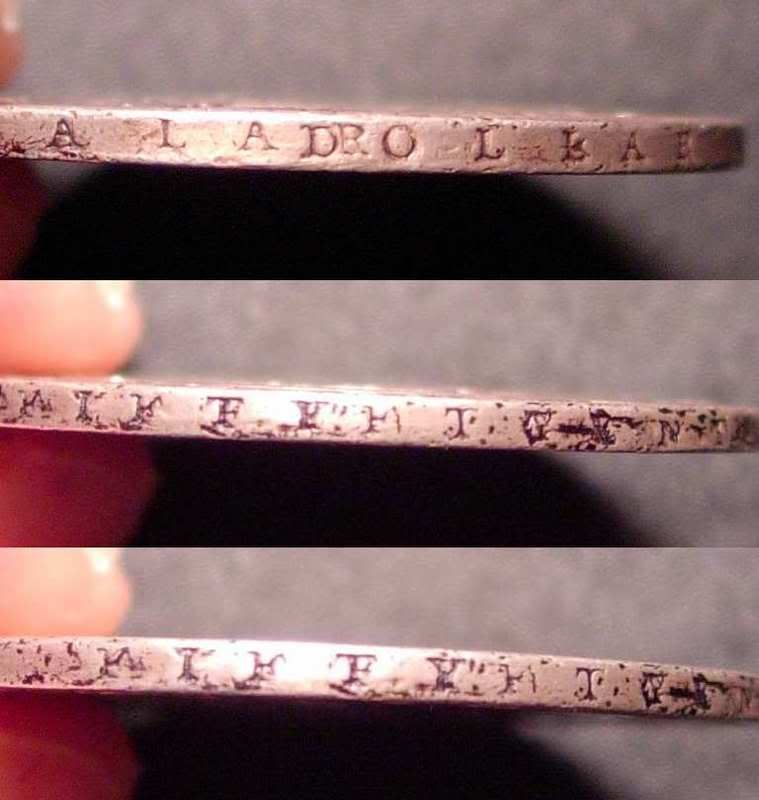
Here are a couple of nice edge errors on some older coins that I collect. This edge lettering was done on a Castaing machine, of course one by one and turned by hand. These are supposed to say FIFTY CENTS OR HALF A DOLLAR
Here is a nice rolled edge error on an 1811 half.
Or how about this really rare triple punched 1827 half.
I wish I could find ONE other example of a tripled letter edge error on a bust half dollar.
_________________
John
|
|
|
|
|
|
JRoccoVeteran Member
Posts: 418
Joined: 08 Oct 2004
|
|
| Posted: Tue Sep 04, 2007 8:19 pm |
|
|
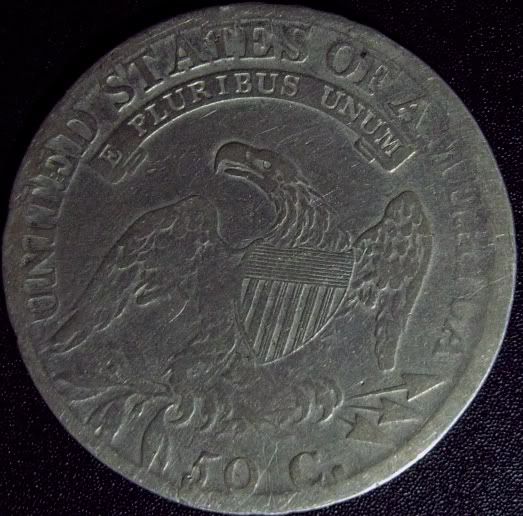
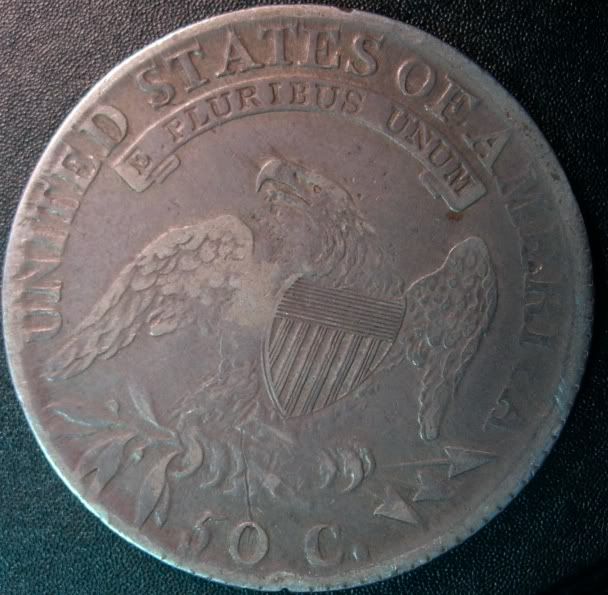
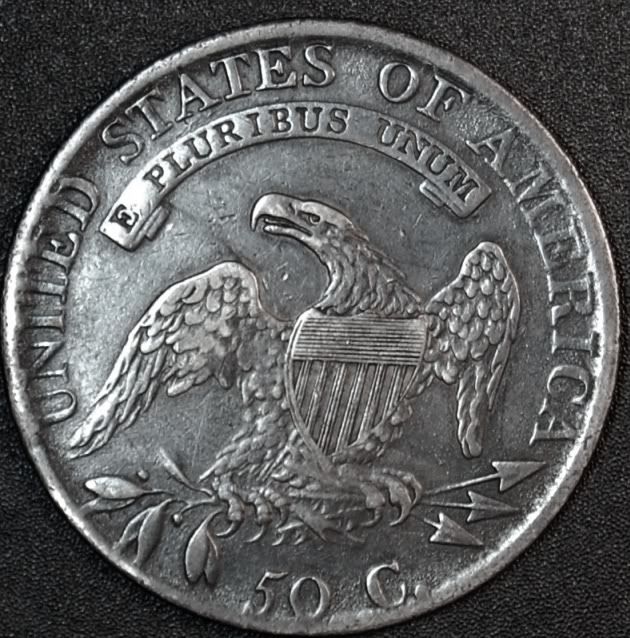
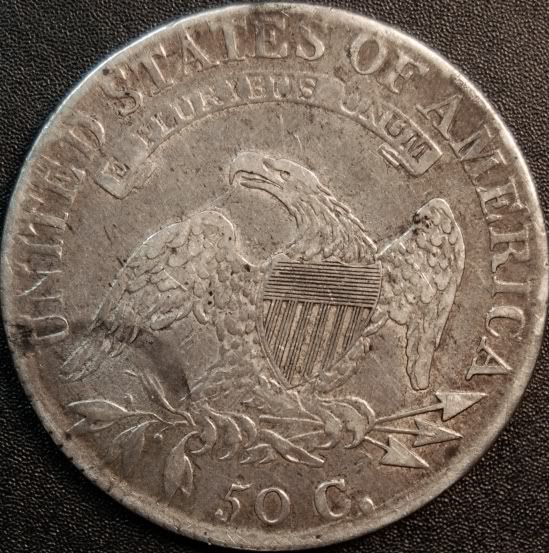
A fascinating area in this CBH series is the attempt by the mint workers to get every last coin out of these old dies as they could. For a modern example- when a strong clash occurs on a modern Lincoln, the dies are commonly lapped or polished to help hide the clashing, resulting in a coin with major polish marks (like we have all seen). Well back in the day, they really went to work to keep those dies working. One of the casualties of this overzealous lapping was the actual filing down of the reverse die resulting in what is referred to as a "single leaf" variety (the uppermost leaf). Examples of this are known to exist in the famous 1812,1813,1814 and 1817 single leaf varieties.
The rarest of these is the 1812 single leaf variety. Listed as a R6 variety with only about 13-30 known. This is one coin I do not own and unless I can cherrypick one, I will have to admire it from a distance, as a common VF graded 1812 single leaf sells in the $8000 range-that is if you can find one for sale.
The 1813 single leaf is an R5 coin-about 30-80 known, 1814 single leaf is an R4+ coin- about 80-120 known, and the 1817 single leaf is an R4 coin- 80-200 known.
If you ever look at this series for a coin purchase, look for this single leaf variety as these are HIGHLY searched for and HIGHLY collectable, not to mention off the wall expensive...unless you can cherrypick one.
Here are the 1813 (2 examples), 1814 and 1817 single leaf variety coins.
_________________
John
|
|
|
|
|
|
JRoccoVeteran Member
Posts: 418
Joined: 08 Oct 2004
|
|
| Posted: Sat Sep 29, 2007 11:38 am |
|
|
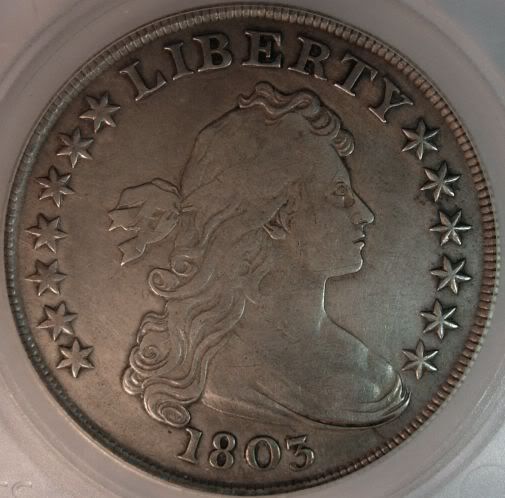
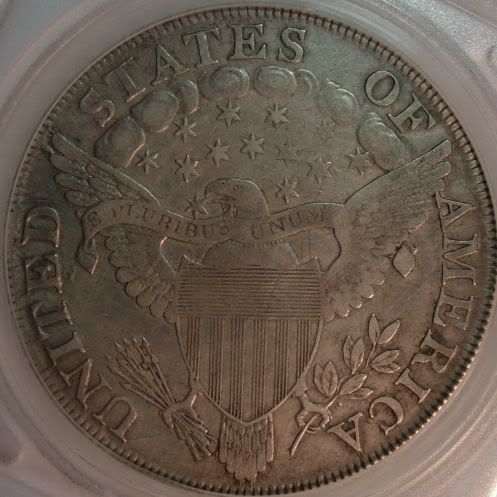
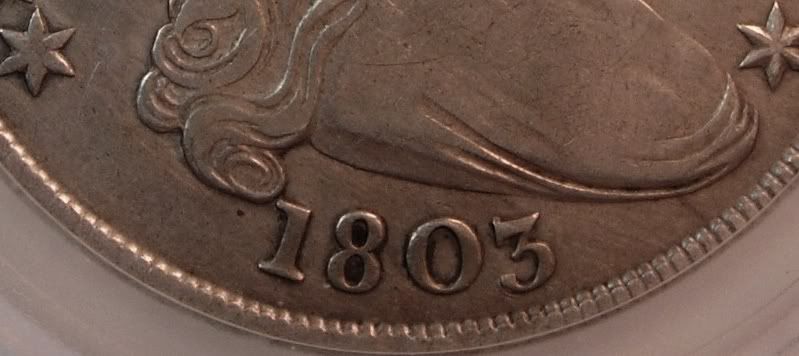
Here is a tough variety to hunt down, even tougher in this condition. This is an 1803 dollar. I am a half dollar collector, but couldn't pass on this one when I found it. It is the Large 3 variety with a clearly re-punched 3.
_________________
John
|
|
|
|
|
|
JRoccoVeteran Member
Posts: 418
Joined: 08 Oct 2004
|
|
| Posted: Thu Oct 11, 2007 8:30 pm |
|
|
Here is a really cool variety that few know of.
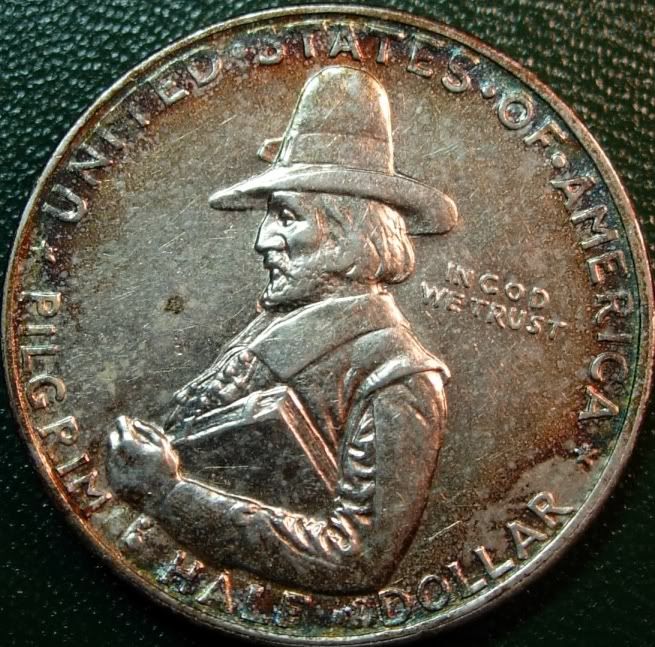
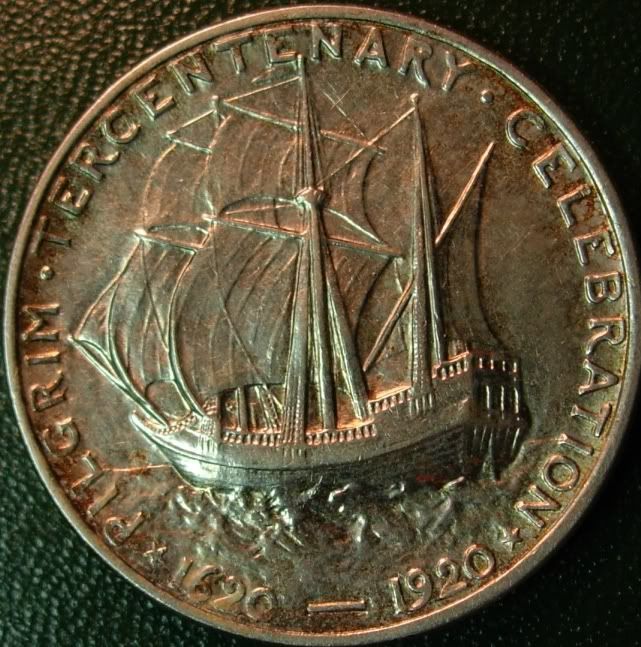
This is a 1920 Pilgrim Commem. I love this coin.
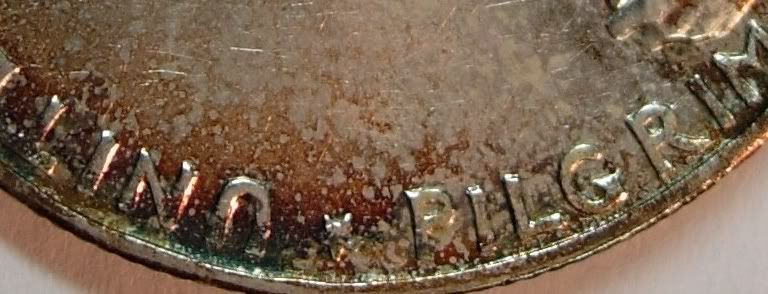
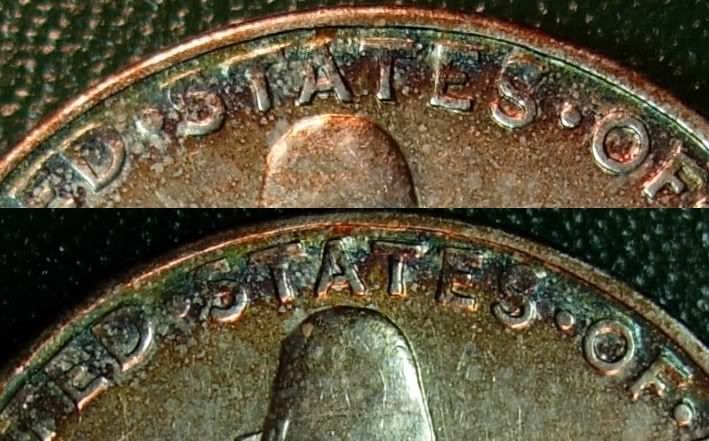
If anyone has this commem, take a close look at it. I was looking at this one to purchase it and took about 10 looks thru a glass to see if I was seeing what I thought I was seeing.This example shows a nice DDO with the pivot at approximately K5.
It is really hard to show in these pics because this one is so heavily album toned, I just can't quite show it like I would like to. If you look at the pic showing the word PILGRIM you can make out some of the minor doubling seen at K7-8 as split serifs, but the strong doubling can be seen CCW on the word STATES.
_________________
John
|
|
|
|
|
|
JRoccoVeteran Member
Posts: 418
Joined: 08 Oct 2004
|
|
| Posted: Sun Nov 04, 2007 10:01 am |
|
|
A board member was asking about FBL's on a Franklin half and it brought up a good question regarding varieties within any particular coin series. We all know that varieties include the usual DDO's,DDR's,O/D's,RPM's,RPD's etc etc, but there are always different things to be learned in each series that is particular to just that series or you may be leaving money on the table if you ever sell your pieces. Take VAM's in the Morgan series as an example of a series specific variety.
Bottom line...we all have to do our homework to learn the series we are collecting.
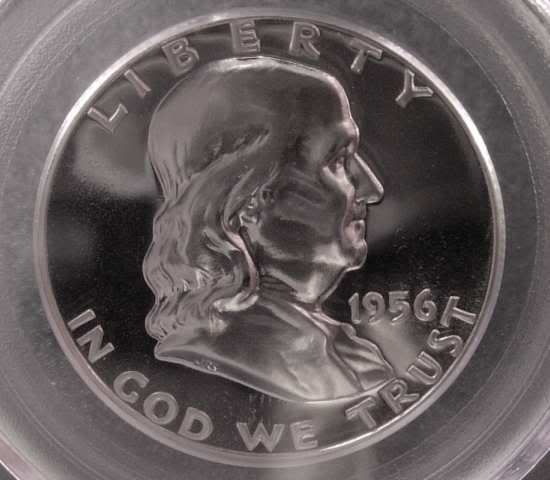
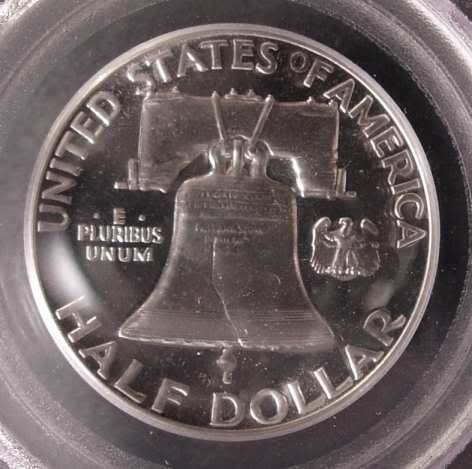
A good example of these specific varieties in the 1956 Proof Frankie. These come in 2 varieties, Type 1 and Type 2.
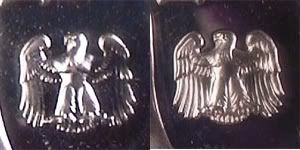
Sometime in 1956 the mint changed the reverse dies used to make Franklin Half Dollars. They added a lot of detail to the eagle. Each wing feather was made distinct. The breast feathers were also changed, they are well defined. Franklin half dollars made prior to 1956 all have the Type 1 eagle (less detail). After 1956 they all are Type 2. However there were a few Type one eagles made in 1956. These are tough to find.
Here is a pic showing the difference between the 2 eagles, Type 1 is the image on the left.
To put it in dollar terms, checking the PCGS pricing on these halfs, the difference for coins graded Proof 67 are as follows:
Non Cam- Type 1- $149, Type 2- $55
Cameo- Type 1- $575, Type 2- $90
Deep Cameo Type 1- $1,250, Type 2- $300
Pardon my old pics, but here is my example of a 1956 Type 1 Frankie. PCGS graded this Proof 67, but not CAM or DCAM. I believe that this is a strong CAM example and may send it back one day for another opinion, but don't want to give PCGS any of my money at this point being the coin is not for sale.
_________________
John
|
|
|
|
|
|
JRoccoVeteran Member
Posts: 418
Joined: 08 Oct 2004
|
|
| Posted: Sun Nov 04, 2007 6:02 pm |
|
|
Let me just add that when looking at Frankie halfs, some of the earlier years like 1950, 1951 are very very tough in CAM and DCAM examples. If you find one of these grab it because they are worth a fortune.
A 1950 Frankie grading 66 DCAM is a $50,000 plus coin 
_________________
John
|
|
|
|
|
|
|



