| Author |
Message |
lucky2Veteran Member
Posts: 222
Joined: 04 Jul 2003
Location: Texas
|
|
 Posted: Sun Jan 15, 2006 3:51 pm Posted: Sun Jan 15, 2006 3:51 pm |
 |
|
|
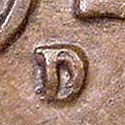
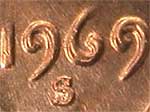
I am looking for coins that exibit the Rockwell Hardness Test. I am interested in photos of the raised dot that sometimes ends up on a struck coin. If you have one of these, any denomination (cents prefered) would you please post a photo.~thanks lucky2
|
|
|
|
|
 |
 coppercoinsSite Admin coppercoinsSite Admin
Posts: 2809
Joined: 29 Jun 2003
Location: Springfield, Missouri.
|
|
| Posted: Mon Jan 16, 2006 9:01 am |
|
|
I, for one, have no clue what you're talking about. I'm sure there are others here who don't know either. Could you show an example of what you are looking for?
_________________
C. D. Daughtrey
owner, developer
www.coppercoins.com
cd@coppercoins.com
|
|
|
|
|
|
 DanesterAdvanced Member DanesterAdvanced Member
Posts: 176
Joined: 18 Aug 2005
Location: Las Vegas, NV
|
|
| Posted: Sun Jan 22, 2006 8:57 pm |
|
|
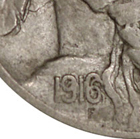
I don't know about the Rockwell hardness test,  unless you are talking about a test on the die that leaves an impression on the die and a raised dot on the coin - very interesting. There was an article a few years back in the Numismatist about these raised dots that were generally in the date area. I will have to see if I can "dig out" that article. It discussed that the dots may have helped the die sinker position the date. unless you are talking about a test on the die that leaves an impression on the die and a raised dot on the coin - very interesting. There was an article a few years back in the Numismatist about these raised dots that were generally in the date area. I will have to see if I can "dig out" that article. It discussed that the dots may have helped the die sinker position the date.
I have an 1883 No Cent Liberty Five-Cent that has a dot in the date area and another Liberty Five-Cent with a dash in the date area. But the Rockwell hardness test is interesting. Please explain why you think that may be the reason behind the dots.
The Danester
_________________
The Danester
"Research is what I do when I don't know what I doing" - Wernher Von Braun
|
|
|
|
|
|
 murphySenior Member murphySenior Member
Posts: 573
Joined: 02 Sep 2004
Location: New Albany, Indiana USA
|
|
| Posted: Tue Jan 24, 2006 11:23 pm |
|
|
|
|
|
|
|
|
DanesterAdvanced Member
Posts: 176
Joined: 18 Aug 2005
Location: Las Vegas, NV
|
|
| Posted: Wed Jan 25, 2006 11:09 pm |
|
|
The more I think about it, the more I feel it is a good possiblity the mint may have used the Rockwell Hardness test on its dies. If so, then yes small raised dots could appear on coins. I will follow up with the Numistatist article.
http://www.gordonengland.co.uk/hardness/rockwell.htm
The Danester
_________________
The Danester
"Research is what I do when I don't know what I doing" - Wernher Von Braun
|
|
|
|
|
|
DanesterAdvanced Member
Posts: 176
Joined: 18 Aug 2005
Location: Las Vegas, NV
|
|
| Posted: Wed Jan 25, 2006 11:35 pm |
|
|
Read what Idhair is saying in the 4th post down in this link. In making a die during the annealing process you want the steel soft by cooling it slowly, but after the die is properly impressed a few times you want to harden the die up by cooling is fast. So I think the mint would want quality control to monitor the hardness of the dies with the some Rockwell Hardness Tests.
http://boards.collectors-society.com/showflat.php?Cat=0&Board=domestic&Number=1047526&page=0&fpart=2
The Danester
_________________
The Danester
"Research is what I do when I don't know what I doing" - Wernher Von Braun
Last edited by Danester on Mon Apr 30, 2007 9:48 pm; edited 1 time in total
|
|
|
|
|
|
DanesterAdvanced Member
Posts: 176
Joined: 18 Aug 2005
Location: Las Vegas, NV
|
|
| Posted: Thu Jan 26, 2006 12:04 am |
|
|
This is probably a better link that expands a little more to include a discussion of controling the hardness of the planchets too by annealing and proper cooling. Looks like that contributed to some of poorly struck New Orleans Morgans and Buffalo Nickels. It is now a obvious to me that the US mint did use the Rockwell Hardness test to "stay on top" of the hardness of their dies and planchets. Now let's see if we can find any coins (copper or other) with the tell-tale raise dot that was transfered from an impression on the die. It's an identifying feature just like a die crack.
http://boards.collectors-society.com/showflat.php?Cat=0&Board=domestic&Number=1047526&page=0&fpart=all
The Danester
_________________
The Danester
"Research is what I do when I don't know what I doing" - Wernher Von Braun
|
|
|
|
|
|
 RobertSenior Member RobertSenior Member
Posts: 896
Joined: 05 Jul 2003
Location: Oklahoma
|
|
| Posted: Fri Jan 27, 2006 9:30 pm |
|
|
I have a little familiarity with that. It's a physical test used to measure the hardness of metals. You mash a small diamond cone or a steel ball onto the metal being tested. You do so with a specific amount of force for a specific amount of time. The cone/ball leaves a "dent" or indentation in the metal being tested. The depth/diameter of the inentation gives a relative hardness- the larger the indentation the softer the metal; the smaller the indentation the harder the metal.
This test is used extensively in the manufacturing industry. Anything metal that is heat treated, welded, etc can use this test to ensure things went correctly. You can't tell un-hardend steel from hardened steel by just looking at it. The Rockwell Hardness test can quickly, easily, and accuratley distinguish the two.
http://esty.ancients.info/numis/
There are other hardness tests BTW such as Vickers, Knoop, Brale, etc.
I hadn't thought of hardness testing on the faces of finished dies. I would have thought they did those tests on the edge of the die. Maybe such things do exist. Here's one that comes to mind:
http://coins.heritagegalleries.com/common/info/press/default.php?ReleaseID=300
the dot is on the reverse at 6 o'clock on the cent, and on the reverse below the wreath on the dime and quarter.
There are some Australian penny varieties involving dots as well.
|
|
|
|
|
|
 coopExpert Member coopExpert Member
Posts: 3402
Joined: 17 Sep 2003
Location: Arizona
|
|
| Posted: Sat Mar 04, 2006 8:27 pm |
|
|
I only thought Rockwell made Saws. LOL See what I get for thinking.... 
_________________
Richard S. Cooper
You may be only one person in the world, but you may also be the world to one person.
|
|
|
|
|
|
murphySenior Member
Posts: 573
Joined: 02 Sep 2004
Location: New Albany, Indiana USA
|
|
| Posted: Sat Mar 04, 2006 9:11 pm |
|
|
No that's Black & Decker, lol.
_________________
~ Murph ~
|
|
|
|
|
|
|



