 coppercoinsSite Admin coppercoinsSite Admin
Posts: 2809
Joined: 29 Jun 2003
Location: Springfield, Missouri.
|
|
 Posted: Thu Oct 19, 2006 10:42 pm Posted: Thu Oct 19, 2006 10:42 pm |
 |
|
The question:
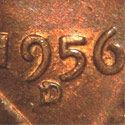
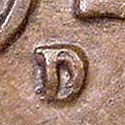
"I found a minor RPM on a Lincoln cent and can't find anything listed about it. What gives?"
The answer - and it's not a short one:
Many problems exist in listing minor RPMs or doubled dies that many who find them don't necessarily think of when asking this question. I'll do my best to bring you over to the attributor's side of things and expand on why coins that are definite RPMs cannot be listed in the guides.
1. The RPM might be too minor to list. Often times people use 30 power microscopes to search coins, and when they find anything that could be a keeper, they dig around expecting to stick a die number on it. Within the community of listing systems, a general rule of thumb exists that is often not advertised. An anomaly on a coin has to be viewable to the eye under low power and has to be easily photographable under 20-30X to be a listable variety. This knocks out a lot of the very minor "hairline" die varieties.
2. Any minor RPM or doubled die NEEDS to be on a higher grade circulated or uncirculated coin to be acceptable as a new listing. Reason for this is because we have to pull identifying markers off the coin, photograph them, write about them, and describe them in detail good enough to earmark that RPM as having these specific characteristics that are different from any other die. Most of the time dirty circulated or more heavily worn coins don't have these markers because they have been damaged or worn away. This is the only way we can be authoritative in listing what we know to be "different" dies. If we get into listing every circulated example of minor anomalies submitted, we will definitely end up double listing single dies because of a lack of information - even to us - because not enough could be derived from the less than stellar first example we examined.
3. The minor anomaly (whether it be a mintmark or doubled die) needs to have enough markers to be discernible as something different. This overlaps my previous two points, but is different in that if a minor RPM is submitted and the coin shows no markers, it's useless to list it because nobody is going to be able to identify a second example. These dies are often lost in the mix, and I can tell you there are dozens of them out there. If you have a minor die variety to submit, regardless of who you submit it to, make sure you can find markers on it before sending it in...because if you can't find them, the submittor can't find the (all well because they might not be there), they aren't going to list the die if they have nothing to use in describing it.
I hope this helps someone out there. I know there's a fair amount of excitement in finding 'anything' that matches the criteria of a die variety, but some of them are just too minor, too worn, or too plain to be listed. I kept them in a separate place for years, then finally started tossing them back into the pile because they would never be able to do anyone any good.
Rule of thumb: If it's minor, make sure it's AU or better and undamaged. If that fits, make sure you can find die scratches, a defining die gouge, crack, break, or something that's on the die that fingerprints that die. If neither of these fit save yourself some trouble and toss it back in the pile.
While the science of attributing die varieties is rather finite, it also has its drawbacks. The more collectors understand that not EVERYTHING is collectible and listable with a die number, the better off everyone will be. I can say from experience that attributing is very hard work sometimes, especially when we get a submission of minor die varieties that come from a year of issue in which they are plentiful - like 1960D cent RPMs...with over 150 of them listed to date, identifying minor ones is hard enough - let alone trying to identify a minor one with wear and no markers.
Questions? Comments? I'll follow this thread and answer all I can to the best of my ability.
_________________
C. D. Daughtrey
owner, developer
www.coppercoins.com
cd@coppercoins.com
|
|
|