| Author |
Message |
 eagamesExpert Member eagamesExpert Member
Posts: 3013
Joined: 15 Nov 2005
|
|
 Posted: Tue Nov 27, 2007 2:49 pm Posted: Tue Nov 27, 2007 2:49 pm |
 |
|
BJ,
That thread has some good info, it's a subject that gets a lot of peoples feathers ruffled. A lot of good points are in the thread and it's a good read for people that want to understand everyones reasoning on this 
I think when most "die variety collectors" use the term "variety" they're using it with the meaning of "die variety".
With that in mind it makes more sense. It's right that VAMs can be anything, a die state or an error or worn die or a die variety and VAM collectors think of all VAMs as "varieties". It's ok in the english language to use the word variety when saying something like "a variety of strike doubling with a doubled VDB" but these are not what I think of as real die varieties and to most die variety collectors they're not worth a premium but good for education pieces.
The reason it matters is many people buy 1969-S machine doubled pieces because they read in a book that the 1969-S doubled die is worth $100K and think they found a bargain. Die variety collectors try to help educate them about what it means so they don't overpay for ones that don't have the same value or spend money getting them graded then feel upset when the holder says nothing but date and grade.
There are some borderline coins that are mostly errors on dies but more of a die state or die damage and not exactly what we think of as die varieties but they still have some good value. Some examples: high/low leaf quarters, 1922 plain cents, 3 leg buffs but we're careful not to assume any worn die or small crack or gouge which is similar to these coins will also have a high value and many coins have a crack or gouge and get no premium. The best explanation is publicity, those coins got publicity and got listed in the red book and that brought the values up to what they are today.
That's my take on the variety subject, I'm sure everyones is different. LOL
Great link for 1969-S:
http://www.pcgs.com/articles/article_view.chtml?artid=3532&universeid=313
_________________
Ed
|
|
|
|
|
 |
 StevenExpert Member StevenExpert Member
Posts: 1298
Joined: 30 Nov 2005
Location: S/E Missouri
|
|
| Posted: Tue Nov 27, 2007 4:19 pm |
|
|
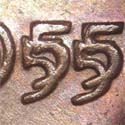
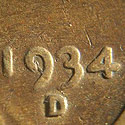
Here's one I kept for discussion. Looks like strike doubling of the designer's initials. Accually looks to be underscored. Thought it was interesting I don't expect it to have a premium. educational piece only.
Steven

|
|
|
|
|
|
 GarryNExpert Member GarryNExpert Member
Posts: 1296
Joined: 09 Jul 2003
Location: Chicago
|
|
| Posted: Tue Nov 27, 2007 9:23 pm |
|
|
|
I have about 50 1969-S cents that I bought from a coin shop in Tulsa about 10 yrs ago. None exhibit that VDB doubling.
|
|
|
|
|
|
 RhubarbSenior Member RhubarbSenior Member
Posts: 856
Joined: 24 Jan 2007
Location: West Georgia
|
|
| Posted: Wed Nov 28, 2007 3:40 pm |
|
|
| GarryN wrote: |
| I have about 50 1969-S cents that I bought from a coin shop in Tulsa about 10 yrs ago. None exhibit that VDB doubling. |
I know the feeling. I have around 20 roll's and have yet to see it either. Maybe it's very uncommon? Sure would like to find one though.
David
_________________
There is no shame in not knowing; the shame lies in not finding
out.
|
|
|
|
|
|
|



