| Author |
Message |
 JRoccoVeteran Member JRoccoVeteran Member
Posts: 418
Joined: 08 Oct 2004
|
|
 Posted: Wed Aug 24, 2005 12:13 pm Posted: Wed Aug 24, 2005 12:13 pm |
 |
|
|
|
|
|
|
 |
JRoccoVeteran Member
Posts: 418
Joined: 08 Oct 2004
|
|
| Posted: Wed Aug 24, 2005 4:08 pm |
|
|
|
|
|
|
|
|
 coppercoinsSite Admin coppercoinsSite Admin
Posts: 2809
Joined: 29 Jun 2003
Location: Springfield, Missouri.
|
|
| Posted: Wed Aug 24, 2005 4:46 pm |
|
|
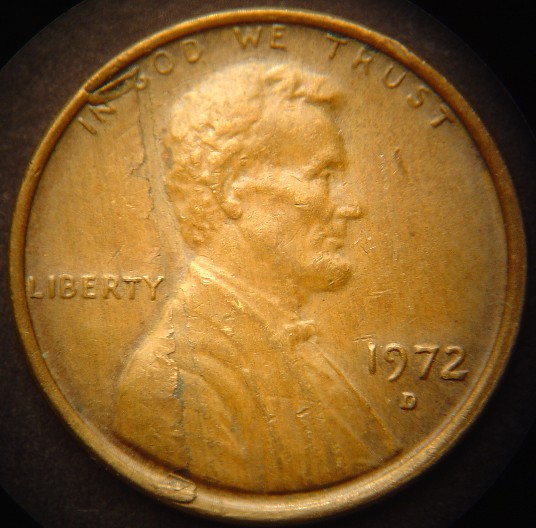
Lamination peels usually occur after the strike. Since the coin was struck with the metal in place, then peeled off after the strike, you can see the mintmark through the peel - not at all unusual.
The mintmark is an absence of strike, a recess in the die that lets the metal flow upward. What you're seeing is the base - the foundation of the raised area.
_________________
C. D. Daughtrey
owner, developer
www.coppercoins.com
cd@coppercoins.com
|
|
|
|
|
|
 murphySenior Member murphySenior Member
Posts: 573
Joined: 02 Sep 2004
Location: New Albany, Indiana USA
|
|
| Posted: Thu Aug 25, 2005 10:12 am |
|
|
That's a nice lamination error. I've seen a few photos of them around here-n-there, but I was able to find one while searching through rolls of circulated cents about a year ago. And it does seem strange at first to see the date is carried through despite the lam error. The strike definitely goes through the lamination layer and beyond. Here's photos of my find:


_________________
~ Murph ~
|
|
|
|
|
|
|



