Detecting counterfeit cent.
|
  |
| Author |
Message |
GabeSenior Member
Posts: 691
Joined: 11 Jul 2003
Location: Gainesville, FL
|
|
 Posted: Tue Jan 24, 2006 9:30 pm Posted: Tue Jan 24, 2006 9:30 pm |
 |
|
What are the things to look for when trying to detect a counterfeit cent? Im talking about 1909S VDB cents, 1914D cents, 1955 DDO cents and all the other major varieties and key dates.
I have read many times Chucks analysis of a struck counterfeit 1955 DDO cent, and find it a very interesting area which most of us collectors should learn about. I would like to be able to tell the real deal from the fake, or is it better to buy slabbed coins?
_________________
-Gabe
|
|
|
|
|
 |
 coppercoinsSite Admin coppercoinsSite Admin
Posts: 2809
Joined: 29 Jun 2003
Location: Springfield, Missouri.
|
|
| Posted: Wed Jan 25, 2006 1:33 am |
|
|
It's actually far better to learn the difference for yourself, because even the slabbers aren't infallable. If they let a fake get into one of their holders and you buy it with complete trust in their judgement, you still can't be sure for yourself that they were right without knowing how to check the coin out.
In addition to the following most common alterations, I have seen alterations on 1940S cents (to look like 1910S), 1941S cents (to 1911S), and to 1948 cents (to create 1943 bronze cents). In all cases the difference is obvious to all but very novice collectors...the date is the wrong shape or size and/or the entire design doesn't match the date in question.
The 1909S VDB cent - two most common counterfeit methods are to add a mintmark to a common 1909 VDB cent or to add the initials on the reverse of a genuine 1909S cent. The first is far more common than the latter for obvious reasons. Best thing to learn to look for is tooling marks in the areas of concern, and to know very well what the real mintmark looks like. Most of the faked mintmarks and initials are the wrong size and/or shape.
The 1914D cent - by far the more common method of counterfeiting is to scrape the first 4 of a 1944D cent down to look like a 1914D. To anyone but the most novice these are obvious. The date is shaped wrong, the design is too bowl shaped, and the initials show up on the shoulder - genuine 1914 cents don't have initials on the shoulder. The second method is to add a mintmark to a genuine 1914 cent. Again, learn what the real deal looks like (1913D or 1915D will do). Once you know a real mintmark, anything else will look odd.
The 1922 "no D" cent - As far as I'm concerned you're on your own here. I have always refused to recognize these as a "key date" coin. They are a common problem for the era, worn out dies. They most certainly exist in most dates of the era, but because Philly minted cents in these years, they aren't recognized as anything special...I have news...I don't believe the 1922 examples are any more special than the other dates where this was certain to happen. I go against the grain here, but we're all entitled to opinions. I don't authenticate or study them. Anyone who pays a vast premium for them is following the market, not their head.
The 1931S cent - Two common alterations, and VERY few known struck counterfeits. First alteration, as before, added mintmarks on common 1931P cents. Wrong shape, different color, tooling marks, or a seam around the mintmark are all signs of added mintmarks. Second common alteration is to reshape the 6 of a 1936S cent into a 1. Very easy to detect, the 3 is the wrong size and shape. I have seen one struck counterfeit, and it was crude. I have seen one spark erosion counterfeit, and while better than the struck counterfeit, it was also easy to spot. Most struck counterfeit coins are the correct weight because blanks are usually easy to find - especially with cents. The difference will be in the rims and softness of strike. Sand cast and spark erosion counterfeits have problems in the details - grainy details, etc. usually easy to spot.
The only way to fake a 1955 DDO with any level of confidence is a struck counterfeit...and most of those are too obvious to pass the eye of someone who knows what the rim of a late wheat looks like. Most of the counterfeits have either sharp rims like a proof, or have rims that look too thin and wire like. Study your normal cents closely and a struck counterfeit will stick out like a sore thumb...the doubling is just a clue that the coin is more likely a counterfeit than a normal coin of the same date would be...in other words, if you have a normal 1955 cent, 99.99% chance it's genuine. Use one to compare the look and feel to a 55 DDO before purchasing one raw. If it's counterfeit something will stick out at you and tell you so.
In my time I have seen over a hundred fakes and alterations. To date not one single Lincoln cent alteration or fake has escaped me in detecting it within a few short seconds. They are usually rather obvious and many are painfully easy to detect. Buy only from reputable dealers or collectors who know their stuff and have a very good return policy. Have any coins in question authenticated in a hurry, then return them if they aren't good with an explanation as to how they were determined to be bad. I will extend my services to anyone who needs expedited help with a possible problem key date coin.
And at last, I hate to be so blunt about this, but I'm gonna lay the truth out. This goes to everyone in the hobby, not anyone in particular. If you simply cannot find it within yourself to use enough sense to get used to the coins long enough to be able to detect the most common types of counterfeits and alterations before buying one, perhaps you're not yet ready to own one of the more expensive coins. Do yourself and everyone else a favor and get more education in detecting problems before you jump in. Numismatics is a hobby of education, patience, and a devotion to detail. Most of the problems associated with alterations are easy to see if you look and use your noodle. Anyone who just throws down their cash without doing the homework first is asking to be burned.
_________________
C. D. Daughtrey
owner, developer
www.coppercoins.com
cd@coppercoins.com
|
|
|
|
|
|
GabeSenior Member
Posts: 691
Joined: 11 Jul 2003
Location: Gainesville, FL
|
|
| Posted: Wed Jan 25, 2006 10:24 am |
|
|
Thanks for the information Chuck!
I will try to study the normal 1955 cents, and hope that a faked or altered coin jumps at me as you say it should.
I have had no problem detecting altered 1944D cent to make them look like 1914D cents, and all other similar alterations.
I will also study my 1909 VDB and my 1909S cent to get a feel of how a real 1909S VDB should look like.
_________________
-Gabe
|
|
|
|
|
|
 murphySenior Member murphySenior Member
Posts: 573
Joined: 02 Sep 2004
Location: New Albany, Indiana USA
|
|
| Posted: Wed Jan 25, 2006 11:44 am |
|
|
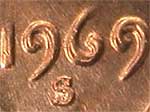
Counterfeit:

_________________
~ Murph ~
|
|
|
|
|
|
coppercoinsSite Admin
Posts: 2809
Joined: 29 Jun 2003
Location: Springfield, Missouri.
|
|
| Posted: Wed Jan 25, 2006 2:02 pm |
|
|
When educating one's self and others in the realm of numismatics it is every increasingly important to use correct terminology. That 1914D image is of an altered coin, not counterfeit. The difference is that yours is a genuine coin, just not like it was issued. A counterfeit starts out as a fake.
_________________
C. D. Daughtrey
owner, developer
www.coppercoins.com
cd@coppercoins.com
|
|
|
|
|
|
murphySenior Member
Posts: 573
Joined: 02 Sep 2004
Location: New Albany, Indiana USA
|
|
| Posted: Wed Jan 25, 2006 3:49 pm |
|
|
I'll buy that. Thank you. 
_________________
~ Murph ~
|
|
|
|
|
|
 eagamesExpert Member eagamesExpert Member
Posts: 3013
Joined: 15 Nov 2005
|
|
| Posted: Wed Feb 01, 2006 4:54 pm |
|
|
Another trick they pull is with 1909-S VDBs, they can take a low grade 1909-s worth $20 and file the back off then a 1909-P VDB worth $2 and file the front off and glue them together. If it is in a flip it might not be easy to notice.
They can also pull the same trick they use to make 2 headed coins where they machine one out along the rim and insert the other like a plug.
_________________
Ed
|
|
|
|
|
|
 coopExpert Member coopExpert Member
Posts: 3402
Joined: 17 Sep 2003
Location: Arizona
|
|
| Posted: Sun Mar 05, 2006 10:23 am |
|
|
Alan: Along with these:

_________________
Richard S. Cooper
You may be only one person in the world, but you may also be the world to one person.
|
|
|
|
|
|
murphySenior Member
Posts: 573
Joined: 02 Sep 2004
Location: New Albany, Indiana USA
|
|
| Posted: Sun Mar 05, 2006 4:02 pm |
|
|
Wow Coop, nice photo-play!
_________________
~ Murph ~
|
|
|
|
|
|
foundinrollsMember
Posts: 47
Joined: 04 Mar 2006
Location: Western Washington
|
|
| Posted: Wed Mar 15, 2006 12:36 pm |
|
|
Hi,
If you are a member of the ANA, they have a picture of a die struck 1909 S VDB counterfeit on their website in the members section. It is phenomenal. First discovered in 1982, there are specific diagnostics to determine if it is indeed the fake.
1. A long, thin depression on the rim parallel to the edge above the I in IN
2. A small diagonal depression in the rim above the E in WE
3. A large depression parallel to Lincoln's coat lapel
4. A small depression in the O of ONE from 2 to 3 o'clock.
It is a brilliant fake and is practically flawless. The small "die markers" are the only way to detect it.
It is also reported that the edge shopws a slight criss-cross pattern.
Have Fun,
Bill
|
|
|
|
|
|
 Bob PSite Admin Bob PSite Admin
Posts: 3482
Joined: 01 Jul 2003
Location: Niceville, Florida
|
|
| Posted: Wed Mar 15, 2006 6:20 pm |
|
|
|
|
|
|
|
|
|
|
|
| Page 1 of 1 |
|
|



