| Author |
Message |
 ndgofloNew Member ndgofloNew Member
Posts: 9
Joined: 11 Jun 2006
Location: Kokomo, Indiana
|
|
 Posted: Wed Oct 18, 2006 9:29 am Posted: Wed Oct 18, 2006 9:29 am |
 |
|
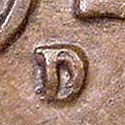
Hi all, just looking through some Lincolns last night and came across this.
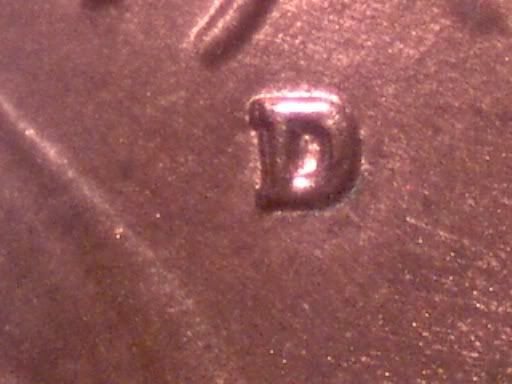
I can only find one listing for an '84-D RPM, but I don't think that it is the same as this.
At first, I thought that it may be machine doubling, but I cannot find any traces of any doubling anywhere except for the mint mark. Is it possible to have machine doubling on just the mint mark.
Any help at all is greatly appreciated.
|
|
|
|
|
 |
 coopExpert Member coopExpert Member
Posts: 3402
Joined: 17 Sep 2003
Location: Arizona
|
|
| Posted: Wed Oct 18, 2006 10:32 am |
|
|
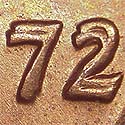
Welcome to coppercoins ndgoflo! I had one like that the other day. The mintmark was all that showed machanical doubling and the on the reverse the letter C on Cent was distorted. So Yes it can happen. Yours looks like a tougher call than The one I found.

Yours looks less step like than mine. So I will let others voice their opinion. Bob may need to see the coin to see for sure. So the answer to your question is YES, if machine doubling can happen on just mintmarks. But as for yours being a RPM, here is a question for you. Does the doubling seem step like or rounded. If it is step like, then it is probably a MD. It if it is rounded it could be a RPM. Tough call from what I can see on yours.
_________________
Richard S. Cooper
You may be only one person in the world, but you may also be the world to one person.
|
|
|
|
|
|
 Bob PSite Admin Bob PSite Admin
Posts: 3482
Joined: 01 Jul 2003
Location: Niceville, Florida
|
|
| Posted: Wed Oct 18, 2006 4:05 pm |
|
|
At first glance, it looks like an RPM to me. As Coop said though, I really need to see it in hand to determine if it is or isn't.
_________________
Bob Piazza
Site Admin/Moderator
Attributer/Photographer
bobp@coppercoins.com
mustbebob1@gmail.com
|
|
|
|
|
|
wavysteps2003Expert Member
Posts: 1344
Joined: 25 Feb 2005
|
|
| Posted: Thu Oct 19, 2006 7:43 am |
|
|
Speaking of which, here are a few that can be questionable as RPMs. Things like these can tear your har out.
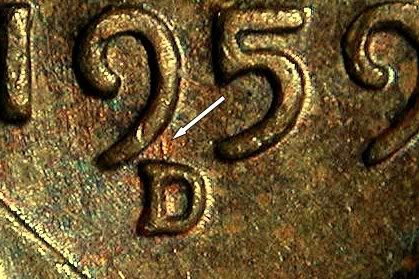
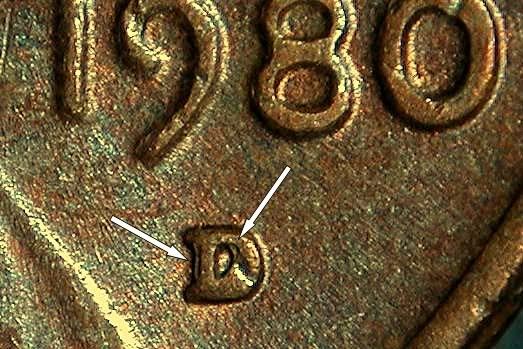
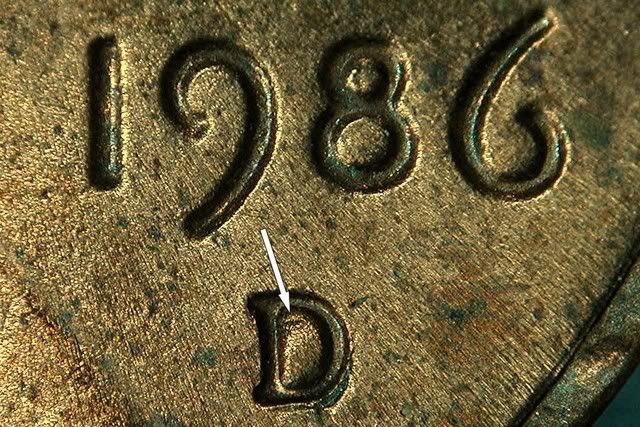
Of the three shown, the 1986-D is probably the most likely canidate for a RPM. The interesting thing about the 1980-D is; can machine doubling be so selective in doubling just one part of a mint mark and not the other? If you will notice, the vertical and upper curve of the "D" is doubled, however, the serifs are not. The 1959-D may very well be a die scratch, but that can be questioned with its proximity to the mintmark. What do you think?
WAVYSTEPS2003 aka BJ Neff
|
|
|
|
|
|
 coppersleuthAdvanced Member coppersleuthAdvanced Member
Posts: 119
Joined: 21 Jul 2006
|
|
| Posted: Thu Oct 19, 2006 11:59 am |
|
|
Good point on the wide variety of strike doubling characterisitcs.
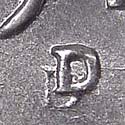
Here is a solid example I have from a 1969 proof set, where the inside of the Lincoln mint mark (upper part of MM) looks somewhat more rounded, but the bottom part of the MM is clearly strike double. Hence, it's all strike doubling.
http://static.flickr.com/83/274010742_ccaa4add97.jpg
As we know, some looks can be very deceiving. Just notice the strike doubles being hawked as "true" doubled dies on Ebay without disclosure of the facts.
|
|
|
|
|
|
 coppercoinsSite Admin coppercoinsSite Admin
Posts: 2809
Joined: 29 Jun 2003
Location: Springfield, Missouri.
|
|
| Posted: Thu Oct 19, 2006 10:52 pm |
|
|
NDgoflo - I would say yours is an RPM from the photo provided and would need to see the coin in person to confirm my opinion.
Coop - I think the same about yours. It shows too many characteristics of being an actual RPM to just toss it back. Some machine doubling can carry similar traits, but yours looks more like a low-profile sharply defined RPM.
Wavysteps - The 1959D is an RPM. The 1980D is not. The 1986D is an RPM. How I can tell - experience and knowledge of the years those coins were minted. Not trying to be a smart ass about it, but experience does count sometimes.
Coppersleuth - Very typical and somewhat confusing machine doubling that shows frequently on proofs minted from 1969 through 1973. Best thing to remember is this....no notching, and the doubling takes up part of the profile thickness of the letters. Look at how thin the bottom of the 'D' ended up after it was smashed on the bottom by the second strike. That would naturally not happen if the doubling were in the die and impressed into the coin with a single strike. I know you probably know this because you are posting the image as machine doubling...but every bit of explanation helps with other people viewing your image - which was a very good one.
_________________
C. D. Daughtrey
owner, developer
www.coppercoins.com
cd@coppercoins.com
|
|
|
|
|
|
coppersleuthAdvanced Member
Posts: 119
Joined: 21 Jul 2006
|
|
| Posted: Fri Oct 20, 2006 5:36 am |
|
|
Very helpful input as always, Chuck. Thanks! That's why i love this site. Great learning opportunities every day 
|
|
|
|
|
|
ndgofloNew Member
Posts: 9
Joined: 11 Jun 2006
Location: Kokomo, Indiana
|
|
| Posted: Fri Oct 20, 2006 12:30 pm |
|
|
Coppercoins - Can I assume that you would like to see this coin first hand? Are you accepting coins for attribution at this time? If so, I have a bunch set aside that I can't find a positive attribution for. I could pick out the most likely candidates to send with this one to make it worth my while so to speak.
Are your attribution instructions the same now as what you have printed in your book? Please let me know how to proceed.
|
|
|
|
|
|
coopExpert Member
Posts: 3402
Joined: 17 Sep 2003
Location: Arizona
|
|
| Posted: Fri Oct 20, 2006 12:33 pm |
|
|
Good thing I saved mine them. I will put it in the send to Bob Pile. When I get another batch ready for him.
_________________
Richard S. Cooper
You may be only one person in the world, but you may also be the world to one person.
|
|
|
|
|
|
|



