LIBERTY
|
  |
| Author |
Message |
 StevenExpert Member StevenExpert Member
Posts: 1298
Joined: 30 Nov 2005
Location: S/E Missouri
|
|
 Posted: Mon Dec 04, 2006 6:15 pm Posted: Mon Dec 04, 2006 6:15 pm |
 |
|
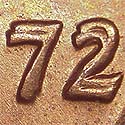
Just a few to show how difficult some are to see, epecially with a lot of wear, without being pointed out and some that are not so difficult to see.
I guess I was bored 
Steven


Last edited by Steven on Thu Dec 14, 2006 9:37 pm; edited 4 times in total
|
|
|
|
|
 |
 DickExpert Member DickExpert Member
Posts: 5780
Joined: 21 Sep 2006
Location: Rialto, CA.
|
|
| Posted: Mon Dec 04, 2006 7:18 pm |
|
|
Steven, the only thing better than these, is having the "gouge" for the final exams!
Dick
_________________
" Deja Moo: The feeling that you've heard this bull before".
|
|
|
|
|
|
 Bob PSite Admin Bob PSite Admin
Posts: 3482
Joined: 01 Jul 2003
Location: Niceville, Florida
|
|
| Posted: Wed Dec 06, 2006 5:36 pm |
|
|
Very nicely done Steven. That is a GREAT learning tool! I guess the only way I would improve upon that is to list the class of doubled dies they are. What do you think??
_________________
Bob Piazza
Site Admin/Moderator
Attributer/Photographer
bobp@coppercoins.com
mustbebob1@gmail.com
|
|
|
|
|
|
StevenExpert Member
Posts: 1298
Joined: 30 Nov 2005
Location: S/E Missouri
|
|
| Posted: Wed Dec 06, 2006 5:42 pm |
|
|
Bob what would be nice would be to have a photo of each class but I don't know that I could come up with a complete set. I still have a bit of a problem understanding some of them. But I may give that a try. I am sure though that if a set was compliled for the site you would probably want some that are of better examples for the educational purpose even though when searching this is probably similar to what will be found in circulated cents.
Steven
Hows about I cheat and ask the class of each photo
#1 Class 6
#2 Class 3
#3 Class 2
#4 Class ? 3 maybe
#5 Class ? 3 maybe
#6 Class 5
#7 Class 1
#8 Class ? 8 maybe
Still bein' lernt  if this is right let me know and I will add to the photos. if this is right let me know and I will add to the photos.
|
|
|
|
|
|
DickExpert Member
Posts: 5780
Joined: 21 Sep 2006
Location: Rialto, CA.
|
|
| Posted: Wed Dec 06, 2006 7:40 pm |
|
|
Steven, if'n you are still being lern't, then I must just be gittin in "kinney garten"!
Dick
_________________
" Deja Moo: The feeling that you've heard this bull before".
|
|
|
|
|
|
GabeSenior Member
Posts: 691
Joined: 11 Jul 2003
Location: Gainesville, FL
|
|
| Posted: Wed Dec 06, 2006 11:34 pm |
|
|
Very nice pictures!!!
Sometimes it is hard to see some of those doubled dies. Very nice varieties!
_________________
-Gabe
|
|
|
|
|
|
Bob PSite Admin
Posts: 3482
Joined: 01 Jul 2003
Location: Niceville, Florida
|
|
| Posted: Thu Dec 07, 2006 6:58 am |
|
|
Steven,
Later on today, when I get back from work, I will help you identify the proper classes of the doubled dies unless someone does it before me.
What is really nice about this series of photos is that this is the condition most of these varieties will be found in today.
The classes of doubled dies are somewhat tricky to learn, and I still have trouble determining some of them. This is where printed materials can be instrumental in assisting you.
ADDED:
Steven,
You were right on on most of them,
The classes of your # 4 and 5 could be class 3, or class 5, or even class 4 depending on any other doubling on the coin. I do get confused on these at times, and there may be some erroneoous info on the site on some of these bar L's. With Bar L coins, it can be tricky. Anyway, the way I would have them listed are (and Chuck may correct me on some of these):
#1 - Class 6
#2 - Class 3
#3 - Class 2
#4 - Class 5
#5 - Class 5
#6 - Class 5
#7 - Class 1
#8 - Class 4
_________________
Bob Piazza
Site Admin/Moderator
Attributer/Photographer
bobp@coppercoins.com
mustbebob1@gmail.com
|
|
|
|
|
|
DickExpert Member
Posts: 5780
Joined: 21 Sep 2006
Location: Rialto, CA.
|
|
| Posted: Thu Dec 07, 2006 1:43 pm |
|
|
I hope you will pardon my ignorance, but what class are we referring to? I know they are not Hub doubling, so it wust be the type of, "strike doubling"?
Dick
_________________
" Deja Moo: The feeling that you've heard this bull before".
|
|
|
|
|
|
 eagamesExpert Member eagamesExpert Member
Posts: 3013
Joined: 15 Nov 2005
|
|
| Posted: Thu Dec 07, 2006 7:33 pm |
|
|
Dick,
None of those are strike doubled. Just in case I'll try to explain. Strike doubling is not a "doubled die" it's an example of another form of doubling that is not a "doubled die" those would be things like "abrasion doubling" or "die deterioration doubling" or "die fatigue" or plain old "strike/machine doubling". Look close at these examples, you will notice some of the most well known real DDOs in those pics like the 95.
The classes being reffered to here are the classes of real doubled dies. They would be:
(hey someone might correct me or add to this, I'm still learning or trying to as I look for these real ones)
Class 1 is rotated hub doubling
(die rotated between hubbings making doubling)
Class 2 is distorted hub doubling
(the hub used was in a different condition from one hubbing to another or a totaly different hub so if it was older the older hubs image may be pushed out further toward the rim than the newer hubs image so you see spread to the rim)
Class 3 is design hub doubling
(in some years they had 2 designs like 1970-S large and small date or 1960 large and small so if one hub was different in design you get both different designs)
Class 4 is offset hub doubling
(this would be where the die shifted between hubbings not rotated, maybe up-down-side so you see 2 images shifted not only rotated.)
Class 5 is pivoted hub doubling
(like class one but it rotated on a pivot point other than the center, you might see doubling strong far from the pivot point but not much at the pivot point.)
Class 6 is distended hub doubling
(these are ones where the letters are fat, it might be that the die was treated in some way thermaly maybe causing expansion so when hubbed over another image it just looks fat. I'm not sure this is the only reason for this class, some seem to bend making the letters like the spines of letters look bent so there must be more to it than expansion.)
Class 7 modified hub doubling
(I'm just guessing this one, maybe they changed something like the large to small date or date position and ground away one date then made a modified one so you see a trace of the other... I don't see why it would be called doubled since it's modified and to me it looks like they did it on the masters on most of them... maybe they mean modified with a trace of the initial image still there maybe someone can explain what step it was done at. The only thing that would be doubled is if they used one hub with the date mostly removed then a second with it in a new location but why use the the partial one is ? to me. Look at 1970-D for some examples of this)
Class 8 tilted hub doubling
(maybe the first hubbing is not flat so maybe it just presses in one area, on some the L of liberty or IN of motto then they hubbed it again flat. I think in most cases the second image will hide the first but if combined with another class you might see the tilted partial image then rotated or shifted by the other classes the second image. Maybe the tilted ones can only be seen on coins that also had another class of shift/doubling)
Class 9 single squeeze doubling, is there a better name?
(the doubling we see on the modern ones made with "single squeeze", probably the reason the CPG said the 97 DDO earlobe was not a DDO is at the time this type of doubling was not known but it is now. It seems to be the die shifting durring single squeeze but is not well understood, it could even be that they sqeezed more than once. Most of the time it will cause notching and or widening but not real sep of images)
Some or many ddo's are a combination of classes, I'd think all class 8 must also have another class and like I said I've never heard of a real class 7 and don't understand why they number it at all. For me just being able to see the non real ddo's is the key to finding the real ones regardless of truly understanding what class they might be.
Dick if you get any good book on doubled dies it will explain these in length... for me I try to simplify the reasoning to fit my pea sized brain so I try to reduce the descriptions to fit.
Like I said somebody can correct or add to my descriptions so we get it right  I'd hate to give misleading definitions. I'd hate to give misleading definitions.
_________________
Ed
Last edited by eagames on Thu Dec 07, 2006 9:59 pm; edited 3 times in total
|
|
|
|
|
|
StevenExpert Member
Posts: 1298
Joined: 30 Nov 2005
Location: S/E Missouri
|
|
| Posted: Thu Dec 07, 2006 9:10 pm |
|
|
Ed,
Thanks for placing the class discriptions in this thread.
I'm replacing the photos in my intial post for this thread. Hopefully a better set.
Steven
|
|
|
|
|
|
DickExpert Member
Posts: 5780
Joined: 21 Sep 2006
Location: Rialto, CA.
|
|
| Posted: Fri Dec 08, 2006 12:09 am |
|
|
Steven, I want to thank you for several reasons, first, the (prior) examples, in which I failed 100%, to define. Second, for the beautiful set you have posted this thread, today. These I will copy to files, and use for referral! (like I did the others) I have seen, and can recognize as doubled dies. Class 6, for one, (even tho I didn't here on the other post). I understand the terminology, and relate to it. I have also read cover to cover the CPG vol 3, 4, and 1st, and 2nd ED, the "plaid book", and any other book that is in, or will soon be in my "grimy" hands., so I am a bit informed, in this respect, BUT, I have never had one of the brutes in my hand to appreciate the value of the view. Same with "Wavy steps". I can recognize them, (strong ones), in photos, but have never seen one in hand. Trails, ditto. I can recognize some of the DDO's, and DDR's on foreign coinage, but couldn't say which class it would be.
The rest of you Gentlemen, and I say it with all due respect, even if I am much older than most of you, the explanations are very easy to understand. THank you! For the record, today is one of those days I enjoy, I learned something!
LATER....
Ed, you refere to your "pea-sized brain"... Now relate to mine: The size of a small "flax seed"!
Dick
_________________
" Deja Moo: The feeling that you've heard this bull before".
|
|
|
|
|
|
|
|
|
| Page 1 of 1 |
|
|



