wavysteps2003Expert Member
Posts: 1344
Joined: 25 Feb 2005
|
|
 Posted: Thu Jun 21, 2007 8:33 am Posted: Thu Jun 21, 2007 8:33 am |
 |
|
I know, putting these anomalies in this section could be cause for an arguement, however, there is enough evidence to support the fact that both extra leaves happened during the die making process, which ends at the tempering of the die. But still, there is an opening for speculation that both anomalies may have happened during the striking phase and are related to die gouges and / or some weird form of die clash, possible from another denominational die; I know, shades of 1857.
That, however, is not the point that I will try to make. For those of you who receive COIN WORLD, there is an article that I am sure caught your eye concerning the Wisc. "extra" leaf and how they were formed. There will be a second part to this article in the following COIN WORLD edition.
Now to the point. There are a few of us that try to develope theories of just what caused a certain anomaly. In the past, excepted theories on how doubled dies (multi-hubbed), RPMs and a whole array of errors (brockage, clips, double struck, clashes, etc.) have been formed and those theories have guided us in the error and variety community.
It is at times a frustrating work, building these theories, for you are working with unknown factors which will ultimately lead you at the end with a plausable explanation of just why that variety or error did occur. And when you feel that the theory is complete, it is sometimes found to have a fatal flaw, so it is back to the drawing board.
It is these flaws, that are at times oblivious to the creator of the theory, that must be found before these works can be presented to the numismatic community. Such written articles have happened in the past and often led to confusion. This was the case many years back with an inverted ball serif mint mark, with an article written by Obie Huffman and resulting in an encapsulation by PCI as such. The mint mark was not inverted and the true facts were not corrected until an inverted mint mark was actually found.
It is imperative that any theory that is presented to the numismatic community as a whole, be thought correct by the majority of experts in the field and not just a few.
_________________
Member of: Coppercoins, ANA, CFCC (VP), CONECA, FUN, NCADD (Editor), NLG, LCR, traildies.com. and MADdieclashes.com
The opinions that I express do not necessarily reflect the policies of the organizations that I am a member of.
|
|
|
 eagamesExpert Member eagamesExpert Member
Posts: 3013
Joined: 15 Nov 2005
|
|
| Posted: Thu Jun 21, 2007 10:46 am |
|
|
Yes that one's hard to define, I try to think of varieties as things on the die when it was made (not gouges or damage from use) which are more like markers of die stages. Doubling from abrasion or use = die state or error but doubling from the die being made = variety. I guess any gouge that's on a die from it being made is in a way a variety but it's tough to prove no coin was struck from the die without the gouge which is in a way what they are saying about the quarters.
It also reminds me that most gouges don't get studied enough for anyone to see if they were made when the die was made or later. I think many people will say in any case a gouge is just a gouge but we all get interested in different things.
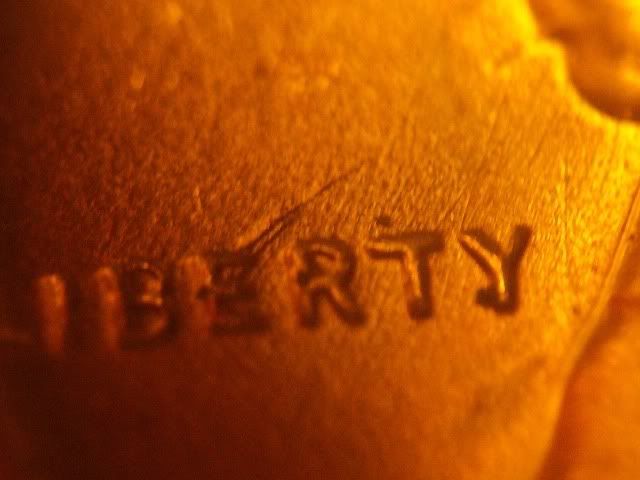
I'd ask why other neat "gouges" like the one in the thread below or my cent with extra leaf gouges are less interesting than the extra leaf quarters, they're similar. Maybe the factors involved are gouge location, relationship with the design and market hype along with when the gouge was made. 
http://www.coppercoins.com/forum/viewtopic.php?t=2989
_________________
Ed
|
|
|



