Key Dates & Errors · 1909 Date Guide

1909-S

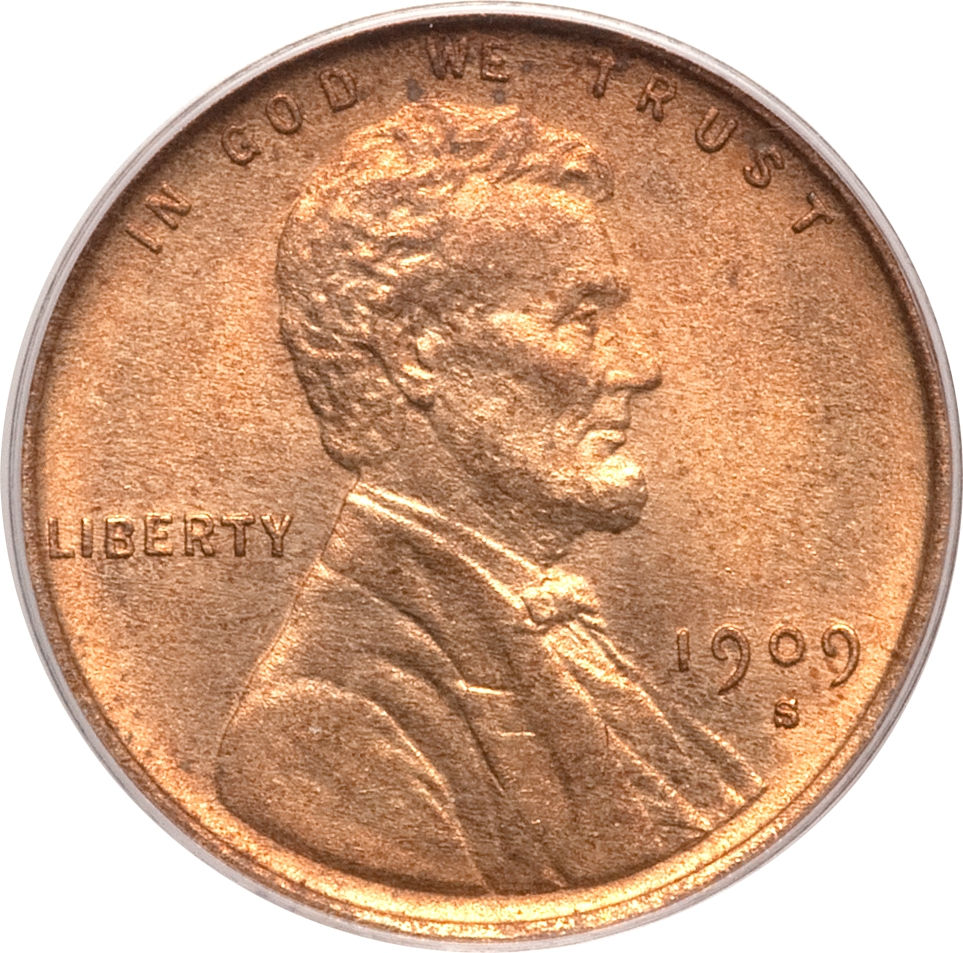
Mintage 1,825,000 from seven known dies (about 260,700 coins per die on average). Includes two well-known RPMs plus five position-only dies — mint-mark placement is critical.

(sponsored)

Diagnostics in this package come from Chuck Daughtrey’s die study (Keys to the Lincoln, 2018). Mint marks were punched into working dies by hand until 1990, so position (and often tilt) separates dies. Overlays against fixed design elements such as the date make those differences obvious. Measurements between the closest point of the middle date digits and the mint mark help confirm which die struck a coin.

Study sample: 428 different 1909-S coins. Die numbers were assigned by this study as coins were examined.

Two dies carry repunched mint marks (RPMs). The remaining five are separated mainly by mint-mark position. Relative frequencies from the study: #01 scarce RPM (~9%), #02 common S/horizontal S (~26%), #03 common (~21%), #04 uncommon (~13%), #05 scarce (~9%), #06 uncommon (~12%), #07 uncommon (~11%).

Known fakes & alterations

Key and semi-key Lincoln cents are the focus of authenticators and counterfeiters alike. Common alteration methods include:

  • Adding a mint mark to a common Philadelphia issue of the same date (for example, turning a 1914 into a 1914-D).
  • Scraping or altering digits of a common date (for example, turning a 1944-D into a 1914-D).
  • Copying genuine coins by spark erosion or soft-die transposition.

Crude alterations usually fail under close study because device details and mint-mark character are wrong. Matching a coin to one of the few known genuine dies for the issue is a powerful authenticity check. When in doubt, use a trusted third-party grading service.

Added S mint marks on 1909 Philadelphia cents are the main alteration threat. RPM characteristics on Dies #01 and #02, or a clean match to one of the five position dies, strongly support genuineness.

Quick checklist

  1. Check first for the two RPMs (Die #01 and Die #02 / S over horizontal S)
  2. If not an RPM, match mint-mark height, left-right placement, and tilt
  3. Use centerline of the S through the zero of the date
  4. Die #05 = highest/left; Die #06 = lowest/farthest right

Die pairs that struck this issue

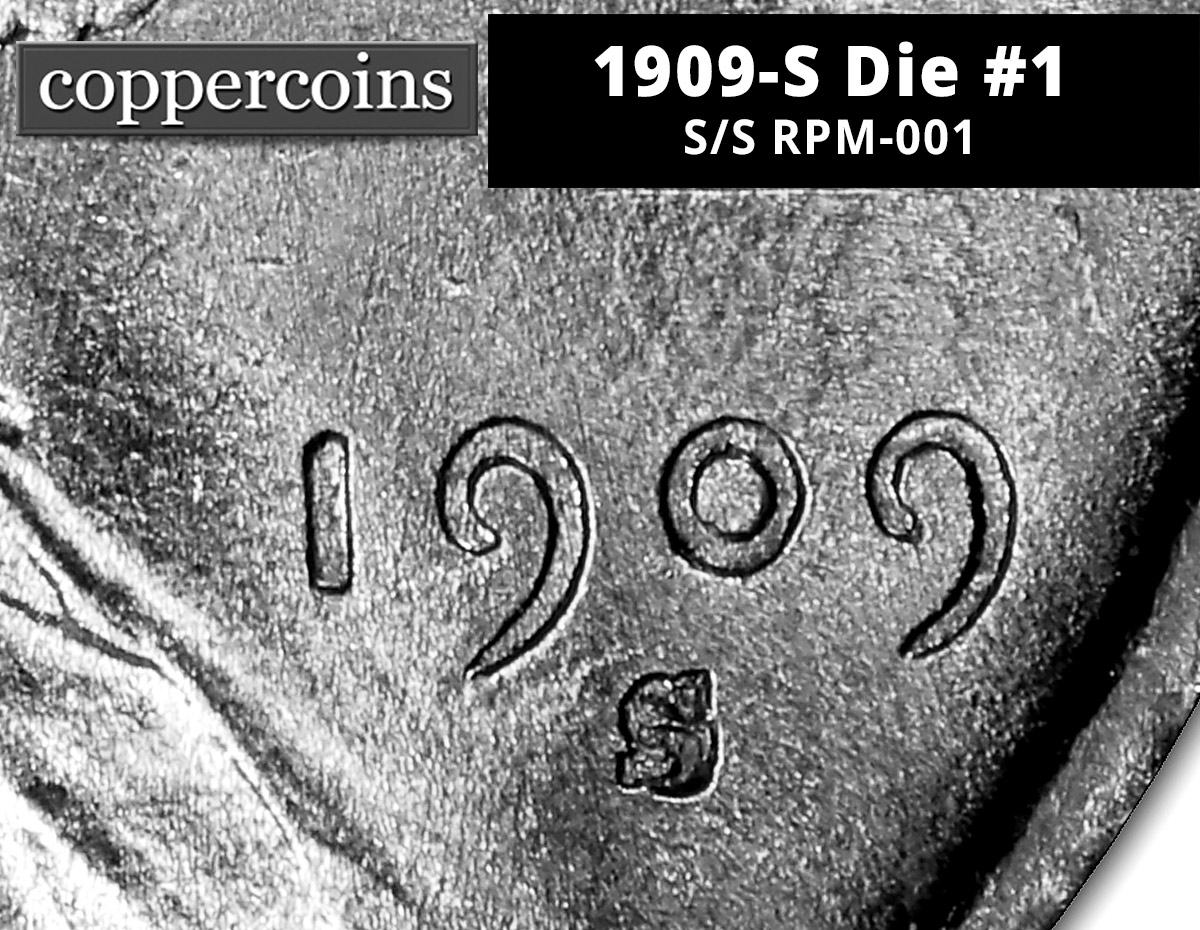
Die #01 Scarce RPM (1909S-1MM-001 / CONECA RPM-001). Nicest known RPM among key/semi-key Lincolns. N–S die scratches through date/mint mark on earlier strikes.

How to recognize: Scarce RPM (1909S-1MM-001 / CONECA RPM-001). Nicest known RPM among key/semi-key Lincolns. N–S die scratches through date/mint mark on earlier strikes.

Relative frequency: Scarce. Study sample: 38 of 428 (8.9%). Assumed die mintage: ~162,425. No markers beyond the RPM are required, though north–south die scratches through the date and mint-mark area appear on earlier strikes and can fade later.

  • 1909-S Die #01 — scarce RPM
    1909-S Die #01 — scarce RPM
  • 1909-S Die #01 — mint-mark detail
    1909-S Die #01 — mint-mark detail
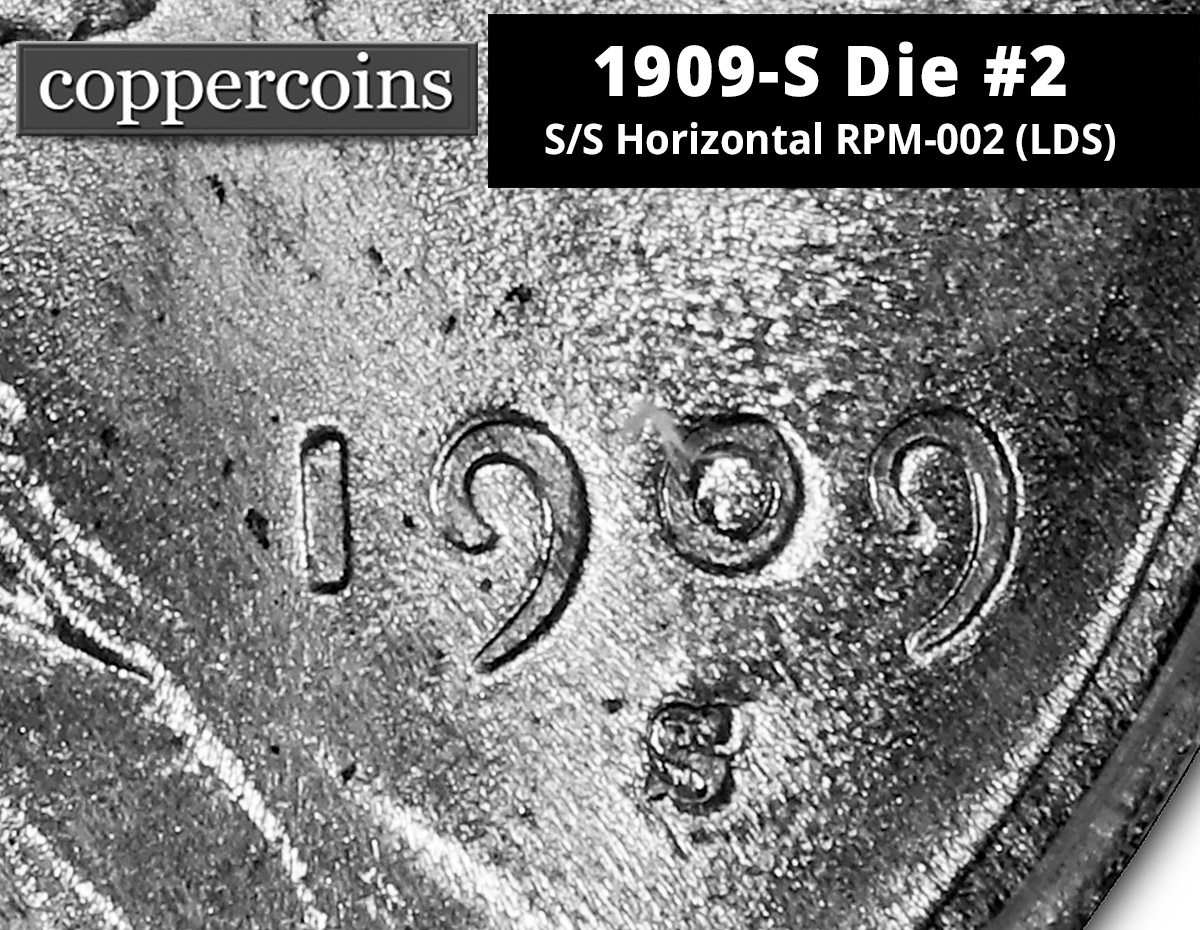
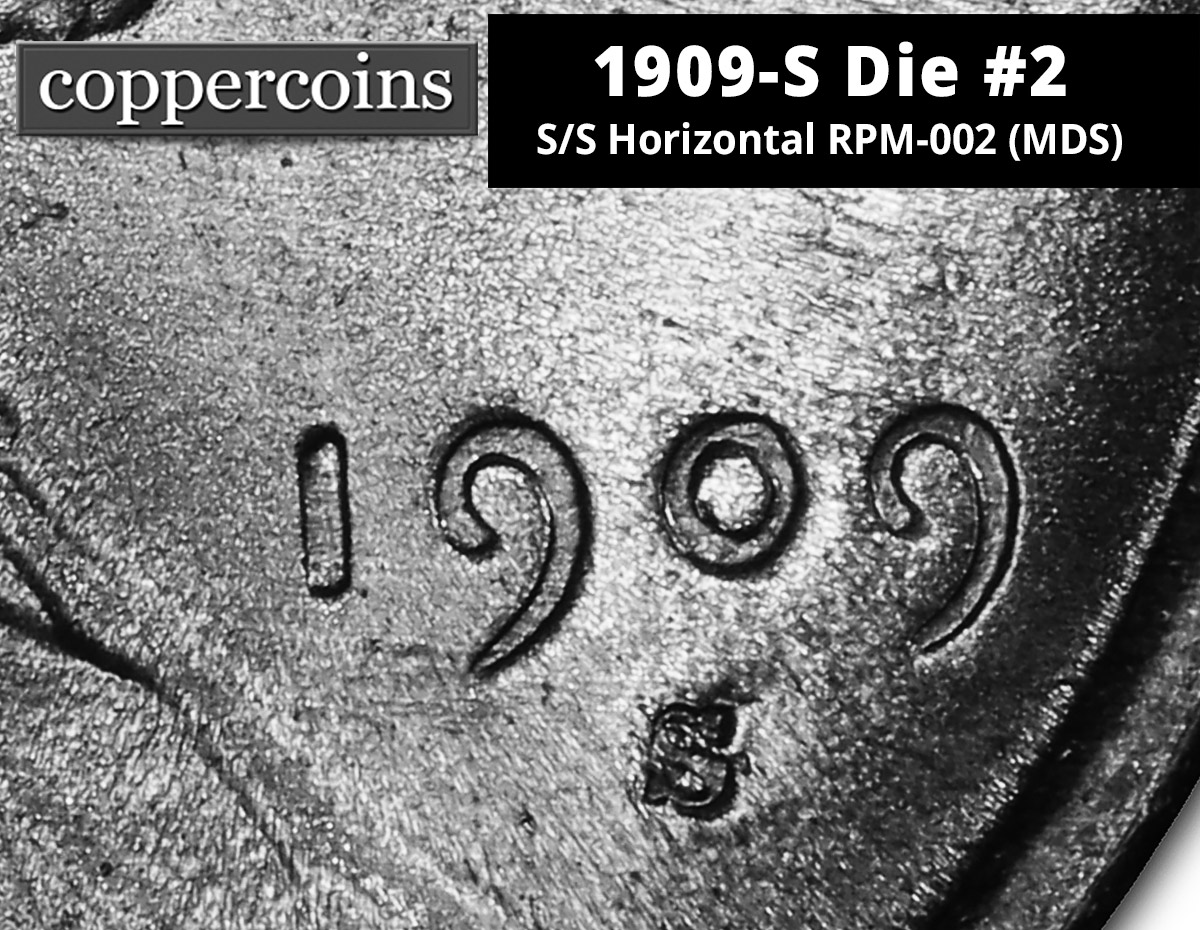
Die #02 Common. S over horizontal S RPM — secondary lower curve and serif rotated ~90° counterclockwise. Most common 1909-S die in the study (~25%).

How to recognize: Common. S over horizontal S RPM — secondary lower curve and serif rotated ~90° counterclockwise. Most common 1909-S die in the study (~25%).

Relative frequency: Common. Study sample: 109 of 428 (25.5%). Assumed die mintage: ~465,375. The only 1909-S RPM listed/recognized across major guides and grading services; often brings a small premium from interest rather than rarity. Secondary mint mark shows through the upper-right section of the primary S.

  • 1909-S Die #02 — S over horizontal S
    1909-S Die #02 — S over horizontal S
  • 1909-S Die #02 — later state with clearer secondary curl
    1909-S Die #02 — later state with clearer secondary curl
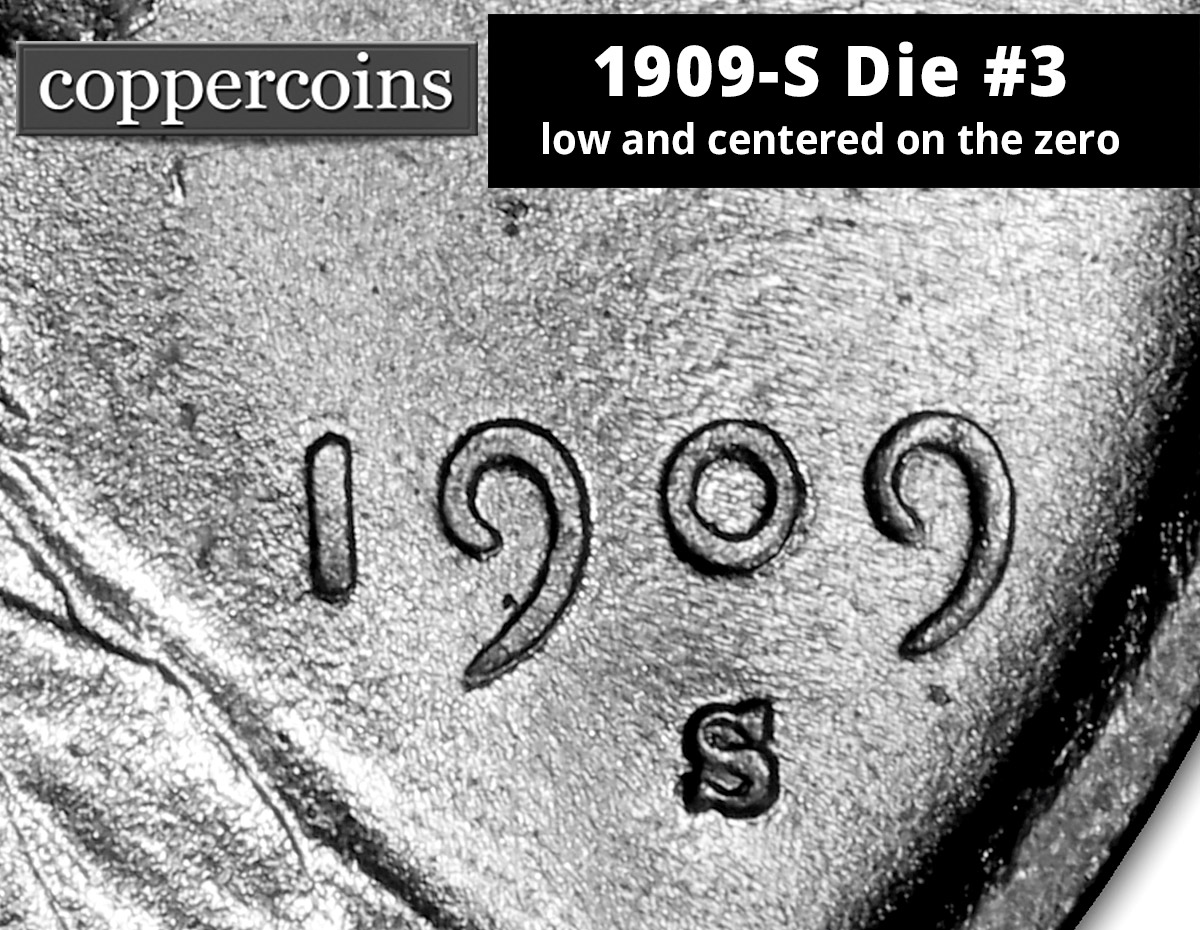
Die #03 Common. Mint mark low and far right; nearly upright so its centerline runs near the middle of the zero. Most common non-RPM die.

How to recognize: Common. Mint mark low and far right; nearly upright so its centerline runs near the middle of the zero. Most common non-RPM die.

Relative frequency: Common. Study sample: 91 of 428 (21.3%). Assumed die mintage: ~388,725. If a 1909-S is not one of the two RPMs, this is a frequent match. Distinguish from #04 and #06, which also sit low/right but differ in tilt and how far right the centerline falls.

  • 1909-S Die #03 — low/right mint mark
    1909-S Die #03 — low/right mint mark
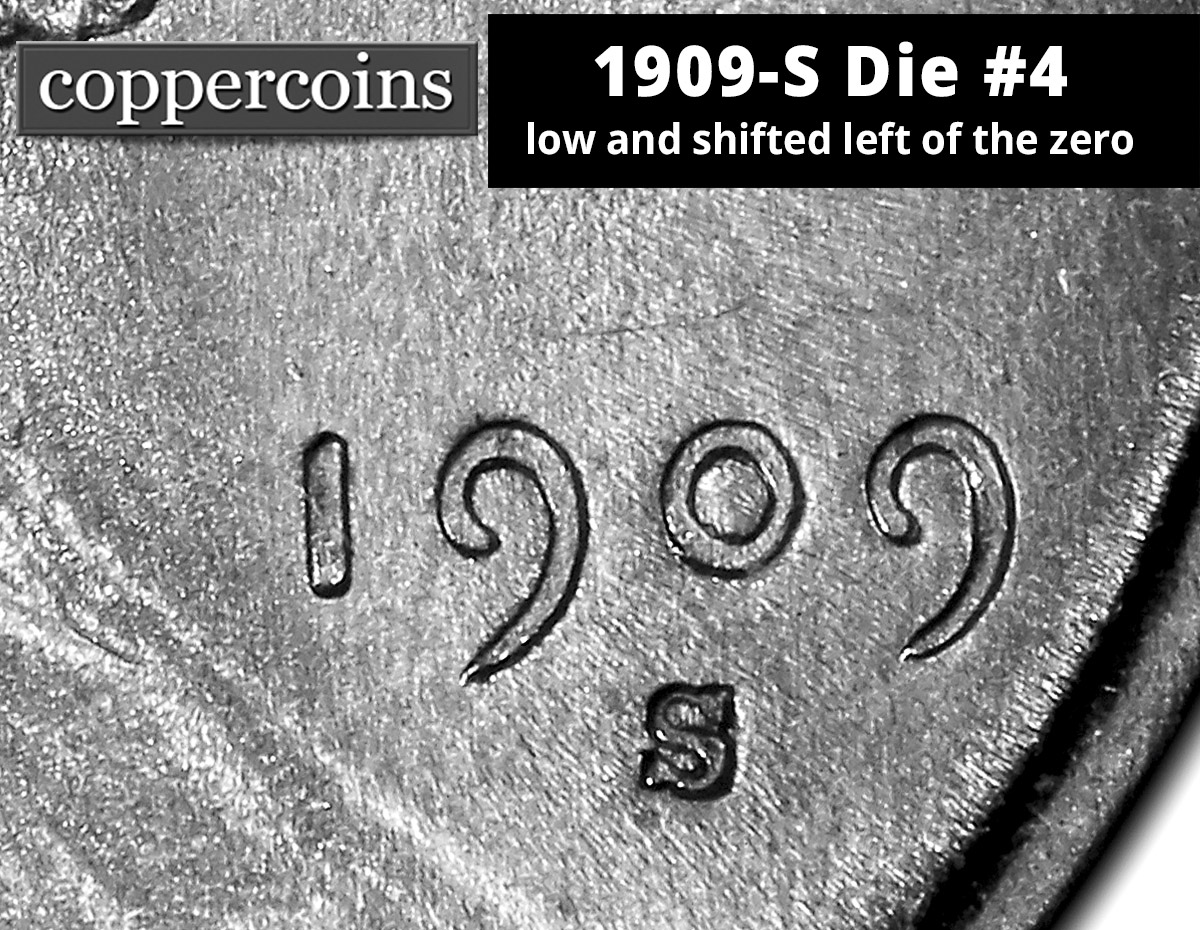
Die #04 Uncommon. Low/right of center but farther left than #03; slight right tilt so centerline points to the left inside of the zero.

How to recognize: Uncommon. Low/right of center but farther left than #03; slight right tilt so centerline points to the left inside of the zero.

Relative frequency: Uncommon. Study sample: 55 of 428 (12.8%). Assumed die mintage: ~233,600. One of three low/right dies — closer to the horizontal center of the date (between the middle digits) than Dies #03 and #06.

  • 1909-S Die #04 — low/right, left of Die #03
    1909-S Die #04 — low/right, left of Die #03
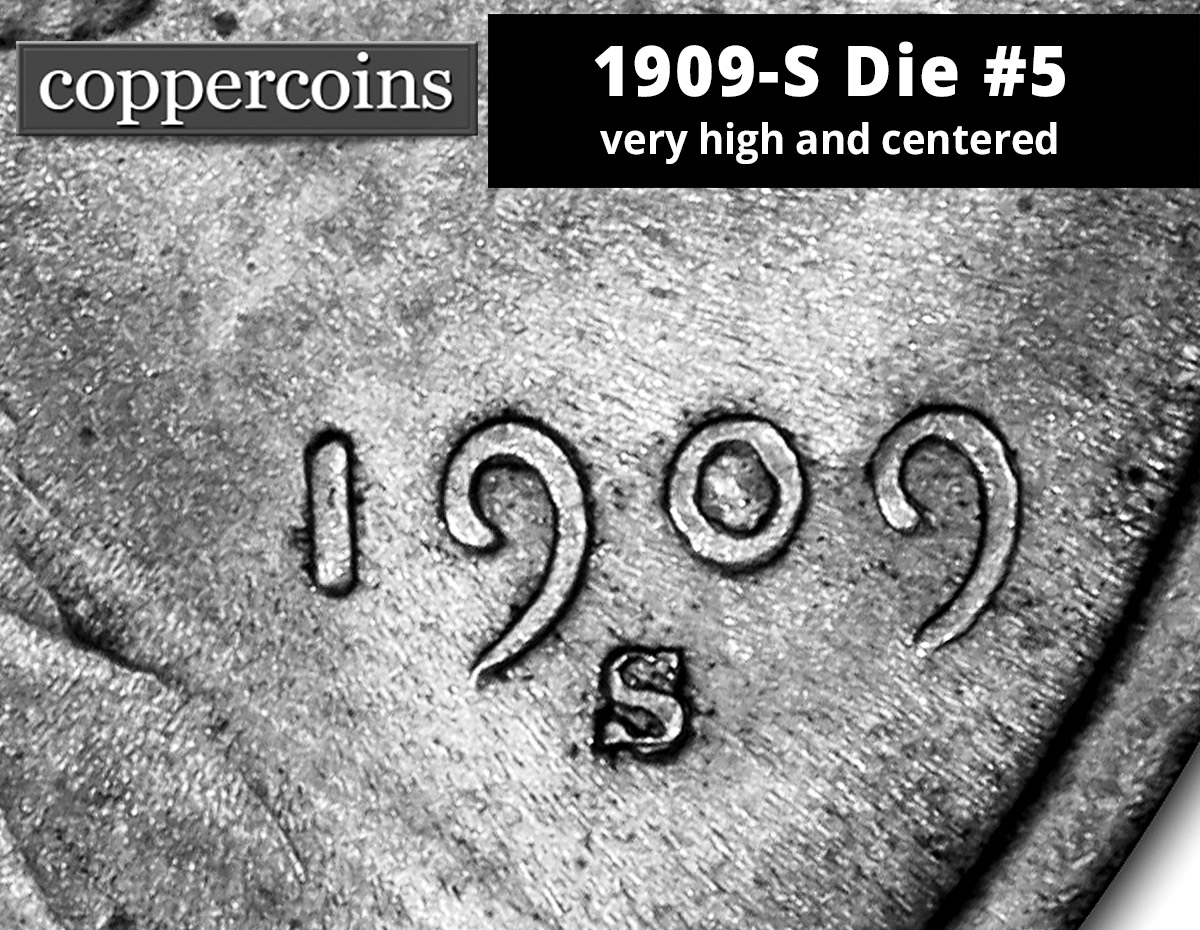
Die #05 Scarce. Highest mint-mark position of the issue (~0.25 mm from the 9). High and left — easiest non-RPM ID by position alone. Not known past mid die state.

How to recognize: Scarce. Highest mint-mark position of the issue (~0.25 mm from the 9). High and left — easiest non-RPM ID by position alone. Not known past mid die state.

Relative frequency: Scarce. Study sample: 37 of 428 (8.7%). Assumed die mintage: ~158,775. Most scarce 1909-S die in the study. Often circulated or lower uncirculated; assumed early retirement.

  • 1909-S Die #05 — high-left mint mark (scarce)
    1909-S Die #05 — high-left mint mark (scarce)
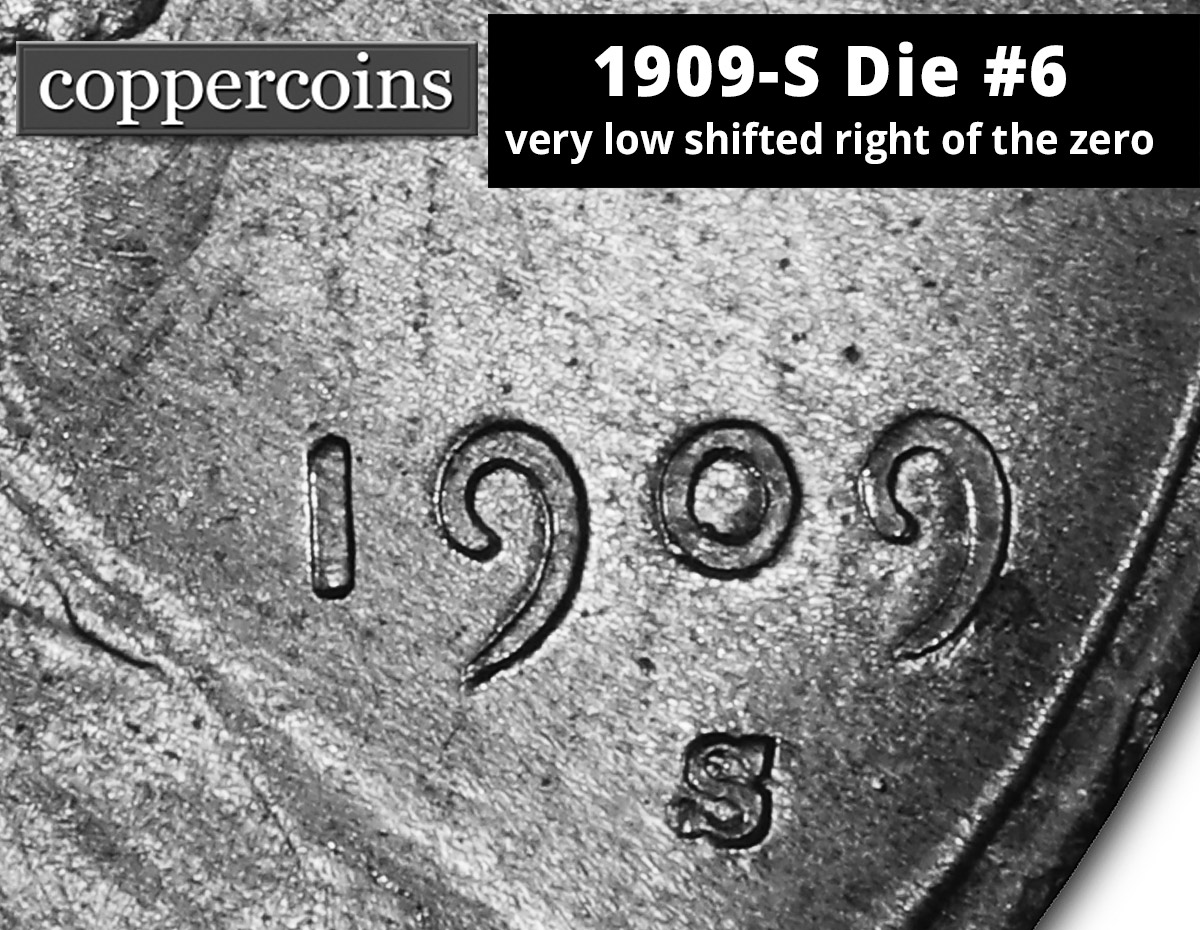
Die #06 Uncommon. Lowest and farthest-right mint mark (~0.9 mm from the 9); right tilt so centerline points to the right inside edge of the zero.

How to recognize: Uncommon. Lowest and farthest-right mint mark (~0.9 mm from the 9); right tilt so centerline points to the right inside edge of the zero.

Relative frequency: Uncommon. Study sample: 53 of 428 (12.3%). Assumed die mintage: ~224,475. Can be confused with Die #03 until the stronger right tilt / extreme right centerline is noticed. Assumed third most populous die overall, but below average per-die mintage so categorized uncommon.

  • 1909-S Die #06 — extreme low/right mint mark
    1909-S Die #06 — extreme low/right mint mark
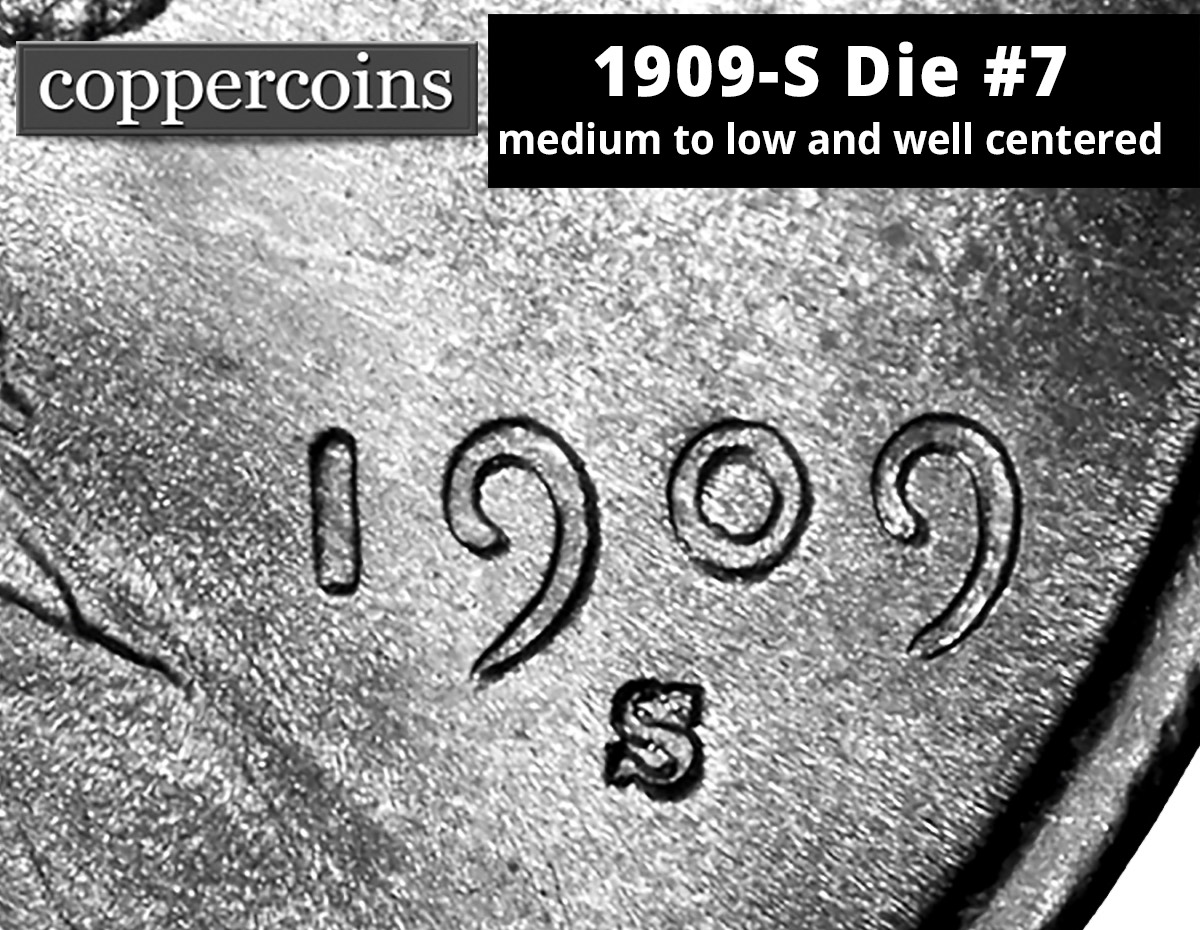
Die #07 Uncommon. Well centered vertically, a bit right horizontally, slight right tilt; centerline touches left side of the zero. Similar position to #01 but without the RPM.

How to recognize: Uncommon. Well centered vertically, a bit right horizontally, slight right tilt; centerline touches left side of the zero. Similar position to #01 but without the RPM.

Relative frequency: Uncommon. Study sample: 45 of 428 (10.5%). Assumed die mintage: ~191,625. Very typical centered appearance. Later states show mottled fields from die wear with a slightly satiny look in better grades.

  • 1909-S Die #07 — centered, slight right tilt (no RPM)
    1909-S Die #07 — centered, slight right tilt (no RPM)

Related

1909 Date Guide All key-date packages Search 1909-S dies