





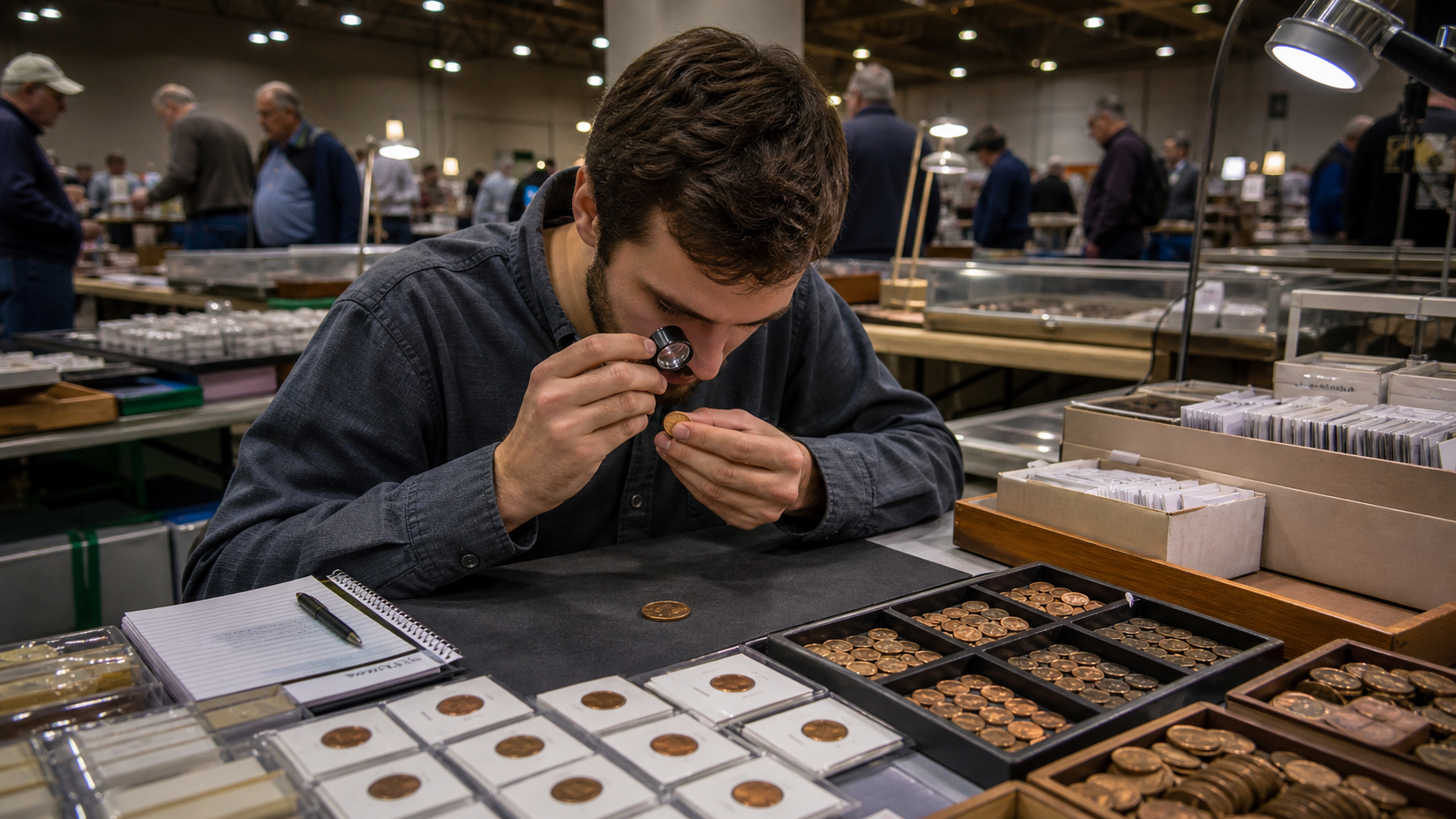

The 1946-S Lincoln cent is more interesting than many collectors realize. At first glance, it looks like a common postwar Wheat cent from San Francisco. Millions were struck, plenty still exist, and most price guides treat the issue in a fairly ordinary way.
But there is more going on.
The 1946-S cent was struck during a period when San Francisco used more than one mint mark punch style. For variety collectors, that makes the date worth studying. The mint mark is not just a tiny letter under the date. It is a piece of evidence. It can help show which punch was used, how often that punch appeared, and which styles may be scarcer than the market currently recognizes.
There are three primary mint mark styles involved in this study.
The first is the serif style, also commonly called the trumpet tail mint mark. This style was used from 1941 through 1952 and is distinguished by its pointed upper serif and a bottom serif that looks a bit like the bell of a trumpet (hence the name). It is the style most collectors are used to seeing on San Francisco Lincoln cents of the period, as it had a tendency to be the most common of the S-mint styles through the late 1940s on most denominations.

The second is the sans-serif style, used in 1946 and 1947. The name comes from French for "without a serif." This is the only San Francisco mint mark punch of this group with no serifs. It has a cleaner, plainer appearance and is usually easy to separate from the others without them having to be next to each other for comparison. This is the style of mint mark that is uncommon to rare for 1946-S dimes. To date, only one dime die is known to have this mint mark style for 1946.

The third is the ball-serif style, used from 1944 through 1946. This style has a rounded serif at the top and a triangular serif at the bottom. It is a distinctive mint mark, but it is also the style that appears to have been used far less often on 1946-S cents. There is some rumor that says this mint mark was supposed to have been punched with the ball on the bottom and the triangle on the top, but I cannot find evidence where this was actually the case.

Between 2002 and 2007, I performed a study of 2,286 Lincoln cents dated 1946-S to determine how often each of the three mint mark styles appeared. The study was not based on a single hoard, a cherry-picked group, or coins selected because they already appeared interesting. The coins were purchased through dealers and online auctions, with sellers unaware that the coins were being bought for a mint mark study.
That matters.
If sellers know a buyer is searching for a specific variety or mint mark style, the sample can become distorted. Coins may be screened, sorted, described differently, or priced differently. For this study, the goal was to gather normal market material and then examine it after the fact.
Both circulated and uncirculated coins were included. Uncirculated pieces came from original rolls. These were carefully marked in tubes so they would not be counted twice. Circulated coins were wrapped and set aside after examination for the same reason. The important part was keeping the count clean. Once a coin had been identified and recorded, it could not be allowed back into the study group.
When the study was completed, the coins were sold.
The results were interesting, and they were not evenly divided.
| Mint mark style | Count | Share of study |
|---|---|---|
| Serif (trumpet tail) | 1,030 | 45.05% |
| Sans-serif | 836 | 36.57% |
| Ball-serif | 420 | 18.38% |
Looking at the chart above, the serif mint mark was the most common of the three styles. A total of 1,030 coins were found with the serif style, representing 45.05% of the study.
The sans-serif mint mark came in second. A total of 836 coins were counted, representing 36.57% of the study.
The ball-serif mint mark was by far the least populous. Only 420 coins were located, representing 18.38% of the total.
That means fewer than one in five 1946-S cents in the study carried the ball-serif mint mark. That does not automatically make every ball-serif 1946-S cent valuable, but it does show that the style is much less common than the other two. For collectors who enjoy building more complete date and mintmark studies, that kind of distribution matters.
There is also a rare side note involving the 1946-S ball-serif cents. A small number are known with the mint mark punched in the opposite orientation from other Lincoln cents, with the ball at the bottom instead of the top. Very few examples have been found, and the total number known is believed to be fewer than 100 pieces.
That is the kind of detail that can easily be missed by the general market. Most collectors are not checking the shape and orientation of every 1946-S mint mark. They see the date, see the S, and move on. Variety collectors know better. Sometimes the smallest details are where the real study begins.
Today, 1946-S cents are already becoming more difficult to find in original Brilliant Uncirculated rolls. Prices are now above $225 per roll and continue moving upward. That makes the study even more important because the opportunity to examine large groups of fresh, original coins is not as easy as it once was.
The ball-serif mint mark style represented only about 18% of the coins studied, and it is unknown how many of those survive in uncirculated condition. Mainstream price guides generally do not separate values between the mint mark styles. To most of the market, a 1946-S cent is still just a 1946-S cent.
That creates opportunity.
Collectors who can identify the ball-serif mint mark now may be able to locate coins before the broader market catches on. The best opportunity is in Brilliant Uncirculated examples, especially attractive red coins with clean surfaces and strong eye appeal. They may not cost much more than ordinary 1946-S cents today, but they represent the scarcer mint mark style from the study.
Not every variety needs to be dramatic to be worth attention. Sometimes the value is in understanding what others have overlooked. The 1946-S Lincoln cent is a good example. Three mint mark styles were used. They were not used equally. The least common one is still hiding in plain sight.


Comments
Share feedback or notes after reading. Keep it civil and on-topic.
No comments yet. Be the first to leave feedback.