






Introduction
In the study of die varieties, few terms cause more confusion than die state and die stage. They sound alike. They both relate to the life of a working die. They both describe changes that can be seen on coins struck from that die. Because of that, the two terms are often used loosely, and sometimes even interchangeably.
That is a mistake.
Die state and die stage are related, but they are not the same thing. Understanding the difference is important for collectors, researchers, catalogers, and anyone trying to properly identify, photograph, or describe a die variety. Confusing the two can lead to poor descriptions, incorrect image groupings, and a misunderstanding of how a die actually changed during its working life.
The simple way to say it is this: die state describes the wear condition of the die. Die stage describes a step in the development of identifying markers on the die.
Those two things may happen along the same general timeline, but they do not necessarily happen at the same time.

What Is Die State?
Die state is the relative wear condition of a die at the time it struck a coin.
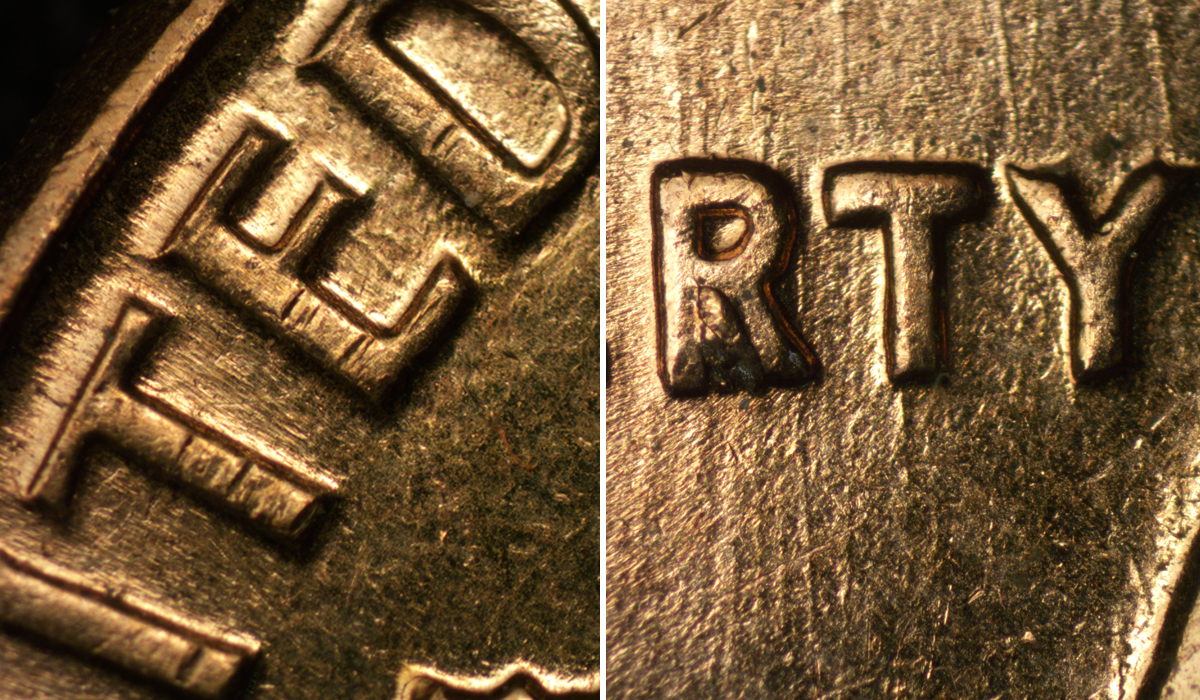
A coinage die is made of steel, but it is not immune to change. As the die is used over and over, the metal surface of the die begins to show the effects of repeated striking pressure. That wear can gradually change the appearance of coins struck from the die.
Collectors may see this as softening of detail, small trenches, loss of sharpness near the outer edges of design elements, or other signs that the die had been in service for some period of time.
Die state is therefore a way of describing where the die was on its wear spectrum.

At the beginning of that range, a Very Early Die State coin shows no meaningful die wear. At the far end, a Very Late Die State coin will show extensive die wear, including heavier trenching and significant loss of crispness in most areas.
The important point is that die state is about wear on the die.
It does not automatically tell us that a new identifying marker appeared. It does not automatically divide a die's life into fixed stages. It simply describes the relative wear condition of the die when the coin was struck.
What Is Die Stage?
A die stage is a specific step in the development of markers on the die. These markers may include die scratches, die cracks, die chips, clash marks, rim chips, or other features on the die surface that repeat on coins struck after those features appeared.
The key word is development.
A die stage changes when something new happens to the die surface that can be used for identification. If a new die crack appears, that may represent a new stage. If a new scratch appears in a useful location and repeats on later coins, that may represent a new stage. If a chip forms and becomes visible on coins, that may represent a new stage. Stage progression is not driven by wear alone. It is driven by changes in the marker set.
Stage A is the earliest known form of the die. It may show little wear, but it may still have important markers. A die does not have to be worn to have markers. Pre-use scratches, polishing lines, or other marks already present on the die can become Stage A identifiers.
As the die continues in service, something new may appear. That new marker development can create Stage B. Later changes may create Stage C, Stage D, and so forth.
Some dies may have only one known stage. Others may develop many stages before being retired.
The Main Difference
The difference between die state and die stage can be summarized this way:
Die state asks: How worn was the die?
Die stage asks: What identifying markers existed on the die at this point in its life?
That distinction matters.
A die can remain in the same die state while developing several different stages. For example, a die may still be considered Early Die State, but during that same general wear period it might develop a scratch, then a small crack, then a chip. Those changes could create Stage A, Stage B, and Stage C, even though the die state remains EDS.
The reverse is also true.
A die may move from EDS to EMDS because of progressive wear, but if no new useful identifying marker appears, that wear change alone may not justify a new stage.
This is where much of the confusion begins. Both die state and die stage move forward during the life of the die, but they do not move forward for the same reason.
Die state advances because of wear. Die stage advances because of new marker development.
Conclusion
Die state and die stage both describe change during the life of a die, but they describe different kinds of change.
Die state is about the wear condition of the die. It moves along a spectrum from very early to very late. It helps describe how much use the die had seen.
Die stage is about marker development. It records the appearance and progression of scratches, cracks, chips, and other repeated features that help identify coins struck from the die.
The two may advance together, but they do not have to. Multiple stages can exist within one die state. A die state can change without creating a new stage. A new stage can appear without a change in die state.
For modern die variety research, the most accurate approach is to keep the two ideas separate. Organize images and identification by stage. Record die state as useful supporting information. That preserves the true history of the die and gives collectors a clearer, more reliable way to understand what they are seeing on their coins.


Comments
Share feedback or notes after reading. Keep it civil and on-topic.
No comments yet. Be the first to leave feedback.