






One of the first questions most collectors ask when they find something unusual on a coin is simple: “How much is it worth?” It is a fair question, but with die varieties and mint errors, the answer is not always simple. A coin can be scarce and still have only modest value. Another coin can be fairly common and still bring strong money because collectors like the way it looks. Value is not based on one factor alone. It is usually the result of several things working together.
Die varieties and errors are, by nature, much scarcer than regular issue coins. A normal Lincoln cent, for example, may have been struck by the millions or even billions. A die variety, however, comes from one die or a limited number of dies. A mint error may have resulted from a specific mistake during production, and only a small number of coins may have escaped the Mint that way. That scarcity is part of what makes these coins interesting. It is also part of what gives them value.
But scarcity alone does not determine price.
A variety can be very rare and still not be especially valuable if collectors do not strongly desire it. On the other hand, a variety that is not extremely rare may bring good money if it is popular, easy to recognize, and widely collected. This is one of the most important things to understand about the market. Value is not just about how many exist. It is also about how many people want one.
Visibility plays a major role. The more obvious a die variety or error is, the more attention it usually gets. Collectors like coins where the feature can be seen quickly and clearly. A bold doubled die, a dramatic off-center strike, a strong repunched mintmark, or a major die break will usually attract more interest than something requiring magnification, special lighting, and a trained eye to identify. People naturally want what they can see.
This is why noticeable varieties and errors often carry a premium. A collector does not have to explain the coin as much. The coin explains itself. When someone can look at a piece and immediately see that something is different, the appeal is stronger. That visual impact helps create demand, and demand helps create value.
At the same time, there are many die varieties and errors that are genuinely scarce but not especially valuable because they are difficult to detect. A very minor doubled die may be rare, but if the doubling is limited to a tiny area of a letter or a small portion of the design, only specialists may care. The average collector may pass it by because it does not have much visual excitement. That does not mean the variety is unimportant. It simply means the market for it is smaller.
This is one of the hardest lessons for newer collectors to learn. Rare does not always mean expensive. A variety may have only a few known examples, but if the diagnostic feature is weak, unattractive, or hard to see, the value may remain modest. The coin may be important for research and attribution, but the number of willing buyers may be limited.
The opposite can also happen. Some very noticeable varieties and errors are not especially rare. They may be dramatic and easy to see, but if they are common enough, the value stays reasonable. A good example is an off-center struck coin. Off-center errors are very noticeable. Even someone with no collecting experience can look at one and understand that something went wrong. That gives them broad appeal.
However, many off-center cents from modern dates are not rare. They are interesting, collectible, and fun to own, but because plenty of them exist, many are worth only modest premiums. A minor off-center modern Lincoln cent might be worth just a few dollars, depending on the date, condition, and percentage off-center. The error is obvious, but the supply is large enough to keep the price from becoming extreme.
That is where the issue itself becomes important. The same type of error can have very different values depending on the date and mintmark. An off-center 1964 Lincoln cent may be worth a couple of dollars because the date is common and the error type is common for the period. But place a similar error on a much better date, such as a 1919-S Lincoln cent, and the value can be dramatically higher. The error type may be the same, but the host coin is not. Collectors are no longer looking at just the error. They are looking at the date, mintmark, scarcity, condition, and survival rate of that specific issue.
This same principle applies to die varieties. Some doubled dies are more obvious but less valuable because they are much more common. One good example is the 1995-P doubled die obverse, listed as 1995P-1DO-001. It is a popular variety because the doubling is clear and easy to see, especially in the date and lettering. It is the kind of coin that gets attention because the feature is visible without needing much explanation.
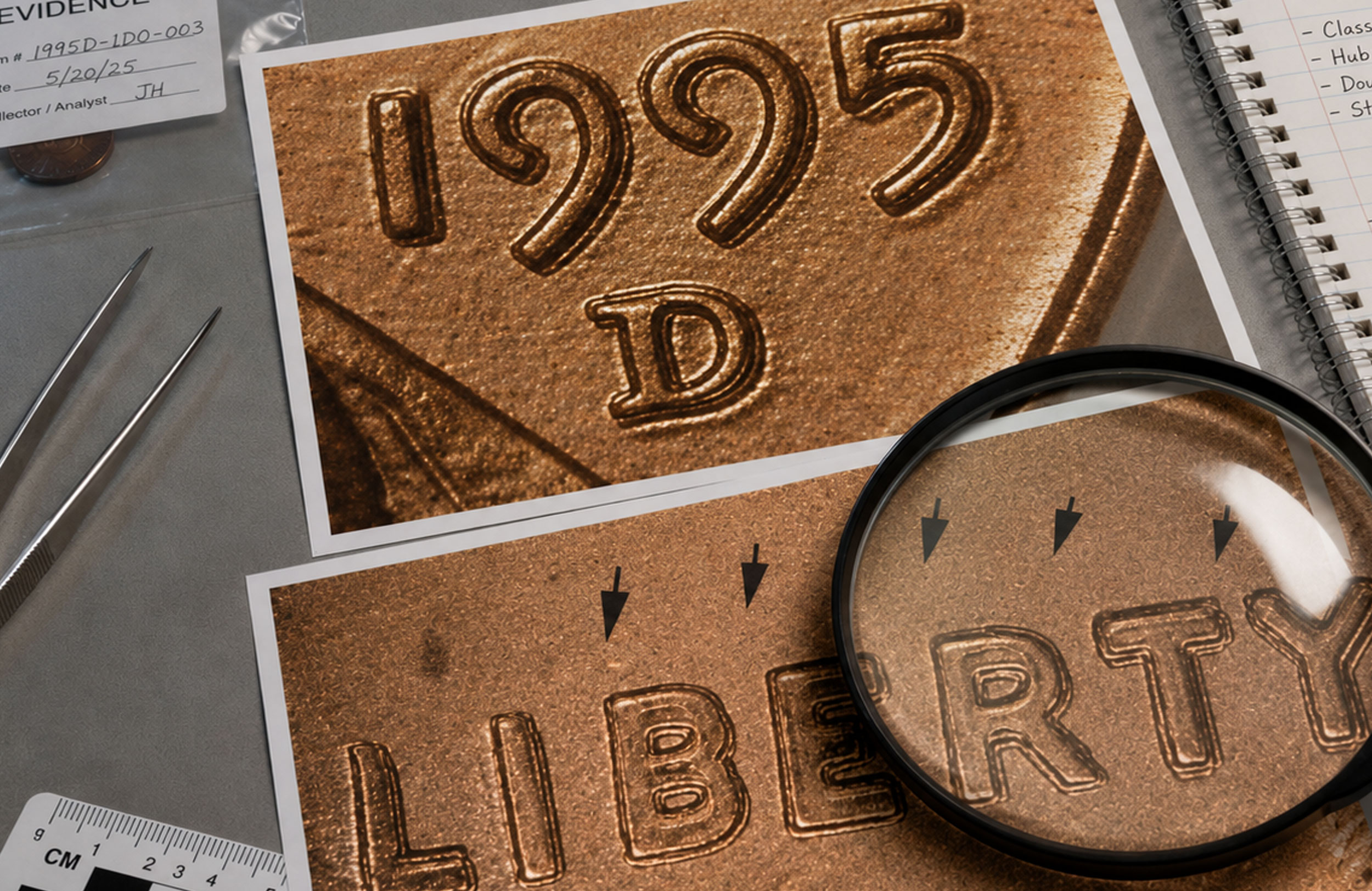
However, visibility does not automatically make it the most valuable. The 1995-D doubled die obverse, 1995D-1DO-001, is more minor and not nearly as dramatic, but it is much scarcer. Because fewer examples are available, it can be more difficult to locate, especially in attractive condition. This creates a different kind of value. The 1995-P gets value from popularity and visual strength. The 1995-D gets value from scarcity and difficulty of acquisition.
That comparison shows why value is a balance. A coin’s worth may come from its visibility, its rarity, its grade, its popularity, or the importance of the date and mintmark. The best coins often combine several of these factors. A bold variety that is also scarce, in high grade, and on a popular series will usually have strong market demand. A dramatic error on a better date can be even more desirable. A minor feature on a common coin may be interesting, but it may not bring much money.
Condition also matters. Two coins with the same variety or error can have very different values if one is heavily worn and the other is sharp, clean, and attractive. Collectors want problem-free coins. A variety that is easy to see on a bright, well-preserved coin will usually sell better than the same variety on a damaged, corroded, cleaned, or heavily worn example. Eye appeal is part of value, even when the main reason for buying the coin is the variety or error.
Authentication and attribution can also affect price. A coin in a reputable third-party holder with the variety or error properly identified may bring more than a raw coin, especially if the variety is valuable or commonly misunderstood. Buyers are often willing to pay more when they have confidence in what they are buying. This is especially true for coins that are rare, expensive, or frequently misattributed.
So how much is it worth? The honest answer is that it depends. It depends on how scarce the coin is, how visible the feature is, how many collectors want it, how nice the coin is, and whether the issue itself is common or difficult. There is no single rule that applies to every variety or error.
A good way to think about value is to ask a series of questions. Is the feature easy to see? Is the coin scarce? Is the date or mintmark important? Is the condition attractive? Is the variety or error popular? Are similar coins selling regularly, and at what price? The more positive answers you have, the better the chance the coin has meaningful value.
Die varieties and errors are some of the most interesting areas of coin collecting because they combine history, production knowledge, rarity, and visual appeal. But value is never based on one factor alone. A coin can be rare but quiet. It can be obvious but common. It can be minor but highly desirable because few are known. Understanding those differences is the key to understanding what a coin is really worth.
In the end, the market rewards a combination of scarcity, visibility, condition, and demand. The strongest values usually come when a coin has more than one of those things working in its favor. That is why two unusual coins that look similar at first glance can have very different prices. The more you understand the reason behind the value, the better collector and buyer you become.



Comments
Share feedback or notes after reading. Keep it civil and on-topic.
No comments yet. Be the first to leave feedback.