



Before you hunt for doubling or a repunched mint mark, know the normal layout of a Lincoln cent. This guide names the devices and fields to give a general sense of the terminology used for the four main designs of the Lincoln cent. Lincoln Bicentennial cents (2009) are not generally broken down into specific part names, so you are likely to see many different terms used for their design parts.
Lincoln Cent Obverse (1909-2026)
Designer - Victor D. Brenner (1871-1924)
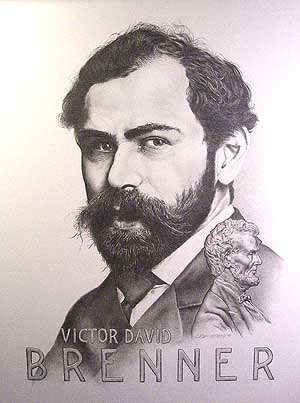
The Lincoln Cent obverse comes from a bust designed in 1907 by Victor David Brenner (Viktoras Baranauskas). President Theodore Roosevelt had sat for a portrait with Brenner in New York and knew of his work from that sitting. When he saw the bronze bust engraved by Brenner in 1907, Roosevelt decided it would look great on a U.S. Coin. Since the cent was conceivably ready for a re-design and the centennial of Lincoln's birth (1809) was coming soon, Roosevelt commissioned Brenner to create the Lincoln Cent design in 1908.
The first Lincoln cents entered circulation in August of 1909 with Brenner's initials on back, but public outcry (and opinion by Chief Engraver Charles Barber) had the initials removed a few days after the issue's release. Initials were not restored to the Lincoln cent until a new bust engraving included them at the truncation of the bust for the 1918 issue.
Parts of the Lincoln Cent Obverse

Wheat Cent Reverse (1909-1958)
Designer - Victor D. Brenner (1871-1924)
The Lincoln Cent reverse design was made by Brenner to accompany his Lincoln obverse design. The denomination was prominently placed in the center of the design flanked by art-deco inspired wheat ears featuring a very "patterned" un-naturally clean appearance. Everything from the appearance of the wheat ears to the fonts used on the design were carefully selected by Brenner to model the agrarian roots of America.
Parts of the Wheat Cent Reverse

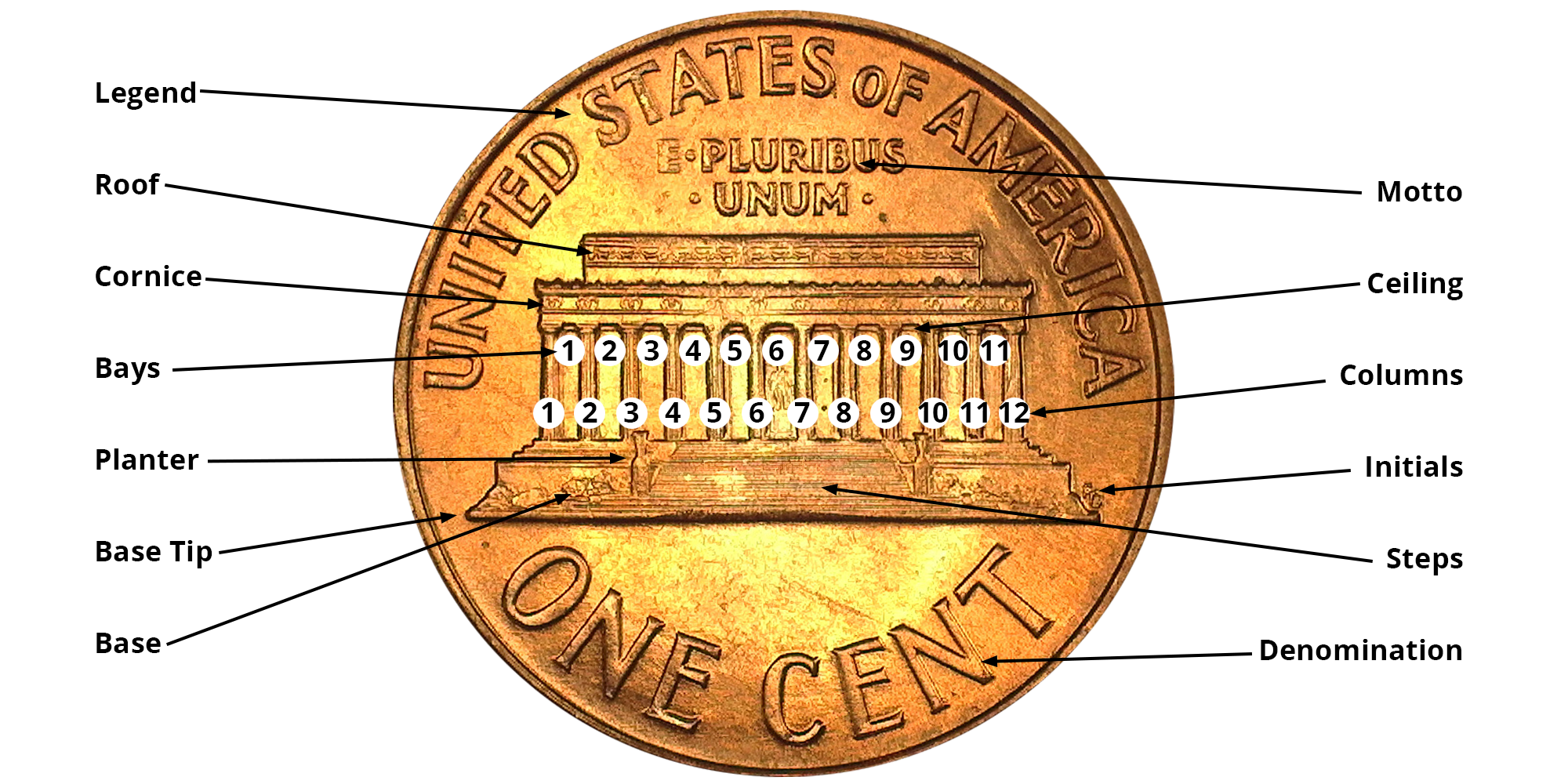
Memorial Cent Reverse (1959-2008)
Designer - Frank Gasparro (1909-2001)
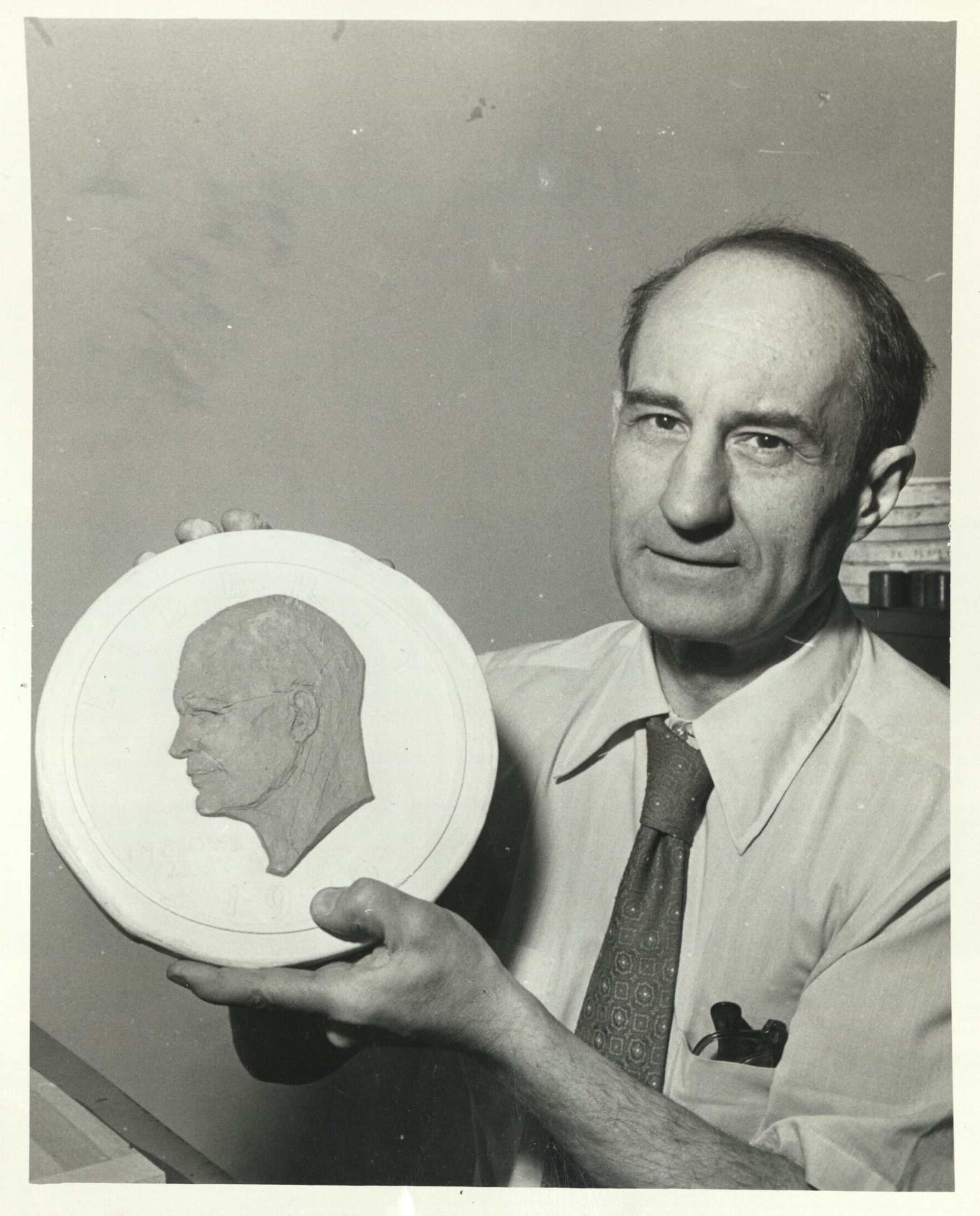
The Memorial Cent reverse design was made by Frank Gasparro, an American born sculptor and eventual 10th Chief Engraver of the United States Mint. Originally hired by the mint in 1942, Gasparro created this iconic design after 16 years at the Mint, and this would become his most famous work, alsthough not his only. Gasparro also desiged the reverse of the Kennedy Half Dollar and both sides of the Eisenhower Dollar and the Susan B. Anthony Dollar.
Prior to his death in 2001 he recognised his achievement in playing a very important role in the evolution of the most minted coin series in history. Billions and billions of copies of his work are in every day use right now. Only the Lincoln cent obverse design by Brenner tops this design as the most minted in world history.
Parts of the Memorial Cent Reverse
Shield Cent Reverse (2010-)
Designer - Lyndall Bass (1952-)


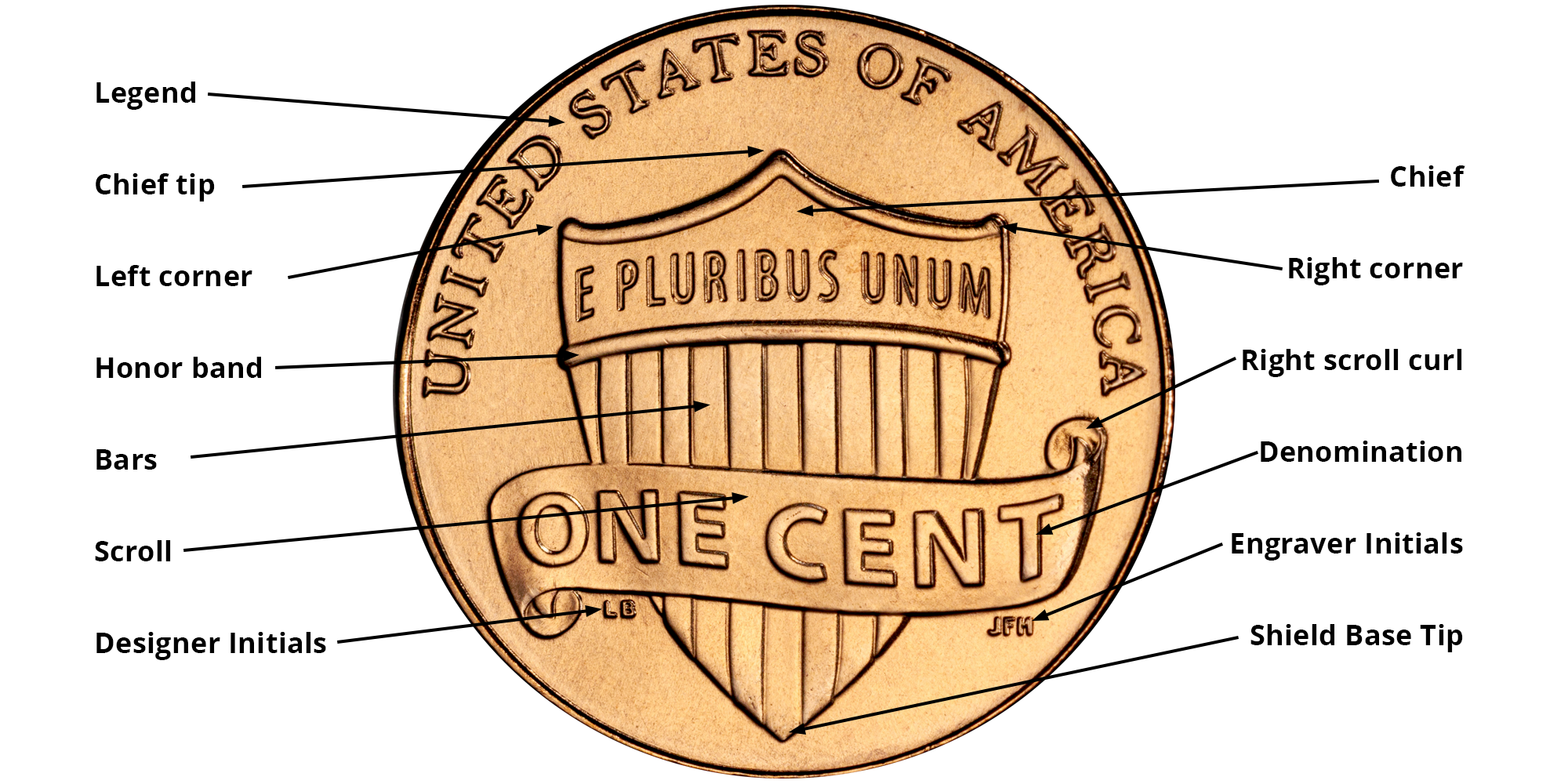
The Shield Cent reverse design was created by Lyndall Bass, an award winning Americn artist born in North Carolina. She has enjoyed a long career as an artist and teacher, and her Union Shield design was chosen for the cent through an open competition known as the Mint's Artistic Infusion Program.
The Shield Cent is the first one cent coin in the United States to feature the initials of both the deisnger of the coin and the engraver who turned the design into a bas-relief rendering for coining. The credit for that accomplishment goes to Joseph Menna, the Mint engraver assigned to the Lincoln Cent reverse redesign.
The shield being used as the main design element for the reverse of the cent was inspired by Abraham Lincoln's dedication to preserving the United States as one nation - a union. It features 13 vertical stripes on a shield with the American motto E Pluribus Umun (Latin for "of one, many") in the chief - the area at the top of a shield.
The shield reverse of the Lincoln Cent is likely the final design used on the coin series, now in its 117th year as a series. The series was brought to an end in commerce during 2025 when President Trump ordered stoppage of production, and a cerimonial final strike was held in Washington in November, 2025. The design will likely be kept alive for the foreseeable future as a mint an proof set issue coin, but has likely seen its last day at the presses as a business strike issue.
Parts of the Shield Cent Reverse