Mintage 484,000 struck from only four known dies (about 121,000 coins per die on average). The most iconic Lincoln key — and a prime target for alterations and counterfeits.
(sponsored)
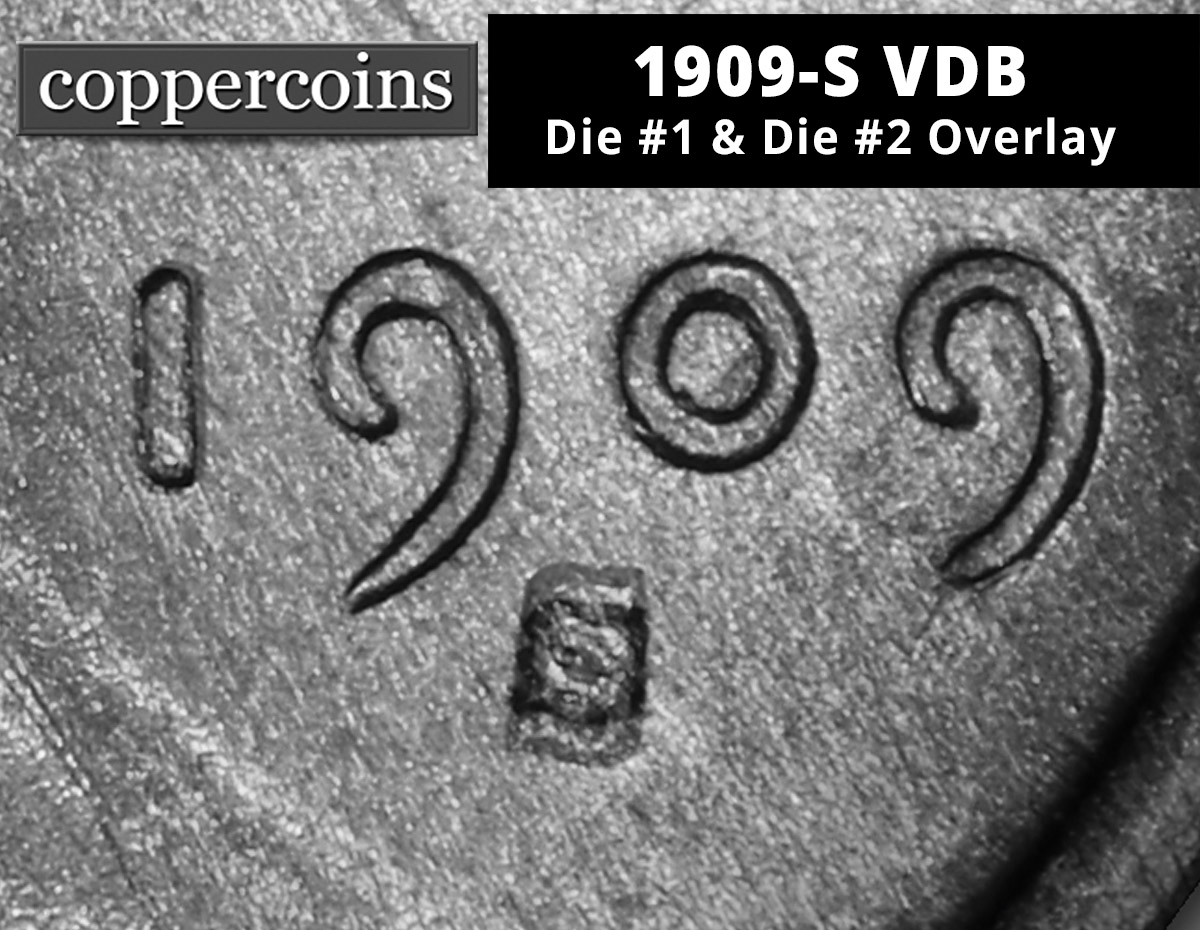
Overlay comparison — Die #01 vs Die #02 mint-mark positions
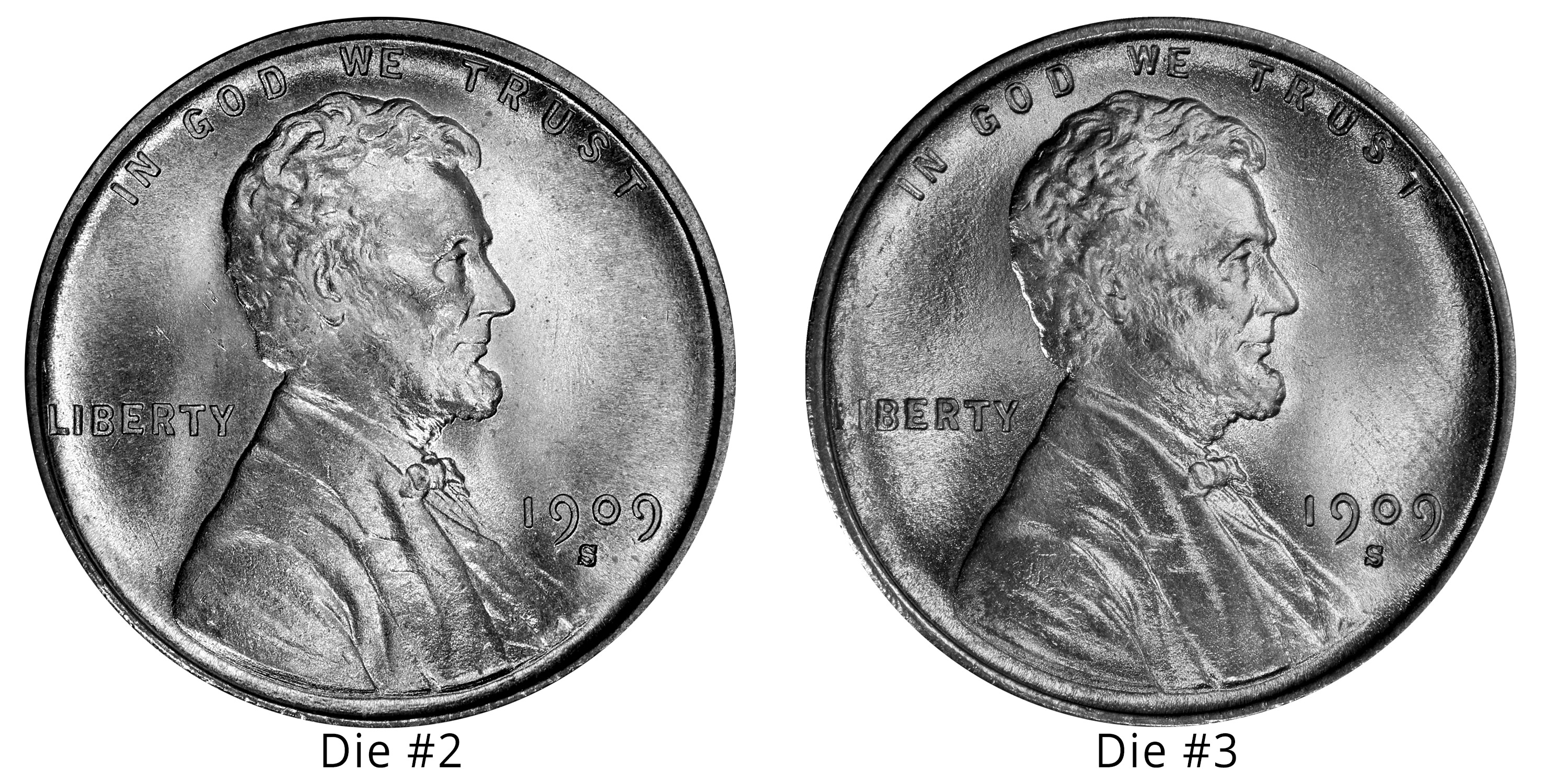
Comparison plate — Die #02 vs Die #03
Diagnostics in this package come from Chuck Daughtrey’s die study (Keys to the Lincoln, 2018). Mint marks were punched into working dies by hand until 1990, so position (and often tilt) separates dies. Overlays against fixed design elements such as the date make those differences obvious. Measurements between the closest point of the middle date digits and the mint mark help confirm which die struck a coin.
Study sample: 312 different 1909-S VDB coins. Die numbers follow the sequence previously published by John Wexler and Kevin Flynn (The Authoritative Reference on Lincoln Cents, 1996).
Use the die-pair panels below to match mint-mark placement. Relative frequencies from the study: Die #01 scarce (~11%), #02 common (~35%), #03 common (~30%), #04 uncommon (~24%).
Known fakes & alterations
Key and semi-key Lincoln cents are the focus of authenticators and counterfeiters alike. Common alteration methods include:
Adding a mint mark to a common Philadelphia issue of the same date (for example, turning a 1914 into a 1914-D).
Scraping or altering digits of a common date (for example, turning a 1944-D into a 1914-D).
Copying genuine coins by spark erosion or soft-die transposition.
Crude alterations usually fail under close study because device details and mint-mark character are wrong. Matching a coin to one of the few known genuine dies for the issue is a powerful authenticity check. When in doubt, use a trusted third-party grading service.
For 1909-S VDB specifically, added “S” mint marks on 1909 VDB Philadelphia cents and wholly fabricated pieces are well known. A coin whose mint-mark position does not match any of the four documented dies should be treated with extreme caution.
Quick checklist
Match mint-mark height, left-right placement, and tilt to one of the four known dies
Compare centerline of the S through the date digits
Look for Die #04 north–south date-area scratches when the mint mark is very low/right
If mint-mark position matches no known die, treat as suspect and seek authentication
Die pairs that struck this issue
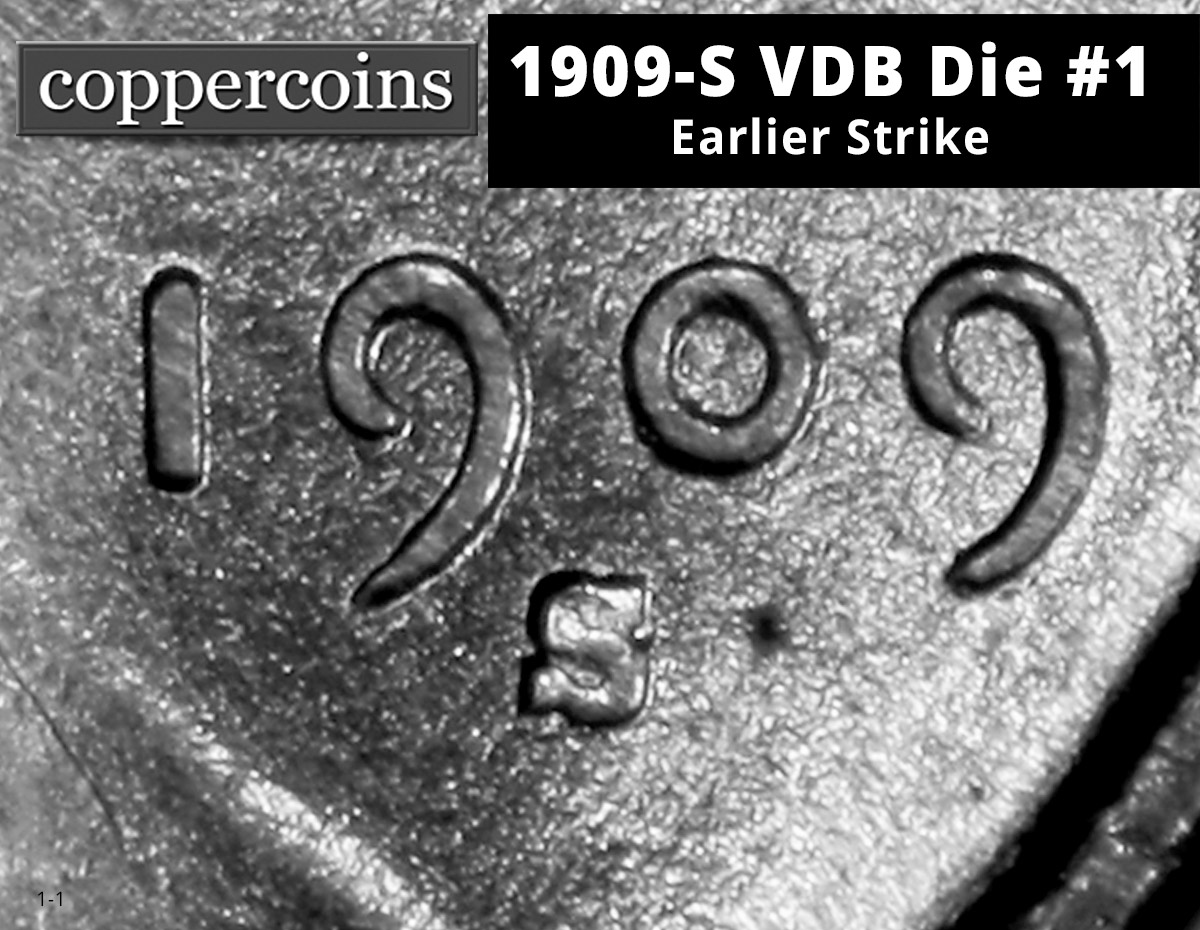
Die #01Scarce. Mint mark quite high and left, close to the first 9; centerline passes between center date characters and tilts slightly forward. Often somewhat incomplete/soft punch. Mostly earlier die states.
How to recognize: Scarce. Mint mark quite high and left, close to the first 9; centerline passes between center date characters and tilts slightly forward. Often somewhat incomplete/soft punch. Mostly earlier die states.
Relative frequency: Scarce. Study sample: 34 of 312 (10.9%). Assumed die mintage: ~52,750.
The least common of the four known dies. The mint mark is always somewhat incomplete (as if softly struck or punched) and sits very high and slightly left of a normal centered position. No major markers beyond mint-mark position itself; scarcity is reinforced by early-die-state survival.
1909-S VDB Die #01 — high-left mint mark (earlier die state)
1909-S VDB Die #01 — later example with more complete strike
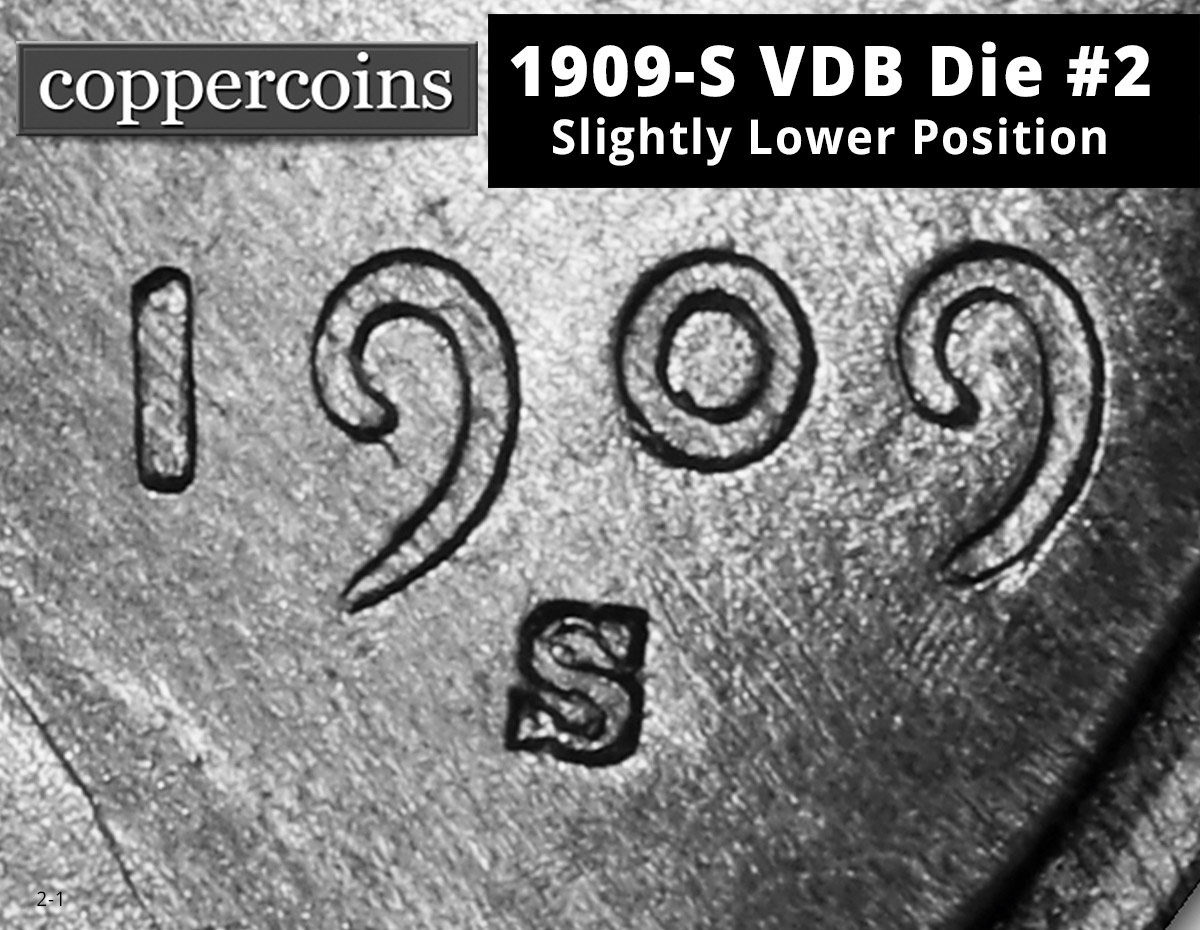
Die #02Common. Mint mark lower than #01 and tilted slightly right; centerline of the S touches the left side of the zero. Often seen in higher uncirculated grades.
How to recognize: Common. Mint mark lower than #01 and tilted slightly right; centerline of the S touches the left side of the zero. Often seen in higher uncirculated grades.
Relative frequency: Common. Study sample: 109 of 312 (34.9%). Assumed die mintage: ~168,900.
One of the more common dies and relatively available in uncirculated grades. Mint mark is slightly lower than Die #01 and tilted right enough that its centerline touches the far left side of the zero. Known to mid die state.
1909-S VDB Die #02 — lower mint mark, slight right tilt
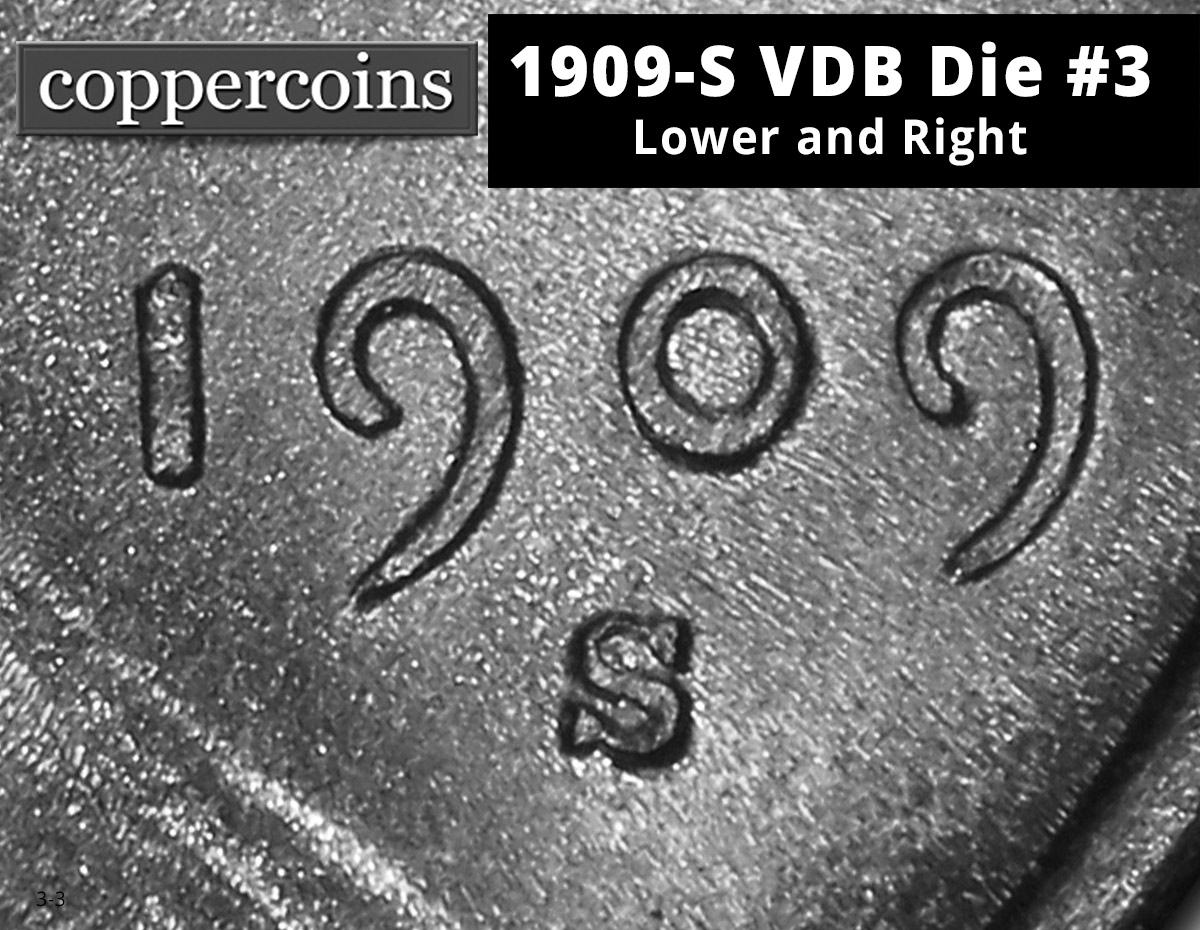
Die #03Common. Mint mark somewhat low and right of center; only a very slight right tilt. Appeared most often in circulated grades in the study.
How to recognize: Common. Mint mark somewhat low and right of center; only a very slight right tilt. Appeared most often in circulated grades in the study.
Relative frequency: Common. Study sample: 94 of 312 (30.2%). Assumed die mintage: ~146,175.
Second most common die found. Flow lines near the rim appear on many examples. In the study this die showed up more often in circulated grades than the other three, suggesting wider dissemination.
1909-S VDB Die #03 — low/right mint-mark placement
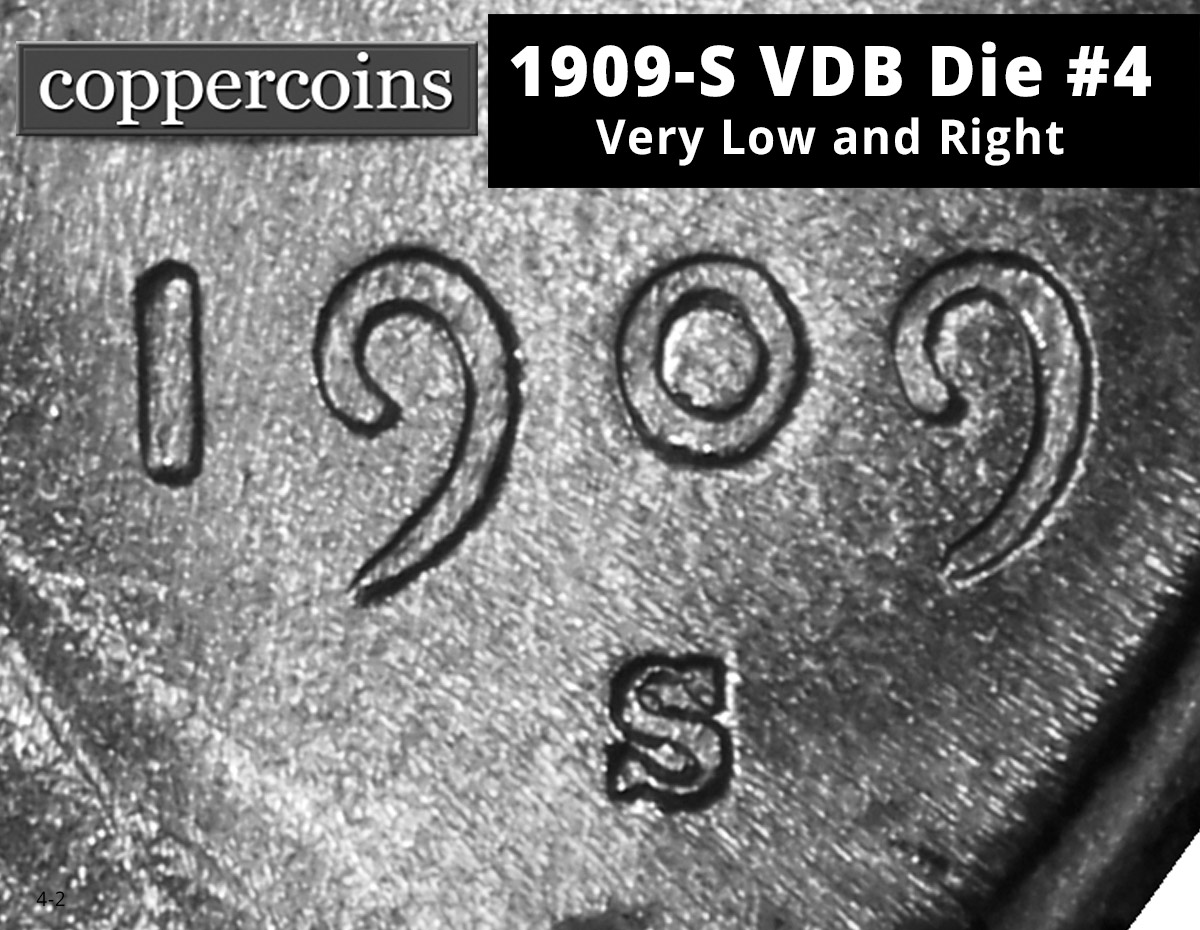
Die #04Uncommon. Lowest and farthest-right mint mark of the four; nearly upright, centerline points inside the zero. Often shows N–S die scratches in the date area.
How to recognize: Uncommon. Lowest and farthest-right mint mark of the four; nearly upright, centerline points inside the zero. Often shows N–S die scratches in the date area.
Relative frequency: Uncommon. Study sample: 75 of 312 (24.0%). Assumed die mintage: ~116,150.
The odd-ball of the issue — easy to separate once you see how far right and low the S sits. Secondary marker: north-to-south die scratches through the date and mint-mark area on many examples.