Key Dates & Errors · 1914 Date Guide

1914-D

Mintage 1,193,000 from only four known dies (about 298,250 coins per die on average). Classic Denver key — added mint marks and date alterations are well known.

(sponsored)

Diagnostics in this package come from Chuck Daughtrey’s die study (Keys to the Lincoln, 2018). Mint marks were punched into working dies by hand until 1990, so position (and often tilt) separates dies. Overlays against fixed design elements such as the date make those differences more obvious and helpful in attribution to die and determining counterfeits. Measurements between the closest point of the middle date digits and the mint mark help confirm which die struck a coin.

Study sample: 261 different 1914-D coins. Relative frequencies: #01 very common (~30%), #02 very common (~33%), #03 common (~26%), #04 scarce (~10%).

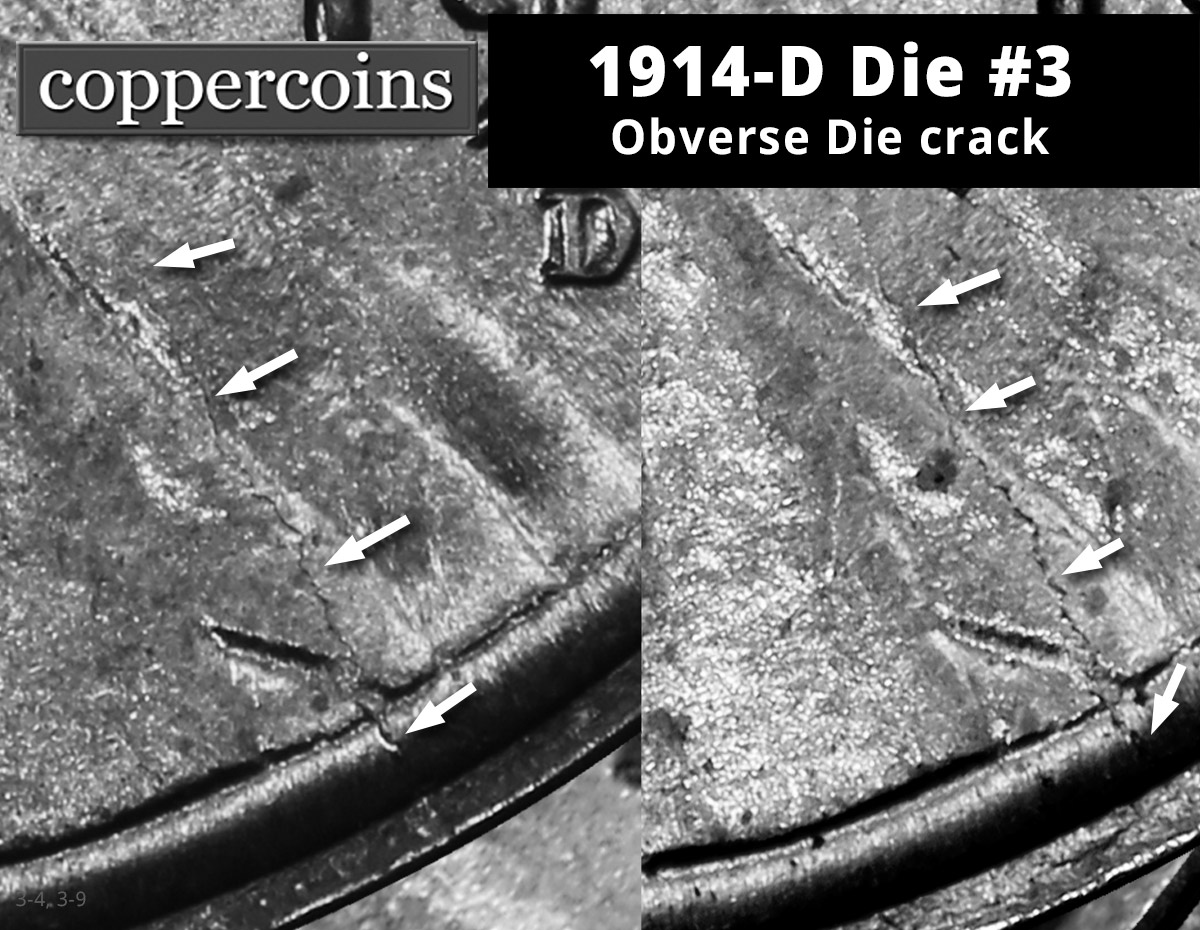
The famous lapel die crack on Die #03 was once treated as “the” genuine marker — three other dies also struck genuine coins without that crack. All images in this study are courtesy of PCGS Coinfacts.

Known fakes & alterations

Key and semi-key Lincoln cents are the focus of authenticators and counterfeiters alike. Common alteration methods include:

  1. Adding a mint mark to a common Philadelphia issue of the same date (for example, turning a 1914 into a 1914-D).
  2. Scraping or altering digits of a common date (for example, turning a 1944-D into a 1914-D).
  3. Copying genuine coins by spark erosion or soft-die transposition.

Crude alterations usually fail under close study because device details and mint-mark character are wrong. Matching a coin to one of the few known genuine dies for the issue is a powerful authenticity check. When in doubt, use a trusted third-party grading service.

1914-D is heavily targeted: added D mint marks on 1914 Philadelphia cents, and altered 1944-D dates scraped into “1914-D.” Match to a known die (and die-state markers where present) before accepting a raw coin as genuine.

Quick checklist

  1. Match mint-mark placement and tilt to one of the four dies
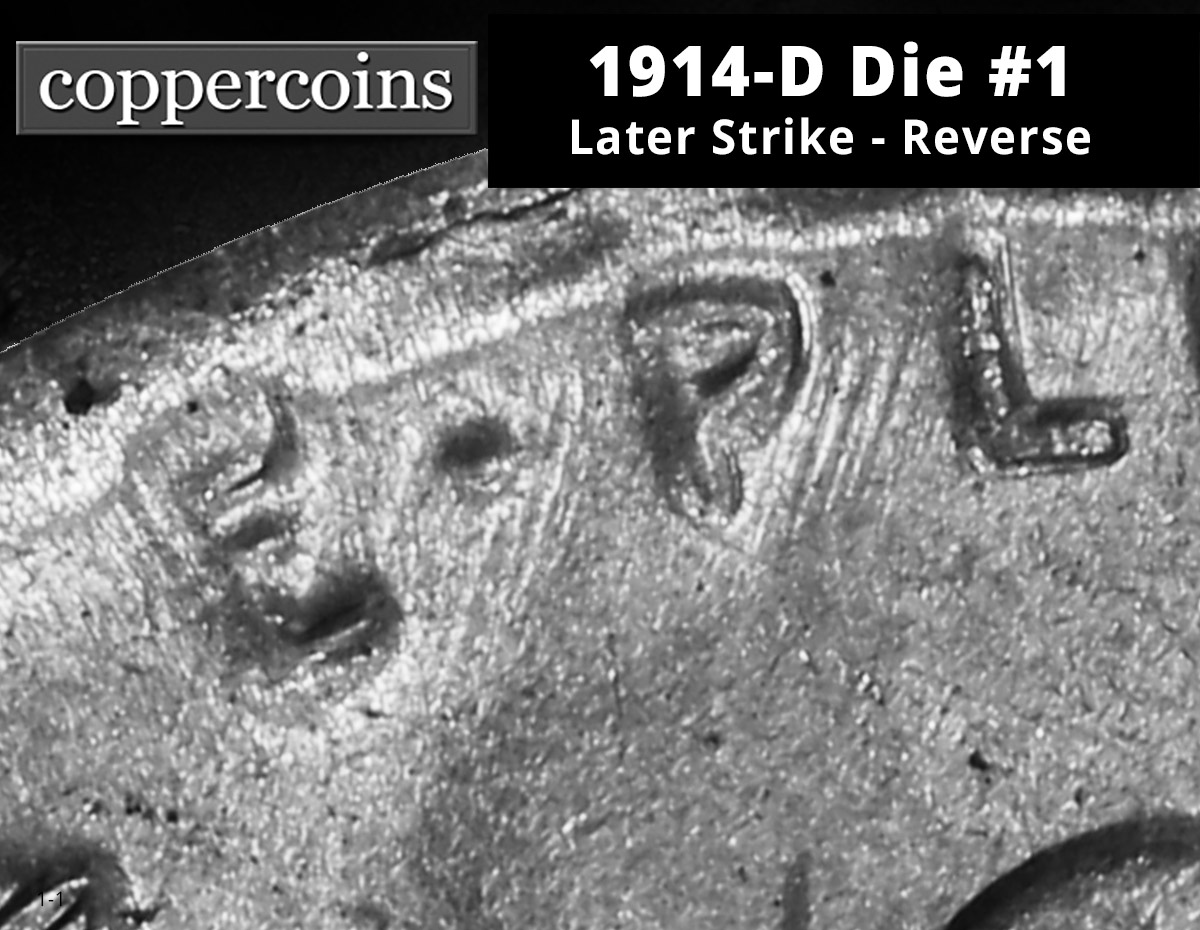
  2. Die #01 late state: reverse ghosting + N–S scratches through E·PL of motto
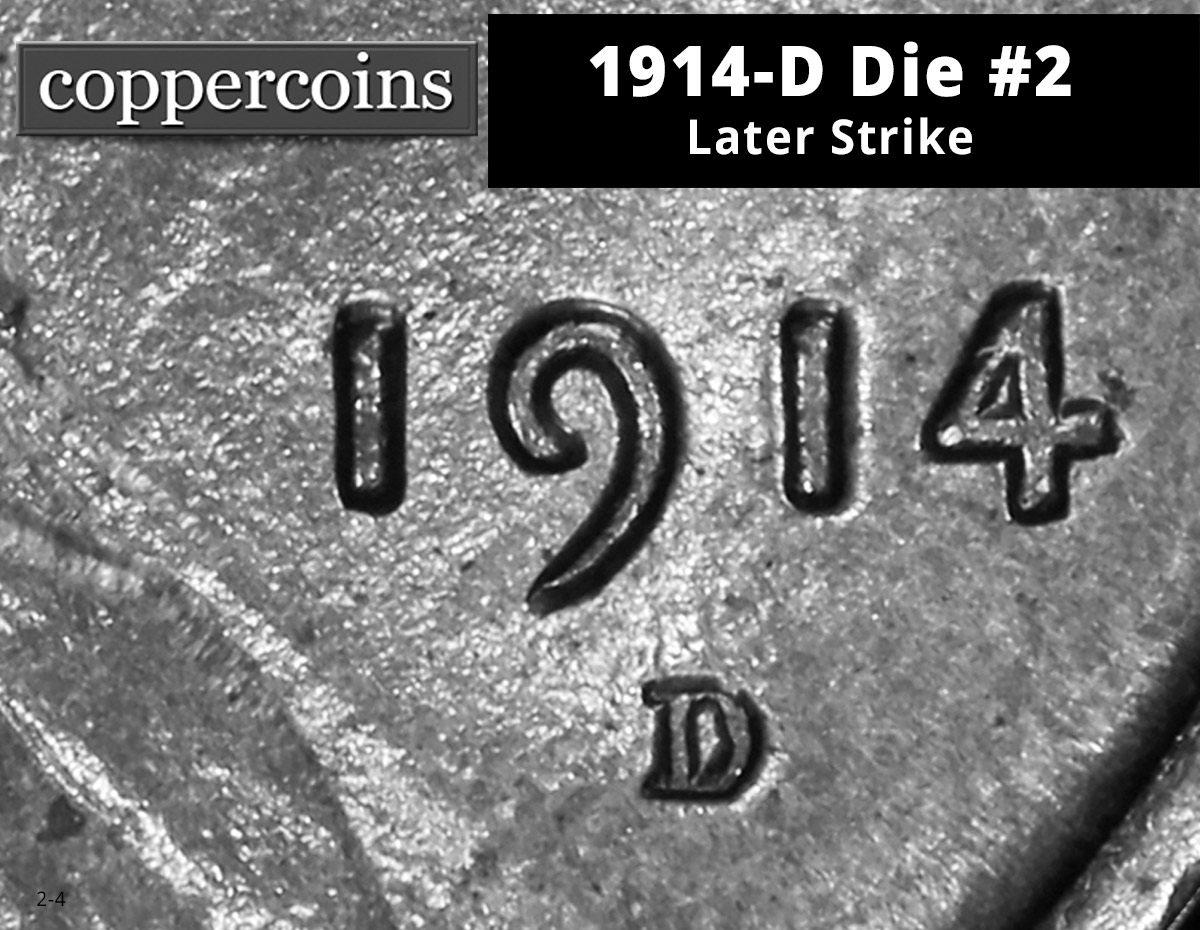
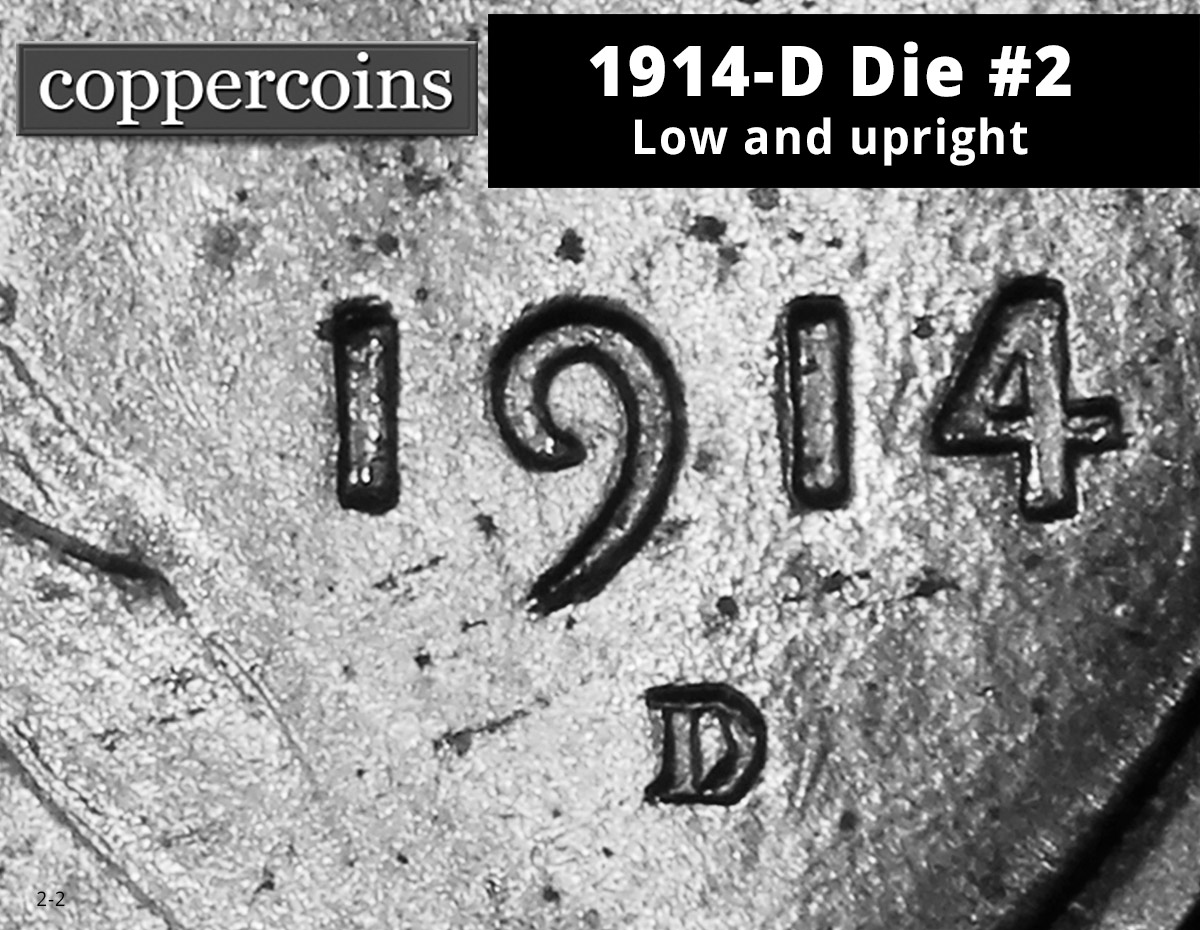
  3. Die #02: scratches behind GOD WE; mint mark tilts slightly left
  4. Die #03: lapel-to-rim die crack (mid state on); not the only genuine marker
  5. Die #04: scarce, “normal” look — position only (left of center)

Die pairs that struck this issue

Die #01 Very common. Normal placement with noticeable right tilt. Late state: soft details, heavy flow lines, reverse Lincoln “ghost,” N–S reverse scratches through E·PL, possible rim cud.

How to recognize: Very common. Normal placement with noticeable right tilt. Late state: soft details, heavy flow lines, reverse Lincoln “ghost,” N–S reverse scratches through E·PL, possible rim cud.

Relative frequency: Very common. Study sample: 79 of 261 (30.3%). Assumed die mintage: ~361,475. Known to very late die state. Indirect die transfer can put a ghostly upside-down Lincoln bust on the reverse. Late reverse scratches run generally north–south through the E, dot, and PL of the motto.

  • 1914-D Die #01 — earlier state, right-tilted mint mark
    1914-D Die #01 — earlier state, right-tilted mint mark
  • 1914-D Die #01 — late die state wear
    1914-D Die #01 — late die state wear
  • 1914-D Die #01 — late reverse markers
    1914-D Die #01 — late reverse markers
Die #02 Very common (most used). Mint mark slightly low/centered with unusual slight left tilt. Die scratches in field behind “GOD WE” persist through much of the die’s life.

How to recognize: Very common (most used). Mint mark slightly low/centered with unusual slight left tilt. Die scratches in field behind “GOD WE” persist through much of the die’s life.

Relative frequency: Very common. Study sample: 87 of 261 (33.3%). Assumed die mintage: ~397,675. Presumed most-used 1914-D die (~⅓ of the issue). On worn coins, rely on mint-mark placement/tilt when scratches are gone.

  • 1914-D Die #02 — slight left tilt
    1914-D Die #02 — slight left tilt
  • 1914-D Die #02 — upper-obverse die scratches
    1914-D Die #02 — upper-obverse die scratches
Die #03 Common. Mint mark left of center, vertically centered, nearly upright. Classic die crack along the lapel to the lower rim (from mid state). Later: rim cud ~2:00–3:00.

How to recognize: Common. Mint mark left of center, vertically centered, nearly upright. Classic die crack along the lapel to the lower rim (from mid state). Later: rim cud ~2:00–3:00.

Relative frequency: Common. Study sample: 69 of 261 (26.4%). Assumed die mintage: ~314,950. Easy to ID once the lapel crack appears, but absence of the crack does not mean fake — Dies #01, #02, and #04 also exist.

  • 1914-D Die #03 — left-of-center mint mark
    1914-D Die #03 — left-of-center mint mark
  • 1914-D Die #03 — lapel-to-rim die crack
    1914-D Die #03 — lapel-to-rim die crack
  • 1914-D Die #03 — additional markers
    1914-D Die #03 — additional markers
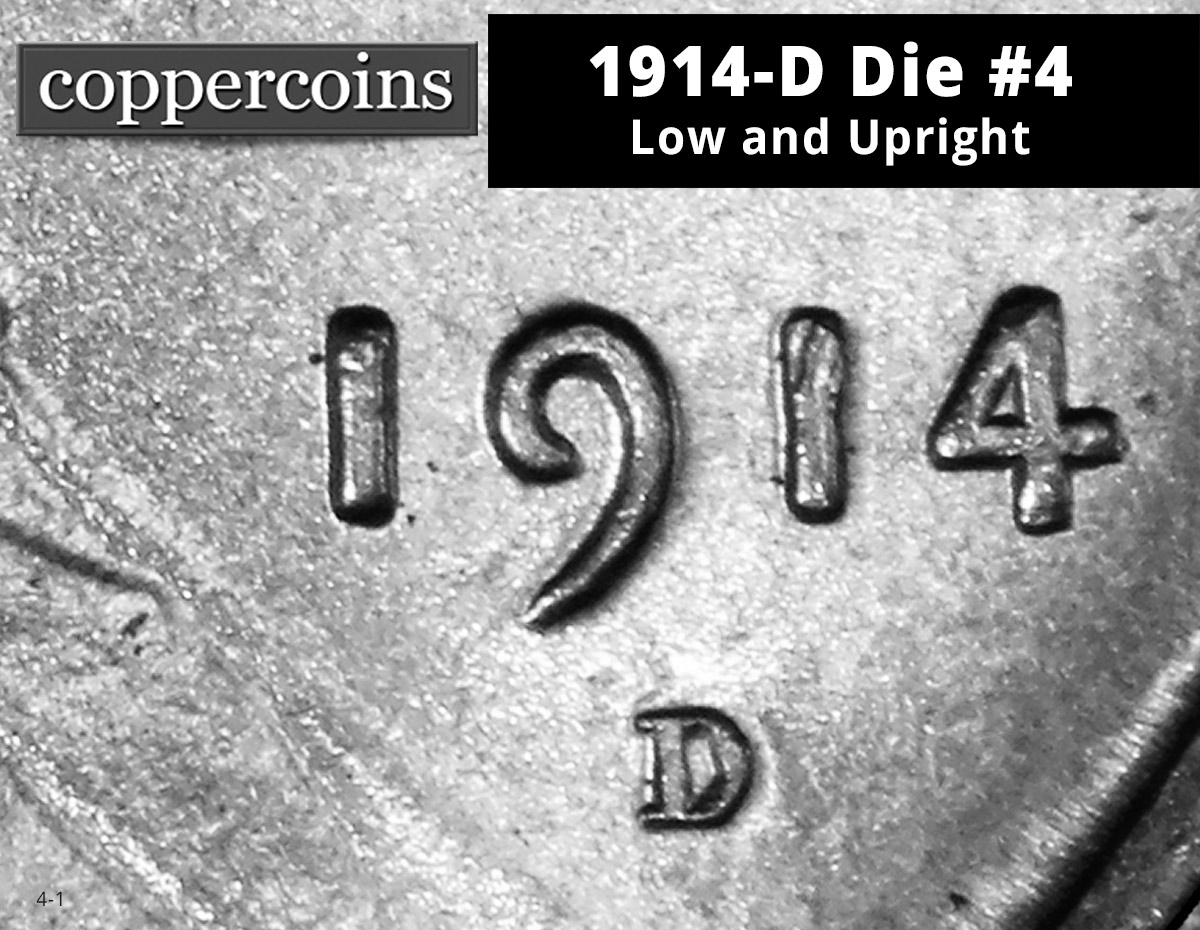
Die #04 Scarce. Looks “normal”: mint mark slightly low, slight left tilt, notably right of center vs #03; centerline passes barely right of the 9 (left of center overall). No crack/cud suite.

How to recognize: Scarce. Looks “normal”: mint mark slightly low, slight left tilt, notably right of center vs #03; centerline passes barely right of the 9 (left of center overall). No crack/cud suite.

Relative frequency: Scarce. Study sample: 26 of 261 (10.0%). Assumed die mintage: ~119,300. Hardest to spot because markers are subtle — mint-mark position is the key diagnostic.

  • 1914-D Die #04 — scarce “normal” position die
    1914-D Die #04 — scarce “normal” position die

Related

1914 Date Guide All key-date packages Search 1914-D dies