1914 Lincoln Cent Date Guide

World War I begins; cents keep circulating

(sponsored)

1914 overview Mintage, history, and notes for this year's cents

Philadelphia (MS)

Photo Credit: Cotgreave Collection

(click images above to see larger view)

Mintage
75,238,432
Mintage Ranking for Type
(73 of 140)

Denver (MS)

Photo Credit: Cotgreave Collection

(click images above to see larger view)

Mintage
1,193,000
Mintage Ranking for Type
(138 of 140)

San Francisco (MS)

Photo Credit: Cotgreave Collection

(click images above to see larger view)

Mintage
4,137,000
Mintage Ranking for Type
(134 of 140)

Philadelphia (PR)

(click images above to see larger view)

Mintage
1,365
Mintage Ranking for Type
(23 of 26)

1914 in history

1914 in history
  • Lincoln cents and Buffalo nickels continued in circulation as Europe plunged into war and U.S. markets grew uneasy.
  • Archduke Franz Ferdinand of Austria was assassinated in Sarajevo on June 28, triggering World War I.
  • Germany declared war on Russia and France in early August; Britain entered the war on August 4.
  • President Wilson proclaimed U.S. neutrality while American trade with belligerent nations drew criticism.
  • The Panama Canal opened to commercial traffic on August 15.
  • The Federal Trade Commission was established to police unfair business practices.
  • Babe Ruth made his major league debut with the Boston Red Sox.
  • The Christmas truce along parts of the Western Front briefly halted fighting in December.

1914 Lincoln cent year notes

The 1914 cent is usually found with better detail than 1911 through 1913 cents, and has always been more sought after than other dates in the teens. In fact, for many years after its release, the 1914-D and S mint cents were considered to be the key issues of the series, outweighing 1909-S and 1909-S V.D.B. cents in value by nearly double, even though their mintage was much higher.

As for items of note to look for, if it had not been for the 1914-D cent's very low mintage, this year's cents would be right on the bottom with 1913. There has been virtually nothing of note reported on 1914 cents regarding die varieties.

The major issue to watch for in this year's cents is counterfeit 1914-D cents. Because of their high value and demand, they are one of the most counterfeited U.S. coins. The most common method of counterfeiting these is by shaving the left half of the first 4 digit down on a 1944-D cent to make it look like a 1 on a 1914-D.

These are very easy to spot; the date has an awkward space where the 4 was shaved, the bust is too high in relief and lacks detail, and the rims are not thick as is common on 1914 cents. In addition, the most telling sign of all is that 1944 cents have the V.D.B. initials on the truncation of Lincoln's shoulder, a feature that was not on 1914 cents. The initials were added to the obverse in 1918. With little practice, the fakes are usually easy to spot. However, authentication is the key. If you are not certain, don't buy it.

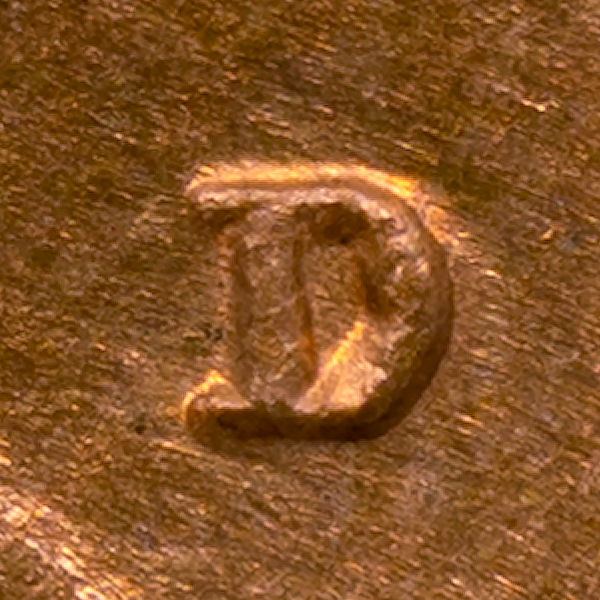
The other common method of counterfeiting, like the 1909-S issues, is by adding a mintmark to a genuine 1914 cent. These are much more dangerous than the shaved 1944-D cents because all the details on the coin will match a genuine 1914-D cent, except for the mintmark itself. If you are going to buy an uncertified 1914-D cent, examine the mintmark area very carefully for seams, and make certain that you know the proper mintmark style used in 1914. It is narrow and usually sits in a depression caused by the mintmark punch. Added mintmarks will usually not have this depression.

-[Caption for photos]: On the left is the proper mintmark style used on cents between 1911 and 1932. On the right is the mintmark style introduced in 1933.

Images/Mintage Mint issues and coin images for 1914

Philadelphia (MS)

Photo Credit: Cotgreave Collection

(click images above to see larger view)

Mintage
75,238,432
Mintage Ranking for Type
(73 of 140)

Denver (MS)

Photo Credit: Cotgreave Collection

(click images above to see larger view)

Mintage
1,193,000
Mintage Ranking for Type
(138 of 140)

San Francisco (MS)

Photo Credit: Cotgreave Collection

(click images above to see larger view)

Mintage
4,137,000
Mintage Ranking for Type
(134 of 140)

Philadelphia (PR)

(click images above to see larger view)

Mintage
1,365
Mintage Ranking for Type
(23 of 26)
1914 in history What else was happening that year
1914 in history
  • Lincoln cents and Buffalo nickels continued in circulation as Europe plunged into war and U.S. markets grew uneasy.
  • Archduke Franz Ferdinand of Austria was assassinated in Sarajevo on June 28, triggering World War I.
  • Germany declared war on Russia and France in early August; Britain entered the war on August 4.
  • President Wilson proclaimed U.S. neutrality while American trade with belligerent nations drew criticism.
  • The Panama Canal opened to commercial traffic on August 15.
  • The Federal Trade Commission was established to police unfair business practices.
  • Babe Ruth made his major league debut with the Boston Red Sox.
  • The Christmas truce along parts of the Western Front briefly halted fighting in December.
1914 cent notes Collector notes for this year's Lincoln cents

The 1914 cent is usually found with better detail than 1911 through 1913 cents, and has always been more sought after than other dates in the teens. In fact, for many years after its release, the 1914-D and S mint cents were considered to be the key issues of the series, outweighing 1909-S and 1909-S V.D.B. cents in value by nearly double, even though their mintage was much higher.

As for items of note to look for, if it had not been for the 1914-D cent's very low mintage, this year's cents would be right on the bottom with 1913. There has been virtually nothing of note reported on 1914 cents regarding die varieties.

The major issue to watch for in this year's cents is counterfeit 1914-D cents. Because of their high value and demand, they are one of the most counterfeited U.S. coins. The most common method of counterfeiting these is by shaving the left half of the first 4 digit down on a 1944-D cent to make it look like a 1 on a 1914-D.

These are very easy to spot; the date has an awkward space where the 4 was shaved, the bust is too high in relief and lacks detail, and the rims are not thick as is common on 1914 cents. In addition, the most telling sign of all is that 1944 cents have the V.D.B. initials on the truncation of Lincoln's shoulder, a feature that was not on 1914 cents. The initials were added to the obverse in 1918. With little practice, the fakes are usually easy to spot. However, authentication is the key. If you are not certain, don't buy it.

The other common method of counterfeiting, like the 1909-S issues, is by adding a mintmark to a genuine 1914 cent. These are much more dangerous than the shaved 1944-D cents because all the details on the coin will match a genuine 1914-D cent, except for the mintmark itself. If you are going to buy an uncertified 1914-D cent, examine the mintmark area very carefully for seams, and make certain that you know the proper mintmark style used in 1914. It is narrow and usually sits in a depression caused by the mintmark punch. Added mintmarks will usually not have this depression.

-[Caption for photos]: On the left is the proper mintmark style used on cents between 1911 and 1932. On the right is the mintmark style introduced in 1933.

Key Dates & Errors Key dates, valuable errors, and genuine vs fake guidance for 1914

1914-D Key date

Mintage 1,193,000 from only four known dies (about 298,250 coins per die on average). Classic Denver key — added mint marks and date alterations are well known.

Diagnostics in this package come from Chuck Daughtrey’s die study (Keys to the Lincoln, 2018). Mint marks were punched into working dies by hand until 1990, so position (and often tilt) separates dies. Overlays against fixed design elements such as the date make those differences more obvious and helpful in attribution to die and determining counterfeits. Measurements between the closest point of the middle date digits and the mint mark help confirm which die struck a coin.

Study sample: 261 different 1914-D coins. Relative frequencies: #01 very common (~30%), #02 very common (~33%), #03 common (~26%), #04 scarce (~10%).

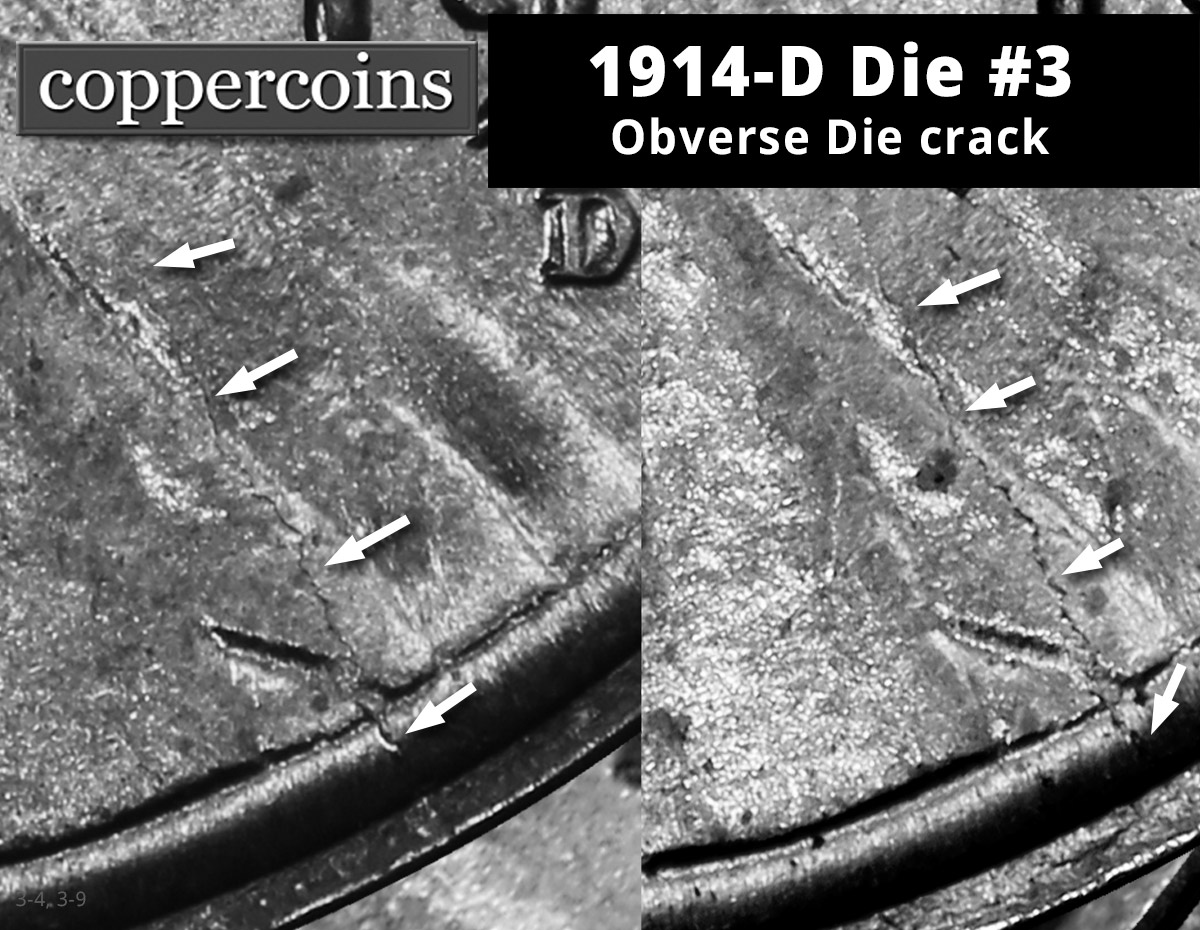
The famous lapel die crack on Die #03 was once treated as “the” genuine marker — three other dies also struck genuine coins without that crack. All images in this study are courtesy of PCGS Coinfacts.

Known fakes & alterations

Key and semi-key Lincoln cents are the focus of authenticators and counterfeiters alike. Common alteration methods include:

  1. Adding a mint mark to a common Philadelphia issue of the same date (for example, turning a 1914 into a 1914-D).
  2. Scraping or altering digits of a common date (for example, turning a 1944-D into a 1914-D).
  3. Copying genuine coins by spark erosion or soft-die transposition.

Crude alterations usually fail under close study because device details and mint-mark character are wrong. Matching a coin to one of the few known genuine dies for the issue is a powerful authenticity check. When in doubt, use a trusted third-party grading service.

1914-D is heavily targeted: added D mint marks on 1914 Philadelphia cents, and altered 1944-D dates scraped into “1914-D.” Match to a known die (and die-state markers where present) before accepting a raw coin as genuine.

Quick checklist

  1. Match mint-mark placement and tilt to one of the four dies
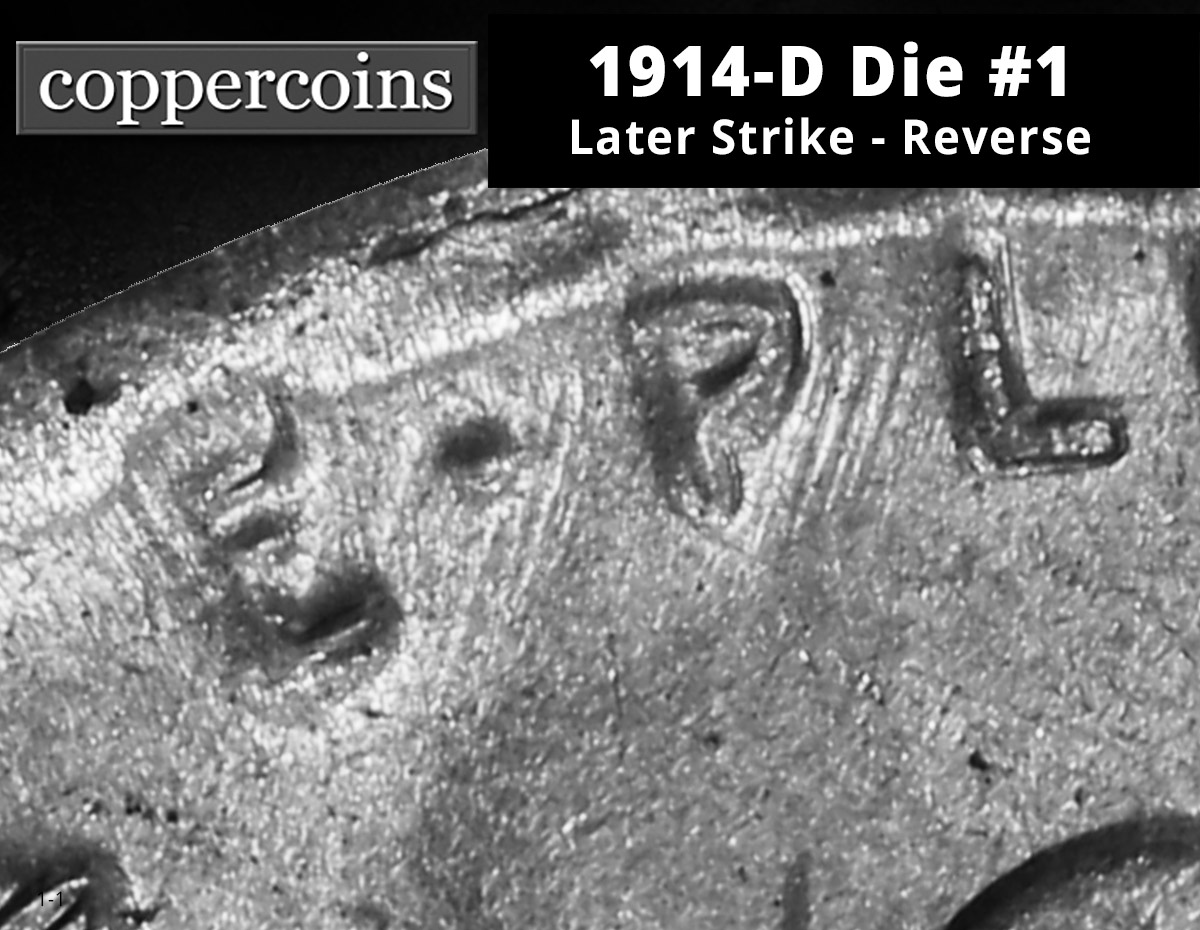
  2. Die #01 late state: reverse ghosting + N–S scratches through E·PL of motto
  3. Die #02: scratches behind GOD WE; mint mark tilts slightly left
  4. Die #03: lapel-to-rim die crack (mid state on); not the only genuine marker
  5. Die #04: scarce, “normal” look — position only (left of center)

Die pairs that struck this issue

Die #01 Very common. Normal placement with noticeable right tilt. Late state: soft details, heavy flow lines, reverse Lincoln “ghost,” N–S reverse scratches through E·PL, possible rim cud.

How to recognize: Very common. Normal placement with noticeable right tilt. Late state: soft details, heavy flow lines, reverse Lincoln “ghost,” N–S reverse scratches through E·PL, possible rim cud.

Relative frequency: Very common. Study sample: 79 of 261 (30.3%). Assumed die mintage: ~361,475. Known to very late die state. Indirect die transfer can put a ghostly upside-down Lincoln bust on the reverse. Late reverse scratches run generally north–south through the E, dot, and PL of the motto.

  • 1914-D Die #01 — earlier state, right-tilted mint mark
    1914-D Die #01 — earlier state, right-tilted mint mark
  • 1914-D Die #01 — late die state wear
    1914-D Die #01 — late die state wear
  • 1914-D Die #01 — late reverse markers
    1914-D Die #01 — late reverse markers
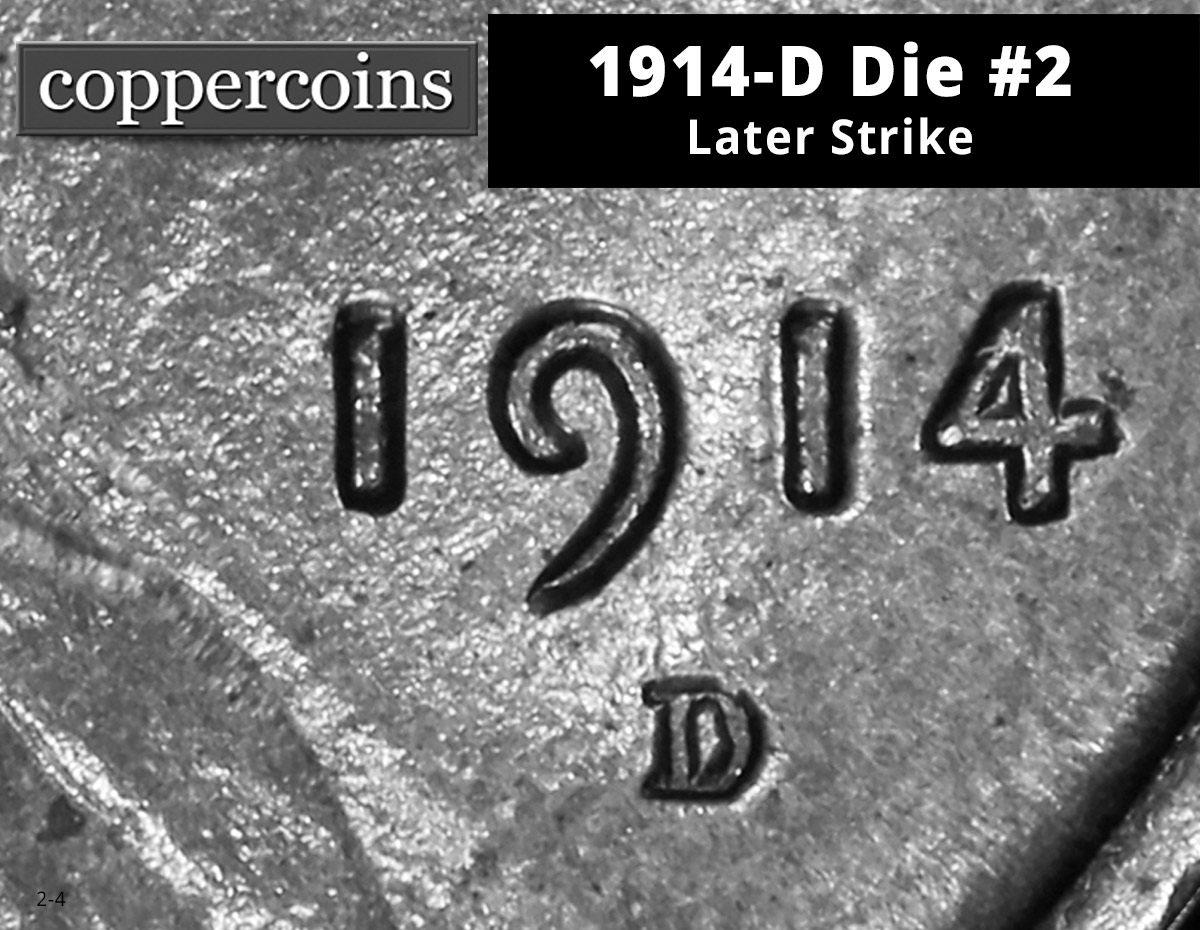
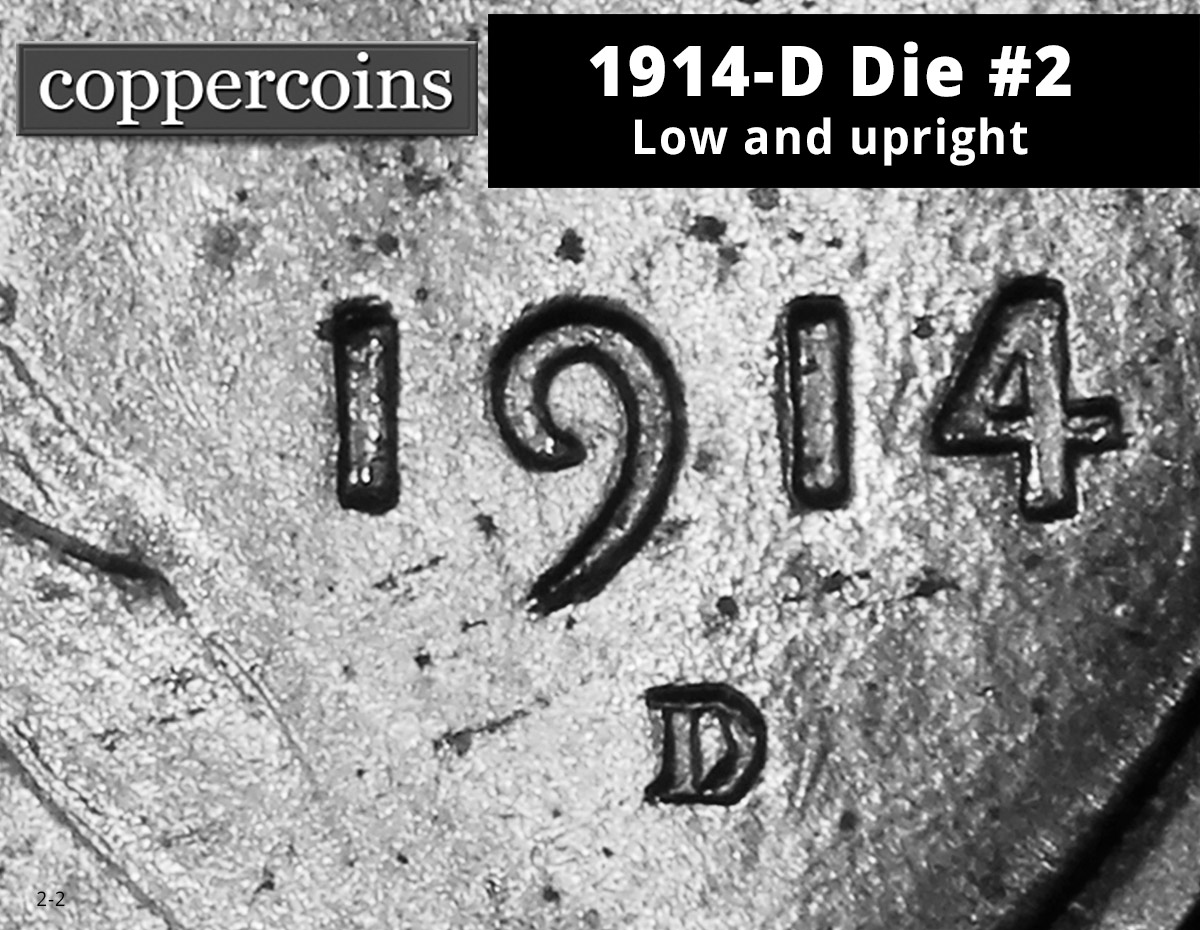
Die #02 Very common (most used). Mint mark slightly low/centered with unusual slight left tilt. Die scratches in field behind “GOD WE” persist through much of the die’s life.

How to recognize: Very common (most used). Mint mark slightly low/centered with unusual slight left tilt. Die scratches in field behind “GOD WE” persist through much of the die’s life.

Relative frequency: Very common. Study sample: 87 of 261 (33.3%). Assumed die mintage: ~397,675. Presumed most-used 1914-D die (~⅓ of the issue). On worn coins, rely on mint-mark placement/tilt when scratches are gone.

  • 1914-D Die #02 — slight left tilt
    1914-D Die #02 — slight left tilt
  • 1914-D Die #02 — upper-obverse die scratches
    1914-D Die #02 — upper-obverse die scratches
Die #03 Common. Mint mark left of center, vertically centered, nearly upright. Classic die crack along the lapel to the lower rim (from mid state). Later: rim cud ~2:00–3:00.

How to recognize: Common. Mint mark left of center, vertically centered, nearly upright. Classic die crack along the lapel to the lower rim (from mid state). Later: rim cud ~2:00–3:00.

Relative frequency: Common. Study sample: 69 of 261 (26.4%). Assumed die mintage: ~314,950. Easy to ID once the lapel crack appears, but absence of the crack does not mean fake — Dies #01, #02, and #04 also exist.

  • 1914-D Die #03 — left-of-center mint mark
    1914-D Die #03 — left-of-center mint mark
  • 1914-D Die #03 — lapel-to-rim die crack
    1914-D Die #03 — lapel-to-rim die crack
  • 1914-D Die #03 — additional markers
    1914-D Die #03 — additional markers
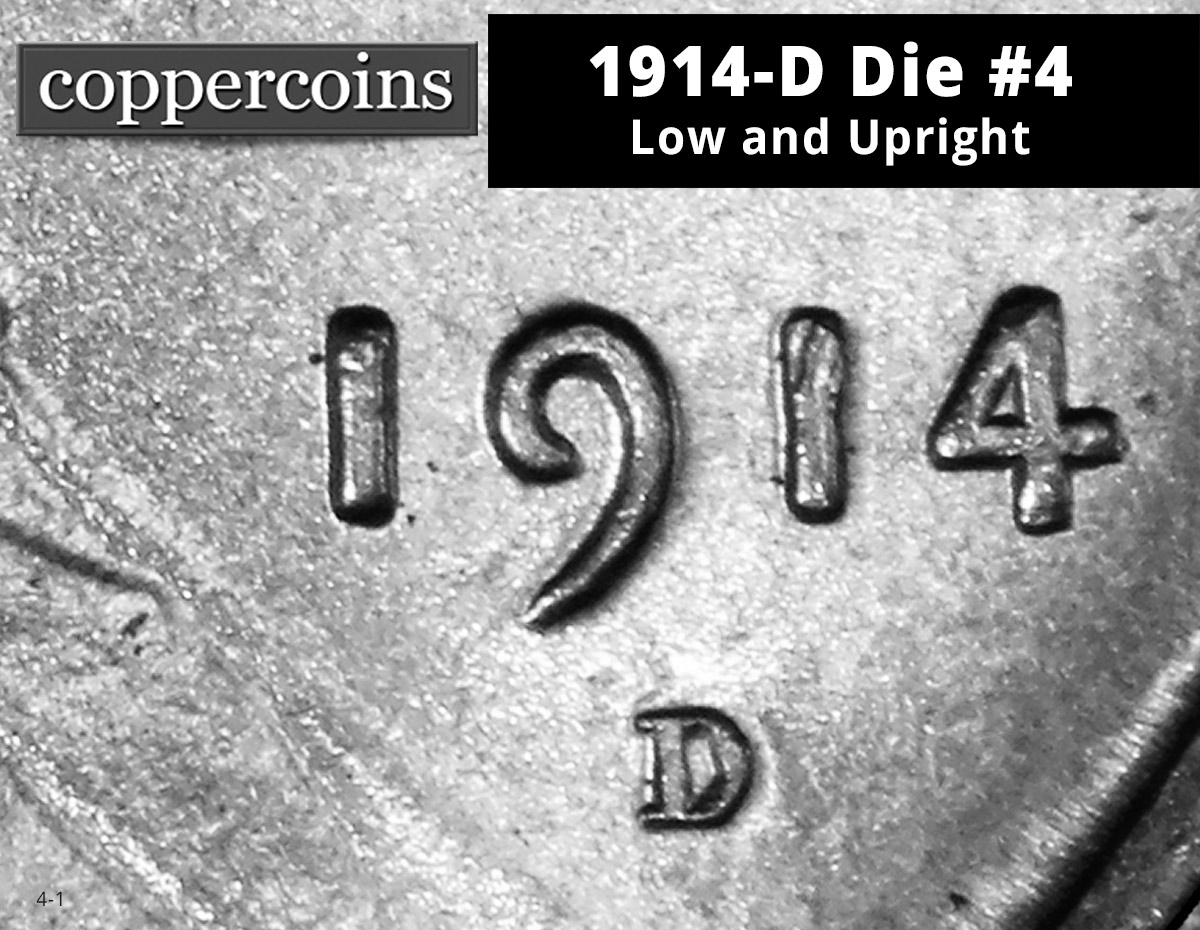
Die #04 Scarce. Looks “normal”: mint mark slightly low, slight left tilt, notably right of center vs #03; centerline passes barely right of the 9 (left of center overall). No crack/cud suite.

How to recognize: Scarce. Looks “normal”: mint mark slightly low, slight left tilt, notably right of center vs #03; centerline passes barely right of the 9 (left of center overall). No crack/cud suite.

Relative frequency: Scarce. Study sample: 26 of 261 (10.0%). Assumed die mintage: ~119,300. Hardest to spot because markers are subtle — mint-mark position is the key diagnostic.

  • 1914-D Die #04 — scarce “normal” position die
    1914-D Die #04 — scarce “normal” position die
Design types Obverse and reverse engravings in use for 1914

Obverse design types (ODT)

Reverse design types (RDT)

Mint mark types Punch styles used on 1914 Lincoln cents
  • Early-D mint mark
    Early-D — 1911–1920 · business · 1922 · business · 1924–1933 · business
  • Early-S mint mark
    Early-S — 1909–1916 · business
Typical values Series price guide for regular-issue 1914 cents

1914 Lincoln cents from the CopperCoins series price guide (August/September 2026 edition) — approximate values only, not offers to buy or sell. Business strikes show separate BN, RB, and RD lines where priced.

Business strike

Issue G4 VG8 F12 VF20 EF40 EF45
1914-P BN 1.55 3.40 7 13.25 22 26
1914-P RB
1914-P RD
1914-D BN 173 236 280 490 850 1,050
1914-D RB
1914-D RD
1914-S BN 17.25 22.75 27.25 32.50 79 95
1914-S RB
1914-S RD
Issue G4 VG8 F12 VF20 EF40 EF45
1914-P BN 1.55 3.40 7 13.25 22 26
1914-P RB
1914-P RD
1914-D BN 173 236 280 490 850 1,050
1914-D RB
1914-D RD
1914-S BN 17.25 22.75 27.25 32.50 79 95
1914-S RB
1914-S RD

Proof

Issue PR60 PR61 PR62
1914-P BN 335 330 420
1914-P RB 460 390 480
1914-P RD 630
Issue PR60 PR61 PR62
1914-P BN 335 330 420
1914-P RB 460 390 480
1914-P RD 630
Die varieties in the catalog Attributed 1914 dies by mint and variety type

Our attribution catalog for 1914—doubled dies, repunched mint marks, and related varieties documented by die number. This is specialist research beyond regular issue Lincoln cents.

Search all 1914 dies Variety value guide for 1914

Catalogued dies for 1914

CopperCoins has not catalogued die varieties for 1914 yet.

(sponsored)