






There are some Lincoln cent varieties that everybody talks about, and then there are the ones that quietly sit in the background while the people who know them keep looking. Re-punched mint marks are a perfect example of this. Some are famous because they made it into a popular book. Some are valuable because registry collectors chased them hard. Some are not nearly as famous as they ought to be, yet they are the coins that can make a collector stop what he is doing and say, "Now that is a good one."
This list is not meant to be a list of the most expensive RPMs, and it is not meant to be a list of the ten easiest ones to sell. This is a collector's list. These are ten modern Lincoln cent RPMs I would not want to miss picking up soon, especially if you are trying to build a serious modern RPM collection and not just a box full of whatever happened to be easy to find. Some of these are popular. Some are sleepers. A few are honestly just hard. That is exactly why they belong here.
10. 1959D-1MM-001
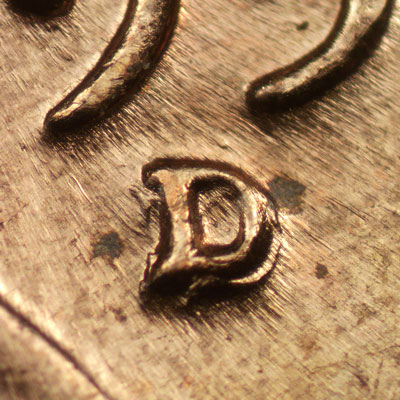
This die is one of those coins that became famous because it was seen by a much wider audience than most die varieties ever get. It is a very nice D/D/D repunched mint mark, and the spread is obvious enough that it does not require a collector to talk himself into seeing it. That helps. A variety can be interesting all day long, but if the feature is obvious, it usually has a much easier time gaining a following.
The catch is that this coin is not really scarce. It can be found, and there are enough examples around that I would not call it scarce in the usual sense. The problem is demand. Once a die variety gets listed in the Cherrypickers' Guide and later becomes recognized by PCGS, the market changes. Better grade pieces start disappearing into collections. Some are hoarded. Some go into registry sets. Some just sit in holders because the owner knows exactly what he has. So while the die itself is not extremely rare, nice examples are becoming less casual to acquire than they once were. If you want one, do not wait around expecting the market to forget it.
9. 1968D-1MM-001
This die is another one that owes a lot of its market strength to outside recognition. It is a very nice repunched mint mark with good features, and it has been listed in the Cherrypickers' Guide for years. It also became a PCGS recognized coin required for the with-varieties registry set. That matters. Once registry collectors get involved, especially those with deep pockets and a reason to compete, higher-grade examples can vanish fast, and values for the remaining examples skyrocket.
In truth, this die is not all that hard to find compared to some others on this list. That is why it is not higher in the countdown. Still, it is one of the RPMs a modern Lincoln cent collector needs to understand because it shows how demand can shape the market almost as much as rarity. A coin does not have to be impossible to locate to become expensive in better grades. It just needs enough people needing the same slot at the same time. The 1968-D 1MM-001 is a good lesson in that.
8. 1970S-1MM-004P (Proof)

Proof RPMs are their own little corner of the hobby, and a lot of collectors still do not think about them. That is part of what makes them fun. Many people look through proof sets for cameo contrast, haze, spots, or maybe a known doubled die, but re-punched mint marks in proof coinage do not always get the attention they deserve. 1970-S 1MM-004P is one of a short list of known proof RPMs, and it is harder to acquire than most people realize.
These can be a nice windfall when found in proof sets. They are not the kind of coin that usually makes loud headlines, but they can sell in the $20 to $50 range, and sometimes the best part is that the original set was bought for far less than the variety is worth. That is the kind of collecting math I like. It rewards the person willing to slow down and look where other people are not looking. Proof RPMs are not common across U.S. coinage, and this one belongs on the radar.
7. 1960D-1MM-004
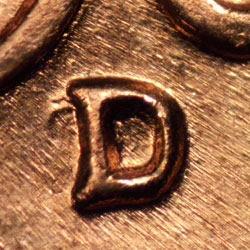
This die is not the loudest variety in the room, but it is one of those coins that becomes very important when you are actually trying to complete a Lincoln cent RPM collection. There are varieties that look dramatic and there are varieties that are just necessary. This one leans more toward necessary, but do not let that make you think it is easy.
It is very scarce in all grades, and one of the interesting things about it is that it is not known past mid-die state. That suggests the die may not have had a long run. A limited run means fewer coins, fewer survivors, and fewer chances for collectors to find one later. This is the sort of coin that can frustrate people because it is not always treated like a major die variety, yet when you need it, you need it. Be prepared to bite the bullet. A decent example can cost up to $100, and I would not be shocked to see determined collectors pay strong money when the right coin appears.
6. 1960D-1MM-100
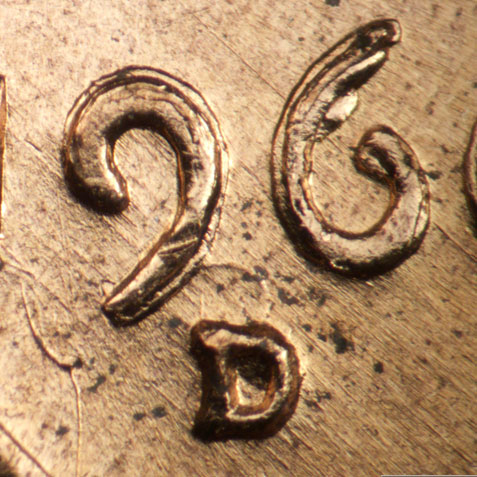
This die is wild as an RPM, but the real reason collectors pay attention is what comes with it. This die is coupled with 1960D-1DO-001, a Class III design hub doubled die showing a small date hubbing over a large date hubbing. That gives the coin a whole different level of appeal. It is not just an RPM. It is not just a doubled die. It is an RPM tied to one of the more interesting design hub stories in the 1960 cent issue.
That matters because collectors like coins with more than one reason to care. Scarce is good. Interesting is good. Valuable is good. This coin manages to put all three in one place. It is the kind of variety that can be explained to a collector who has never seen it before, and once he understands what is going on, the light comes on. It has that "wait, it has both?" quality. Those coins tend to hold attention over time.
5. 1971S-1MM-010P (Proof)

This die is a very rare proof repunched mint mark with a nice spread, and that combination is not something to ignore. Proof RPMs in general are scarce across U.S. coins, and this one is not just rare; it actually shows well enough to make the hunt worthwhile.
This is a coin that many collectors will never find because they are not looking in the right place. They may search rolls, bags, dealer stock, and albums, but proof sets sit off to the side. Modern proof coins can feel too perfect, too packaged, too removed from the normal hunt. That is a mistake. Proof dies were made by people too, and mint marks were still punched into working dies during this era. When the secondary mint mark shows well, you end up with a proof coin that has both eye appeal and variety appeal. 1971S-1MM-010P is exactly the sort of coin I would want tucked away before more collectors decide proof RPMs are worth serious attention.
4. 1987D-1MM-021
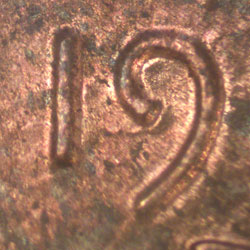
This die has almost everything a variety collector could ask for. It is unusual, it is rare, and it gives you something to point at that is not just a tiny spread hiding inside the mint mark. The secondary mint mark is located near the top of the 1 and 9 of the date, which is an odd and memorable placement. That makes the coin stand out in a way many late-era RPMs do not.
The bigger issue is rarity. There are fewer than a dozen verified examples known. That is not casual scarcity. That is the kind of number that should make a collector pay attention immediately. When a variety has that few confirmed pieces, the opportunity to buy one may not come very often. If one does appear, it may not be cheap, and it may not sit around waiting for a second thought. This is one of those modern RPMs where the best advice is simple: if you need it and you can afford it, do not assume another one will be right behind it.
3. 1987D-1MM-003
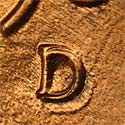
This die is a beautiful and scarce example of a major re-punched mint mark from the final era of hand-punched mint marks. That final-era part matters. By the late 1980s, RPMs are generally tough to locate, and the dramatic ones are even more desirable because the issue was often minted by hundreds of working dies, making coins minted by individual dies harder to locate in the vast sea of similar coins. Additionally, being an early zinc cent means corrosion was often present, which killed many coins after only a couple of years of circulation or storage. This one sits right in the middle of that difficult period and gives collectors a near-perfect example of what a really nice RPM can be.
It has the look. It has the scarcity. It has the value to prove that collectors are paying attention. For someone building a modern Lincoln cent RPM set, this is not just another number on a checklist. It is one of the coins that gives the set some backbone. It is strong enough to stand on its own, and it is difficult enough that ownership actually means something.
2. 1973D-1MM-009
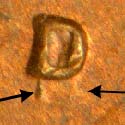
This die is a quiet sleeper in Memorial cents. It rarely comes up in casual conversation, and that is exactly why I like it. The collectors who are familiar with it know to scope out their 1973-D cents specifically looking for it, but it has not become one of those varieties everybody talks about at every show or in every online discussion.
That kind of quiet can be temporary. A scarce coin with a small but serious following can sit under the radar for a long time, and then one day people realize there are not many available. By then many examples are in private collections out of reach or are victims of circulation damage and ultimate destruction. The 1973D-1MM-009 is pretty rare, and it sits in an area of the series that still has room for collector education. If you like buying coins before the crowd wakes up, this is exactly the sort of RPM I would pay attention to. It is not flashy hype. It is the quieter kind of good coin, and those can be the most satisfying to own.
1. 1960-D 1MM-044

This die is the one I would not want to miss. It is surprisingly difficult to locate, and it slips under the radar of most collectors, even seasoned collectors. That is not easy to do in 1960-D. The 1960-D Lincoln cent is the most popularly collected RPM year, and it has been studied heavily for decades. When something from that year is still genuinely hard to find, that matters.
Demand is generally weak for this die because most people have no idea they are so scarce and don’t pay attention because this is not an obvious RPM. It also fills a difficult spot in a very popular year. Collectors love 1960-D RPMs. They like the date, they like the mint, they like the number of known varieties, and they like the challenge of building depth in that year. But 1960D-1MM-044 is not one that just falls into your hand every time you look. It is one of those coins people may underestimate until they try to buy one.
That is why it takes the top spot here. It combines the sleeper effect, difficulty, and collector relevance. It is not just rare in some obscure corner nobody cares about. It is difficult within a year that a lot of collectors actively pursue. That is the important part. A tough coin in a quiet series can remain quiet forever. A tough coin in a popular series eventually gets noticed. If I were building a serious modern Lincoln cent RPM collection and had a chance to pick up a solid 1960D-1MM-044, I would not waste much time talking myself out of it.
Final Thoughts
The best RPMs are not always the ones with the loudest reputation. Sometimes the smartest buys are the coins that have real collector importance before the wider market fully catches up. The ten coins in this countdown each bring something different to the table: fame, registry pressure, proof rarity, late-era scarcity, unusual placement, limited die state, or plain old difficulty.
If you collect modern Lincoln cent RPMs, these are coins worth knowing now. Some are already expensive. Some are still sleepers. Some may only show up when another collector decides to let one go. That is the fun and the frustration of this part of the hobby. The coins are out there, but not always when you want them, and not always at a price that makes you smile. Still, when the right one appears, it can be the difference between an ordinary RPM collection and one that shows real depth.


Comments (1)
Share feedback or notes after reading. Keep it civil and on-topic.