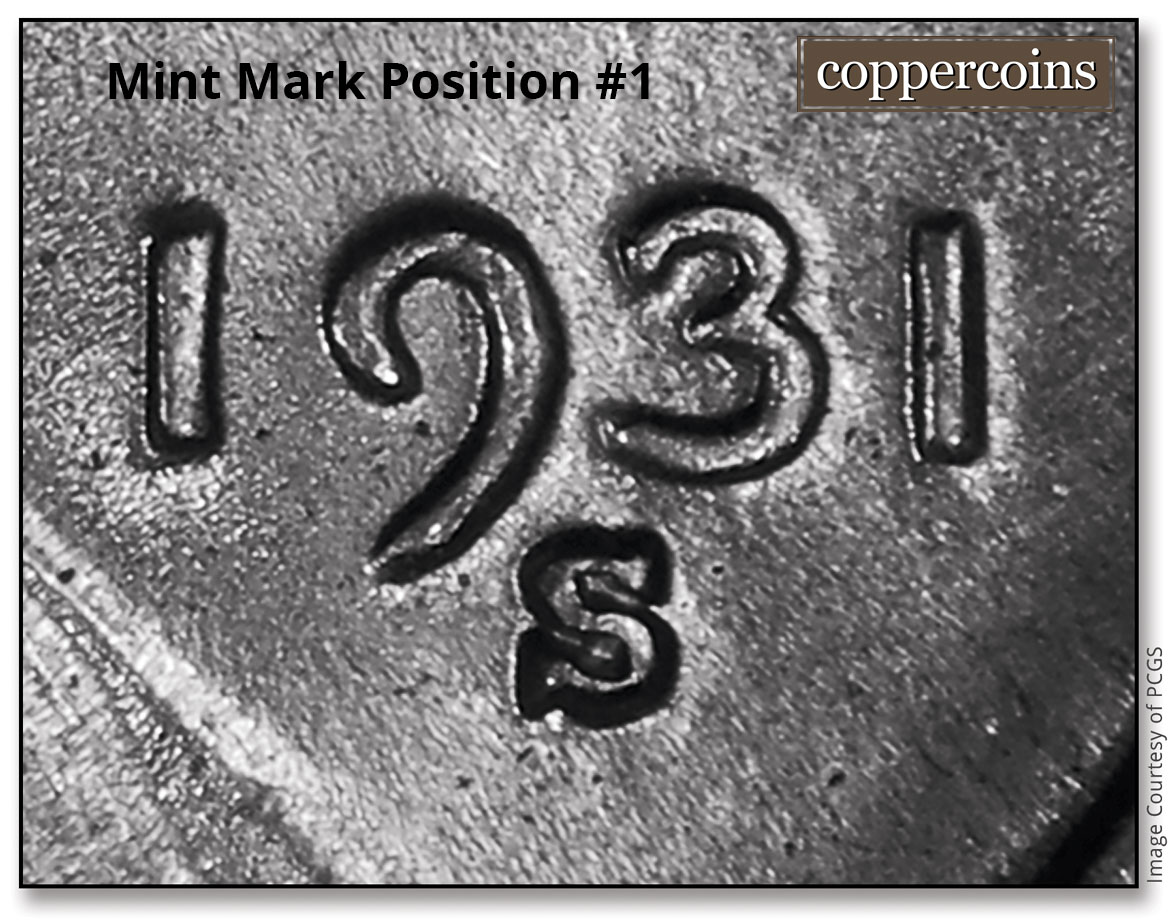
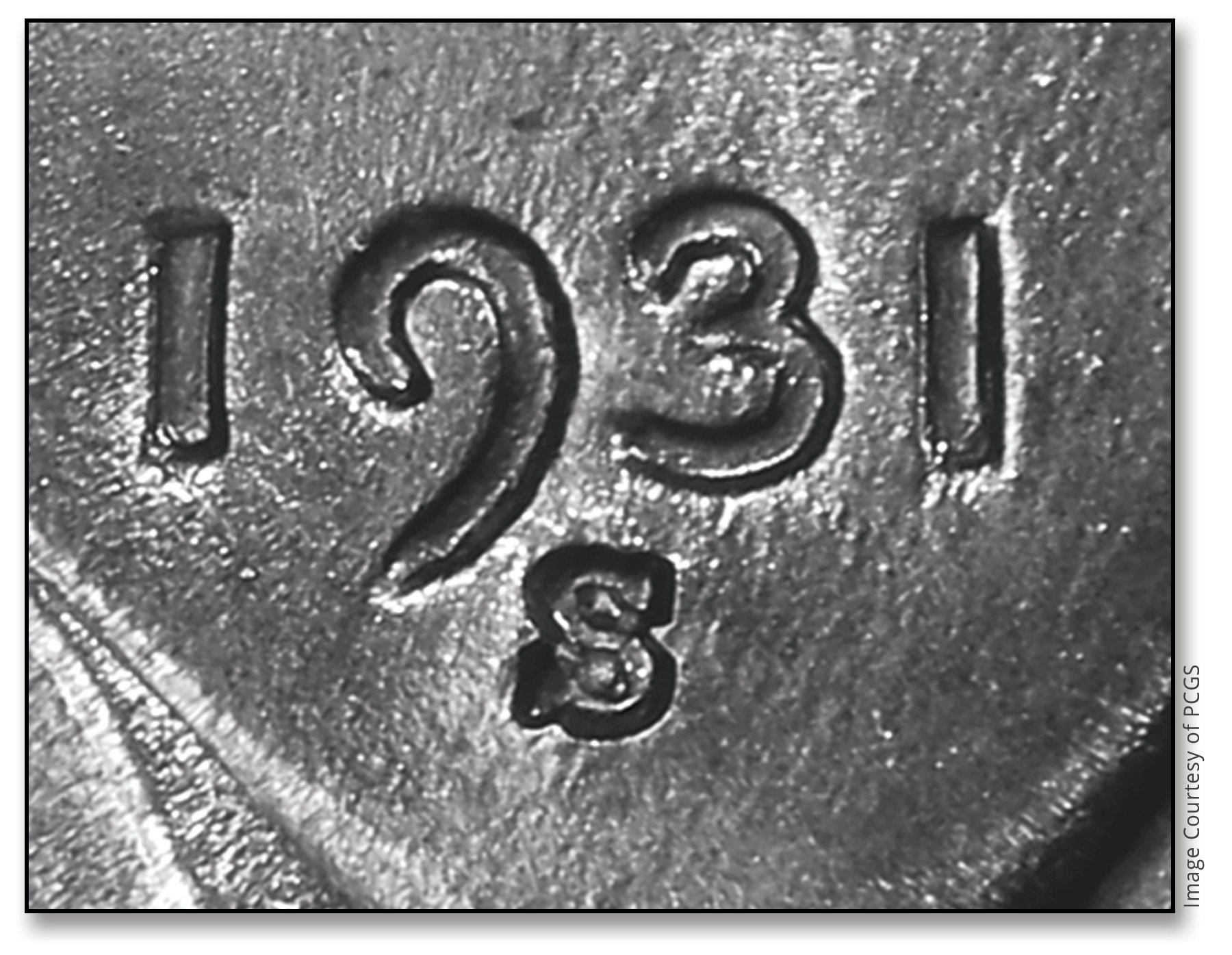
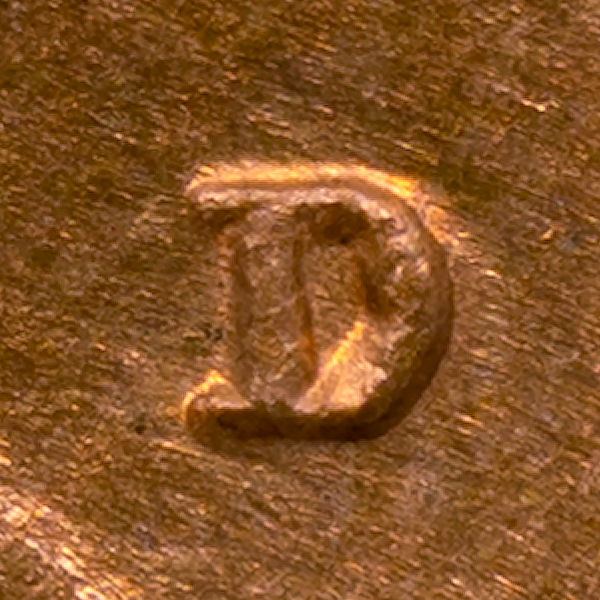
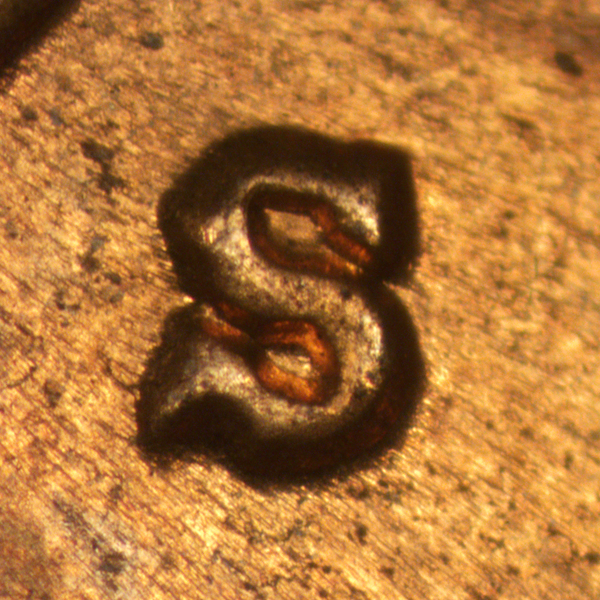
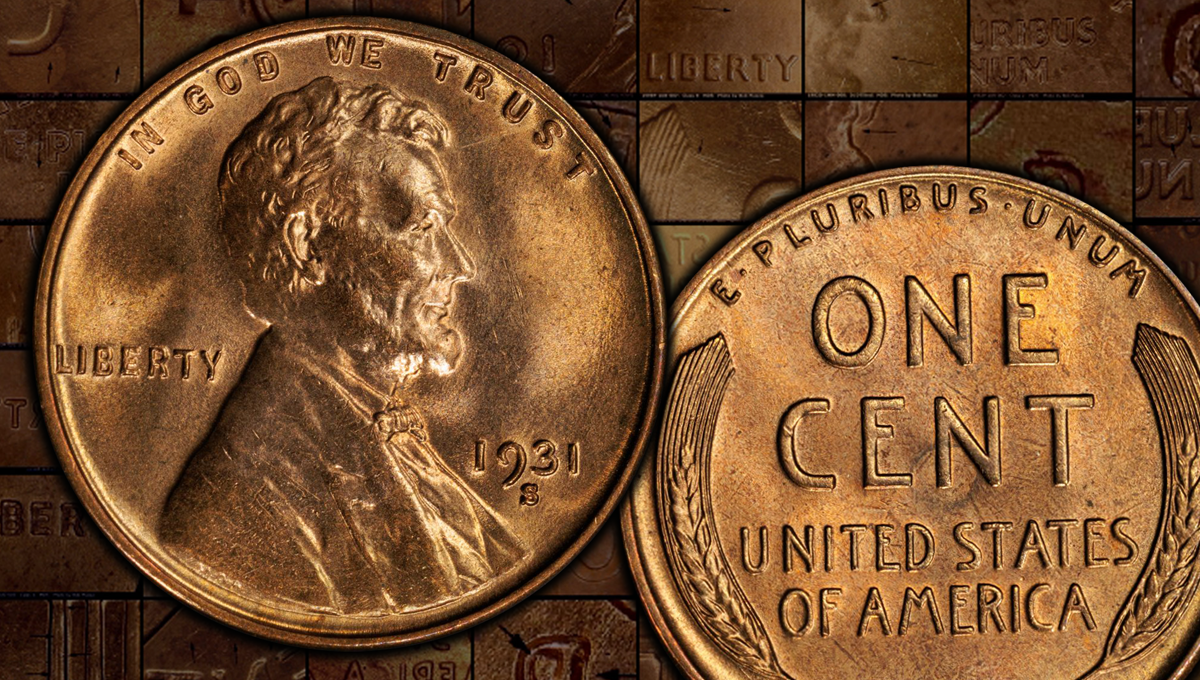
Diagnostics in this package come from Chuck Daughtrey’s die study (Keys to the Lincoln, 2018). Mint marks were punched into working dies by hand until 1990, so position (and often tilt) separates dies. Overlays against fixed design elements such as the date make those differences obvious. Measurements between the closest point of the middle date digits and the mint mark help confirm which die struck a coin.
Study sample: 193 different 1931-S coins. Relative frequencies: #01 very common (~30%), #02 common (~21%), #03 common (~24%), #04 uncommon (~14%), #05 scarce (~11%).
Because every known die has a close mint mark, die cracks, dots, scratches, and reverse wear patterns finish the identification.
Known fakes & alterations
Key and semi-key Lincoln cents are the focus of authenticators and counterfeiters alike. Common alteration methods include:
- Adding a mint mark to a common Philadelphia issue of the same date (for example, turning a 1914 into a 1914-D).
- Scraping or altering digits of a common date (for example, turning a 1944-D into a 1914-D).
- Copying genuine coins by spark erosion or soft-die transposition.
Crude alterations usually fail under close study because device details and mint-mark character are wrong. Matching a coin to one of the few known genuine dies for the issue is a powerful authenticity check. When in doubt, use a trusted third-party grading service.
1931-S is frequently targeted with added mint marks. A close S alone is not proof — match secondary markers to one of the five documented dies.