1952 Lincoln Cent Date Guide
Eisenhower era begins

1952 overview
Philadelphia (MS)
Photo Credit: Cotgreave Collection
(click images above to see larger view)
- Mintage
- 186,775,000
- Mintage Ranking for Type
- (45 of 140)
Denver (MS)
Photo Credit: Cotgreave Collection
(click images above to see larger view)
- Mintage
- 746,130,000
- Mintage Ranking for Type
- (8 of 140)
San Francisco (MS)
Photo Credit: Cotgreave Collection
(click images above to see larger view)
- Mintage
- 137,800,004
- Mintage Ranking for Type
- (58 of 140)
Philadelphia (PR)
Photo Credit: PCGS Coinfacts
(click images above to see larger view)
- Mintage
- 81,980
- Mintage Ranking for Type
- (7 of 26)
1952 in history

- Lincoln cents circulated in a booming economy as Americans bought cars, appliances, and new homes.
- Dwight D. Eisenhower was elected president, ending two decades of Democratic control of the White House.
- The United States detonated the first hydrogen bomb in the Ivy Mike test.
- King George VI of the United Kingdom died; Elizabeth II succeeded him in February.
- The Mau Mau uprising began in Kenya against British colonial rule.
- The first successful animal cloning experiment produced tadpoles from differentiated cells.
- The Mau Mau emergency and Cold War tensions shaped U.S. alliances worldwide.
- The Today show premiered on NBC, starting the modern morning television news format.
1952 Lincoln cent year notes
Philadelphia and San Francisco minted cents this year tend to be well struck but are usually discolored and spotted. Superlative GEM (MS-67) examples are nearly unheard of in all but Denver minted cents. This, coupled with a relatively low mintage in plain and S mint cents and a lack of availability of original rolls, has pushed roll prices to near $100. Meanwhile, Denver Mint roll prices remain comparable to surrounding years at around $10 per roll. Finding uncirculated rolls of plain and S mint cents from this year is rather difficult at best.
Reduction lathe doubling seen on the forehead in this photo is common for 1952 cents. It is not a doubled die.
Doubled dies are very minimal and quite minor this year. Most of the half dozen known doubled dies are doubled eyelids, and the other doubled dies for the year are not readily visible and do not command much premium.
Master die doubling shows on many 1952 cents in the form of doubling in the date. These, as with all other cases of master die doubling, do not carry any premium value.
Another anomaly that is commonly reported as a doubled die shows on this years' cents as well. Described in the 1951 section (see above), reduction lathe doubling is very common on 1952 cents. Most early to middle die state examples examined exhibit this common form of doubling and, thus, do not command any premium value.
Mintmark varieties for this year, on the other hand, are the most numerous for any date in wheat reverse cents. At the time of this printing, over 100 different dies have been discovered with new discoveries added regularly. A problem exists, however, with the D mintmark punch. Many examples sent in as RPMs show a damaged lower serif in the punch and are not RPMs. These are among the most common non-RPM coins sent in as such. A broken punch is to blame for the split lower serif on this mintmark. It is not an RPM.
One very odd RPM for the date shows a partial D punched beneath Lincoln's lapel at the rim. This RPM is easy to miss and is quite valuable. So far very few uncirculated specimens have been reported, while circulated specimens seem to be uncommon to scarce, but not rare.
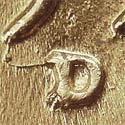
Die breaks in the date and mintmark area tend to be very common in 1952 because the dies used this year, especially those in Philadelphia, saw far more use than they should have. Some of these die breaks are major enough to warrant a premium value ranging between $1 and $5. Do not expect to see a price guide listing for these, as collector interest is very specific and small. Elaborate die breaks such as the one seen here are rather common for 1952 cents. Some of them are worth a modest premium value as a curiosity. Photo by author.
As an additional bit of Lincoln cent information, the following excerpt was extracted from uspatterns.com:
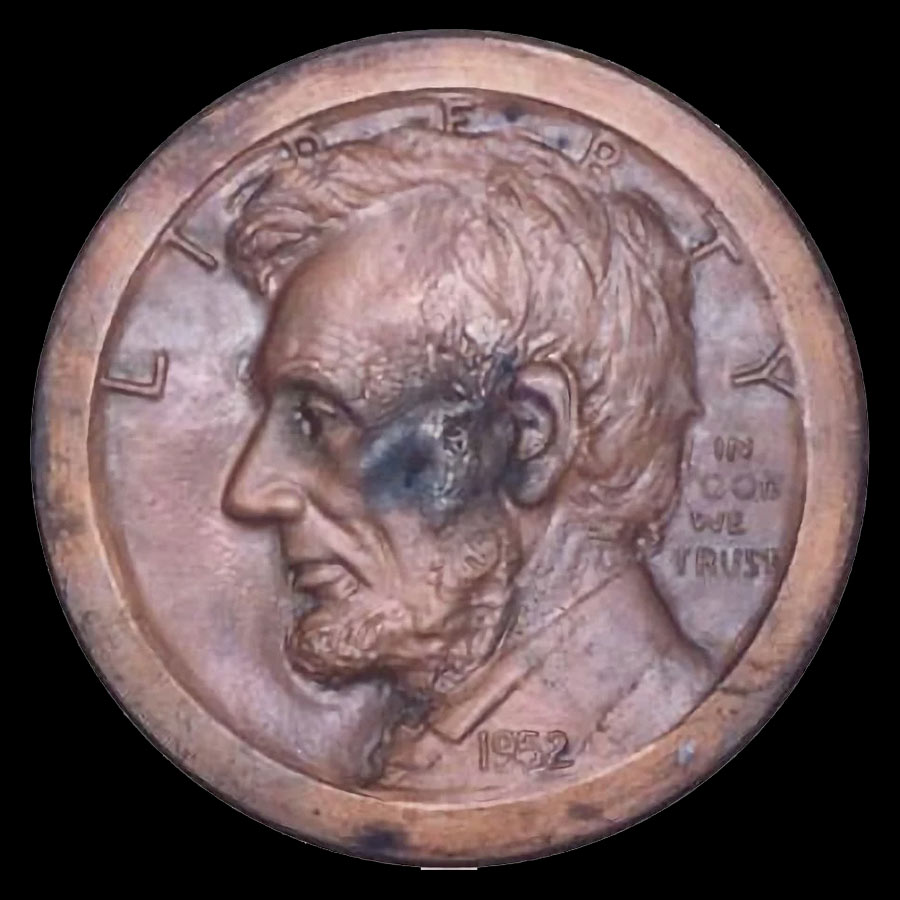
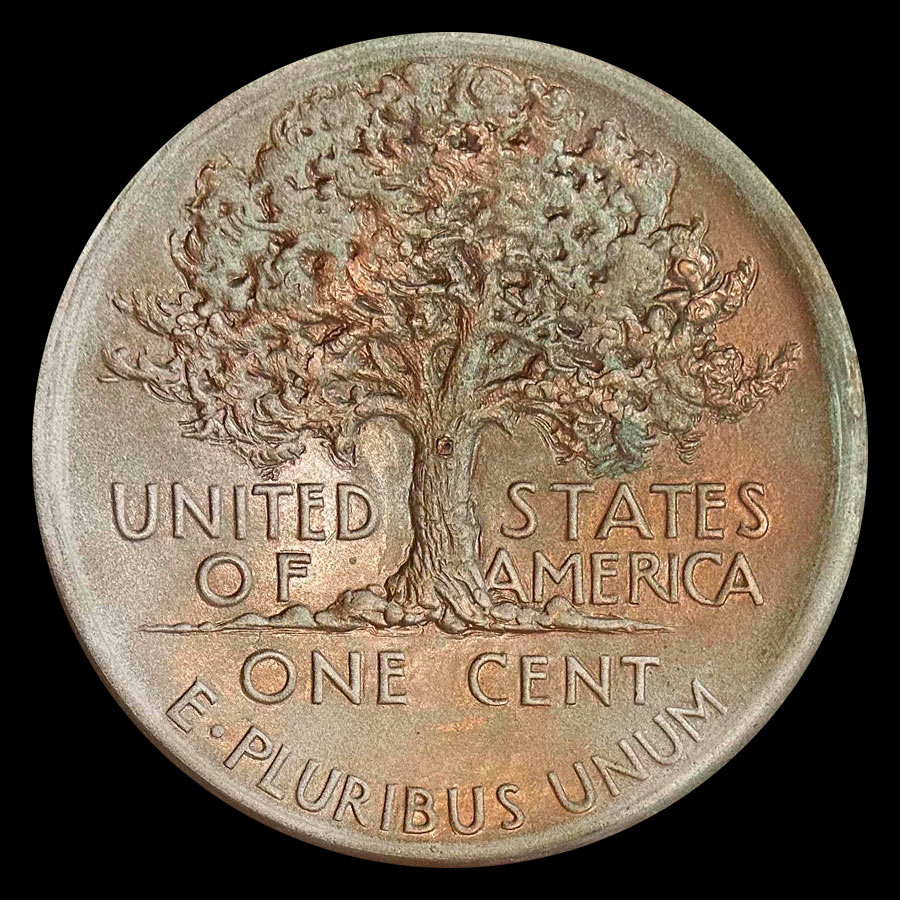
Director Ross was so impressed (by James Earle Fraser's new cent design submission) that she convinced the Secretary of the Treasury to permit pattern coins to be struck. Forty-six pieces were coined on May 7, 1952 and another 100 were made from dies of slightly lower relief on June 19. Although Ross, the Secretary and others gave strong support to the new Lincoln cent design, the change was not to occur. Demand for coinage surged and the Mint Bureau could barely keep up with normal production: the project was scrapped in March 1953.
The 146 pattern cents were certified as being destroyed on March 16, 1953, the dies were locked in the Engraver's safe and the models stuck in storage at the Philadelphia Mint. In 1995, numismatist Bill Fivaz chanced to photograph the obverse model.
Photo attached is by Bill Fivaz. It is not known whether the photo is of a galvano or a colored plaster model.
Images/Mintage
Philadelphia (MS)
Photo Credit: Cotgreave Collection
(click images above to see larger view)
- Mintage
- 186,775,000
- Mintage Ranking for Type
- (45 of 140)
Denver (MS)
Photo Credit: Cotgreave Collection
(click images above to see larger view)
- Mintage
- 746,130,000
- Mintage Ranking for Type
- (8 of 140)
San Francisco (MS)
Photo Credit: Cotgreave Collection
(click images above to see larger view)
- Mintage
- 137,800,004
- Mintage Ranking for Type
- (58 of 140)
Philadelphia (PR)
Photo Credit: PCGS Coinfacts
(click images above to see larger view)
- Mintage
- 81,980
- Mintage Ranking for Type
- (7 of 26)
1952 in history
- Lincoln cents circulated in a booming economy as Americans bought cars, appliances, and new homes.
- Dwight D. Eisenhower was elected president, ending two decades of Democratic control of the White House.
- The United States detonated the first hydrogen bomb in the Ivy Mike test.
- King George VI of the United Kingdom died; Elizabeth II succeeded him in February.
- The Mau Mau uprising began in Kenya against British colonial rule.
- The first successful animal cloning experiment produced tadpoles from differentiated cells.
- The Mau Mau emergency and Cold War tensions shaped U.S. alliances worldwide.
- The Today show premiered on NBC, starting the modern morning television news format.
1952 cent notes
Philadelphia and San Francisco minted cents this year tend to be well struck but are usually discolored and spotted. Superlative GEM (MS-67) examples are nearly unheard of in all but Denver minted cents. This, coupled with a relatively low mintage in plain and S mint cents and a lack of availability of original rolls, has pushed roll prices to near $100. Meanwhile, Denver Mint roll prices remain comparable to surrounding years at around $10 per roll. Finding uncirculated rolls of plain and S mint cents from this year is rather difficult at best.
Reduction lathe doubling seen on the forehead in this photo is common for 1952 cents. It is not a doubled die.
Doubled dies are very minimal and quite minor this year. Most of the half dozen known doubled dies are doubled eyelids, and the other doubled dies for the year are not readily visible and do not command much premium.
Master die doubling shows on many 1952 cents in the form of doubling in the date. These, as with all other cases of master die doubling, do not carry any premium value.
Another anomaly that is commonly reported as a doubled die shows on this years' cents as well. Described in the 1951 section (see above), reduction lathe doubling is very common on 1952 cents. Most early to middle die state examples examined exhibit this common form of doubling and, thus, do not command any premium value.
Mintmark varieties for this year, on the other hand, are the most numerous for any date in wheat reverse cents. At the time of this printing, over 100 different dies have been discovered with new discoveries added regularly. A problem exists, however, with the D mintmark punch. Many examples sent in as RPMs show a damaged lower serif in the punch and are not RPMs. These are among the most common non-RPM coins sent in as such. A broken punch is to blame for the split lower serif on this mintmark. It is not an RPM.
One very odd RPM for the date shows a partial D punched beneath Lincoln's lapel at the rim. This RPM is easy to miss and is quite valuable. So far very few uncirculated specimens have been reported, while circulated specimens seem to be uncommon to scarce, but not rare.
Die breaks in the date and mintmark area tend to be very common in 1952 because the dies used this year, especially those in Philadelphia, saw far more use than they should have. Some of these die breaks are major enough to warrant a premium value ranging between $1 and $5. Do not expect to see a price guide listing for these, as collector interest is very specific and small. Elaborate die breaks such as the one seen here are rather common for 1952 cents. Some of them are worth a modest premium value as a curiosity. Photo by author.
As an additional bit of Lincoln cent information, the following excerpt was extracted from uspatterns.com:
Director Ross was so impressed (by James Earle Fraser's new cent design submission) that she convinced the Secretary of the Treasury to permit pattern coins to be struck. Forty-six pieces were coined on May 7, 1952 and another 100 were made from dies of slightly lower relief on June 19. Although Ross, the Secretary and others gave strong support to the new Lincoln cent design, the change was not to occur. Demand for coinage surged and the Mint Bureau could barely keep up with normal production: the project was scrapped in March 1953.
The 146 pattern cents were certified as being destroyed on March 16, 1953, the dies were locked in the Engraver's safe and the models stuck in storage at the Philadelphia Mint. In 1995, numismatist Bill Fivaz chanced to photograph the obverse model.
Photo attached is by Bill Fivaz. It is not known whether the photo is of a galvano or a colored plaster model.
Design types
Obverse design types (ODT)
-
 Flat serif G obverse — ODT09 · 1922–1929 · business · 1931–1933 · business · 1935–1955 · business · 1936–1942 · proof · 1950–1955 · proof
Reverse design types (RDT)
See the design types reference. Design types identify engraved designs; when differing designs create collectible alternatives within a year, see Lincoln cent design varieties.
Mint mark types
-
 Pulled Corner-D — 1946–1953 · business
 -
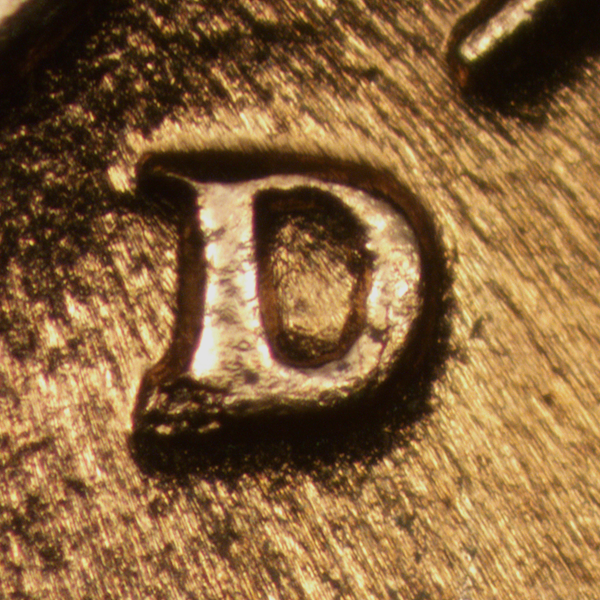 Smashed-D — 1952 · business
 -
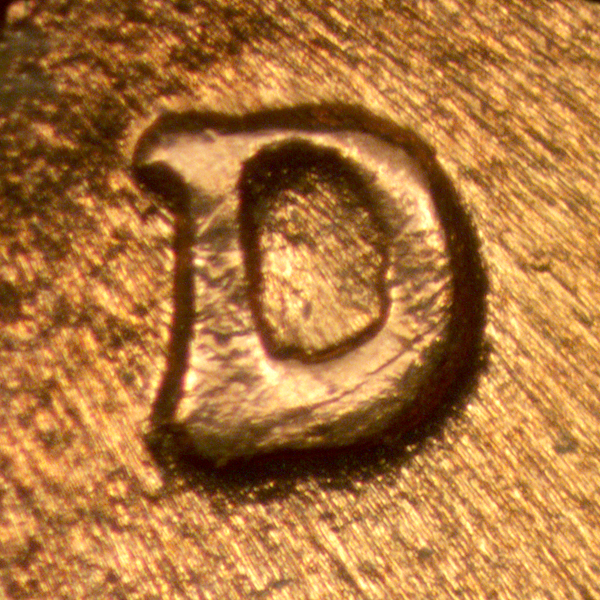 Curved Top-D — 1952–1953 · business
 -
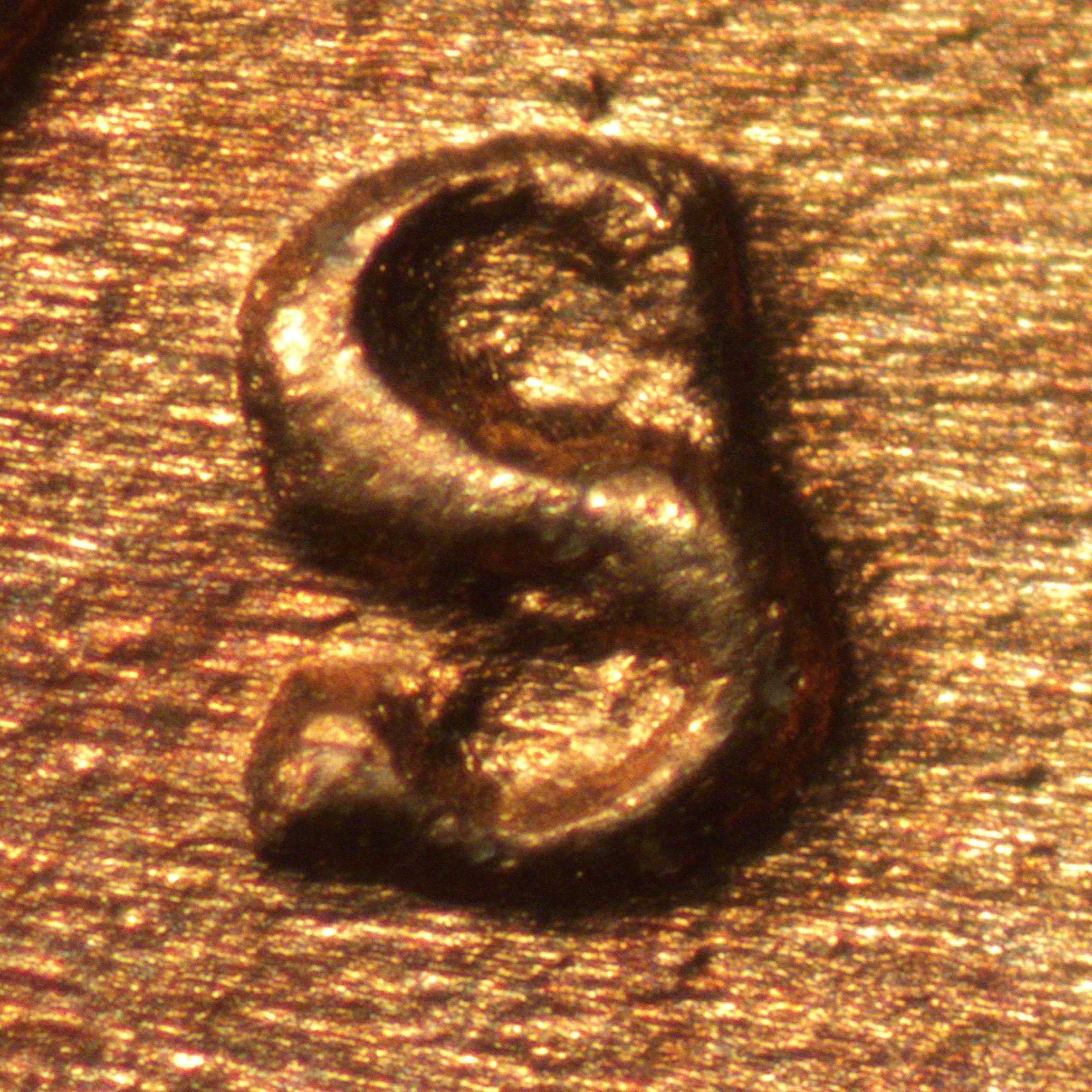 Trumpet-tail S — 1942 · business · 1945–1952 · business
 -
 Late-Serif S — 1951–1955 · business · 1968–1970
See the mint mark types reference.
Typical values
1952 Lincoln cents from the CopperCoins series price guide (August/September 2026 edition) — approximate values only, not offers to buy or sell. Business strikes show separate BN, RB, and RD lines where priced.
Business strike
| Issue | G4 | VG8 | F12 | VF20 | EF40 | AU50 |
|---|---|---|---|---|---|---|
| 1952-P BN | 0.05 | 0.05 | 0.05 | 0.05 | 0.10 | 0.10 |
| 1952-P RB | ||||||
| 1952-P RD | ||||||
| 1952-D BN | 0.05 | 0.05 | 0.05 | 0.05 | 0.10 | 0.10 |
| 1952-D RB | ||||||
| 1952-D RD | ||||||
| 1952-S BN | 0.05 | 0.05 | 0.05 | 0.05 | 0.10 | 0.10 |
| 1952-S RB | ||||||
| 1952-S RD |
| Issue | AU53 | AU55 | AU58 | MS60 | MS61 | MS62 |
|---|---|---|---|---|---|---|
| 1952-P BN | 0.15 | 0.15 | 0.15 | 1.40 | 1.60 | 1.90 |
| 1952-P RB | ||||||
| 1952-P RD | 4 | 4 | 5 | |||
| 1952-D BN | 0.15 | 0.15 | 0.15 | 0.40 | 0.45 | 1.15 |
| 1952-D RB | ||||||
| 1952-D RD | 2 | 3 | 4 | |||
| 1952-S BN | 0.15 | 0.15 | 0.20 | 2 | 2.30 | 3.45 |
| 1952-S RB | ||||||
| 1952-S RD | 4 | 4 | 4 |
| Issue | MS63 | MS64 | MS65 | MS66 | MS67 | MS68 |
|---|---|---|---|---|---|---|
| 1952-P BN | 2.30 | 2.60 | 5.40 | 8.75 | ||
| 1952-P RB | 2.90 | 4.60 | 8.40 | 25 | ||
| 1952-P RD | 9.70 | 34 | 79 | 350 | 1,175 | |
| 1952-D BN | 1.45 | 2.90 | 6 | 12.50 | ||
| 1952-D RB | 3.45 | 5.75 | 9 | 17.50 | ||
| 1952-D RD | 6.50 | 25 | 35 | 65 | 249 | |
| 1952-S BN | 4.05 | 4.60 | 6.30 | 10.75 | ||
| 1952-S RB | 4.60 | 5.20 | 8.40 | 16.25 | ||
| 1952-S RD | 7.65 | 22 | 30 | 55 | 171 | 30,000 |
| Issue | G4 | VG8 | F12 | VF20 | EF40 | AU50 |
|---|---|---|---|---|---|---|
| 1952-P BN | 0.05 | 0.05 | 0.05 | 0.05 | 0.10 | 0.10 |
| 1952-P RB | ||||||
| 1952-P RD | ||||||
| 1952-D BN | 0.05 | 0.05 | 0.05 | 0.05 | 0.10 | 0.10 |
| 1952-D RB | ||||||
| 1952-D RD | ||||||
| 1952-S BN | 0.05 | 0.05 | 0.05 | 0.05 | 0.10 | 0.10 |
| 1952-S RB | ||||||
| 1952-S RD |
| Issue | AU53 | AU55 | AU58 | MS60 | MS61 | MS62 |
|---|---|---|---|---|---|---|
| 1952-P BN | 0.15 | 0.15 | 0.15 | 1.40 | 1.60 | 1.90 |
| 1952-P RB | ||||||
| 1952-P RD | 4 | 4 | 5 | |||
| 1952-D BN | 0.15 | 0.15 | 0.15 | 0.40 | 0.45 | 1.15 |
| 1952-D RB | ||||||
| 1952-D RD | 2 | 3 | 4 | |||
| 1952-S BN | 0.15 | 0.15 | 0.20 | 2 | 2.30 | 3.45 |
| 1952-S RB | ||||||
| 1952-S RD | 4 | 4 | 4 |
| Issue | MS63 | MS64 | MS65 | MS66 | MS67 | MS68 |
|---|---|---|---|---|---|---|
| 1952-P BN | 2.30 | 2.60 | 5.40 | 8.75 | ||
| 1952-P RB | 2.90 | 4.60 | 8.40 | 25 | ||
| 1952-P RD | 9.70 | 34 | 79 | 350 | 1,175 | |
| 1952-D BN | 1.45 | 2.90 | 6 | 12.50 | ||
| 1952-D RB | 3.45 | 5.75 | 9 | 17.50 | ||
| 1952-D RD | 6.50 | 25 | 35 | 65 | 249 | |
| 1952-S BN | 4.05 | 4.60 | 6.30 | 10.75 | ||
| 1952-S RB | 4.60 | 5.20 | 8.40 | 16.25 | ||
| 1952-S RD | 7.65 | 22 | 30 | 55 | 171 | 30,000 |
Proof
| Issue | PR60 | PR61 | PR62 |
|---|---|---|---|
| 1952-P BN | 5.40 | 9 | 10.25 |
| 1952-P RB | 5 | 12 | 13.25 |
| 1952-P RD | 9 | 14.50 | 18 |
| 1952-P CAM | |||
| 1952-P DCAM |
| Issue | PR63 | PR64 | PR65 |
|---|---|---|---|
| 1952-P BN | 13 | 17 | 24 |
| 1952-P RB | 17.50 | 22.75 | 28.50 |
| 1952-P RD | 24.50 | 28.75 | 38 |
| 1952-P CAM | 50 | 125 | 188 |
| 1952-P DCAM | 275 | 970 |
| Issue | PR66 | PR67 | PR68 |
|---|---|---|---|
| 1952-P BN | 33.75 | 48.75 | |
| 1952-P RB | 41.25 | 64 | |
| 1952-P RD | 55 | 97.50 | 600 |
| 1952-P CAM | 375 | 860 | 2,100 |
| 1952-P DCAM | 1,750 | 3,800 | 64,700 |
| Issue | PR60 | PR61 | PR62 |
|---|---|---|---|
| 1952-P BN | 5.40 | 9 | 10.25 |
| 1952-P RB | 5 | 12 | 13.25 |
| 1952-P RD | 9 | 14.50 | 18 |
| 1952-P CAM | |||
| 1952-P DCAM |
| Issue | PR63 | PR64 | PR65 |
|---|---|---|---|
| 1952-P BN | 13 | 17 | 24 |
| 1952-P RB | 17.50 | 22.75 | 28.50 |
| 1952-P RD | 24.50 | 28.75 | 38 |
| 1952-P CAM | 50 | 125 | 188 |
| 1952-P DCAM | 275 | 970 |
| Issue | PR66 | PR67 | PR68 |
|---|---|---|---|
| 1952-P BN | 33.75 | 48.75 | |
| 1952-P RB | 41.25 | 64 | |
| 1952-P RD | 55 | 97.50 | 600 |
| 1952-P CAM | 375 | 860 | 2,100 |
| 1952-P DCAM | 1,750 | 3,800 | 64,700 |
Die varieties in the catalog
Our attribution catalog for 1952—doubled dies, repunched mint marks, and related varieties documented by die number. This is specialist research beyond regular issue Lincoln cents.
Catalogued dies for 1952
Number of assigned dies in the CopperCoins catalog, by mint and variety type. Click a count to search that group.
| Mint | DO Doubled Die Obverse | MM Repunched Mint Mark | OM Over Mint Mark | Total |
|---|---|---|---|---|
| Philadelphia (P) | 3 | N/A | 0 | 3 |
| Denver (D) | 10 | 104 | 1 | 115 |
| San Francisco (S) | 2 | 32 | 0 | 34 |
| All mints | 15 | 136 | 1 | 152 |
OMM listings for this year
Catalog results
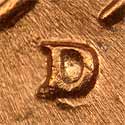
1952D•1OM•001
D/S south
The lower curve of an S punch shows to the south of the primary mintmark. Old CPG # 021.6
Cross references
- WEXLER: WRPM-077
- CONECA: OMM-001
- FIVAZ/STANTON: FS-511
- CRAWFORD: COMM-001




All prices and market estimates are for informational and educational purposes only. They are not appraisals, guarantees, or offers to buy or sell. See the Terms of Use for the full Price Guide and Valuation Disclaimer.
Variety plate coin videos
Videos on our YouTube channel that show when the plate coins for these dies were found in CopperCoins roll reveal videos.